
How to Follow Up With Leads for Small Business (Without Sounding Pushy)

Author
Sam MonacFounder, Business Boomer | AI Operator & Growth Strategist
Sam Monac is a product and AI operator who helped scale Token Metrics to $7M+ ARR and supported more than $6M in capital raises. Through Business Boomer and his portfolio of AI-enabled businesses, Sam writes from hands-on experience building automation systems, growth workflows, and practical AI tools for real operators.

Fact Checked By
S. VishwaSEO Specialist & Blog Writer, Business Boomer
S. Vishwa is an experienced SEO specialist and blog writer with 10+ years of experience across digital marketing and fintech. He is passionate about crafting high-quality content that informs and engages readers in the finance and marketing sectors.
Small businesses close more deals when lead follow-up is fast, clear, and consistent instead of random and delayed.
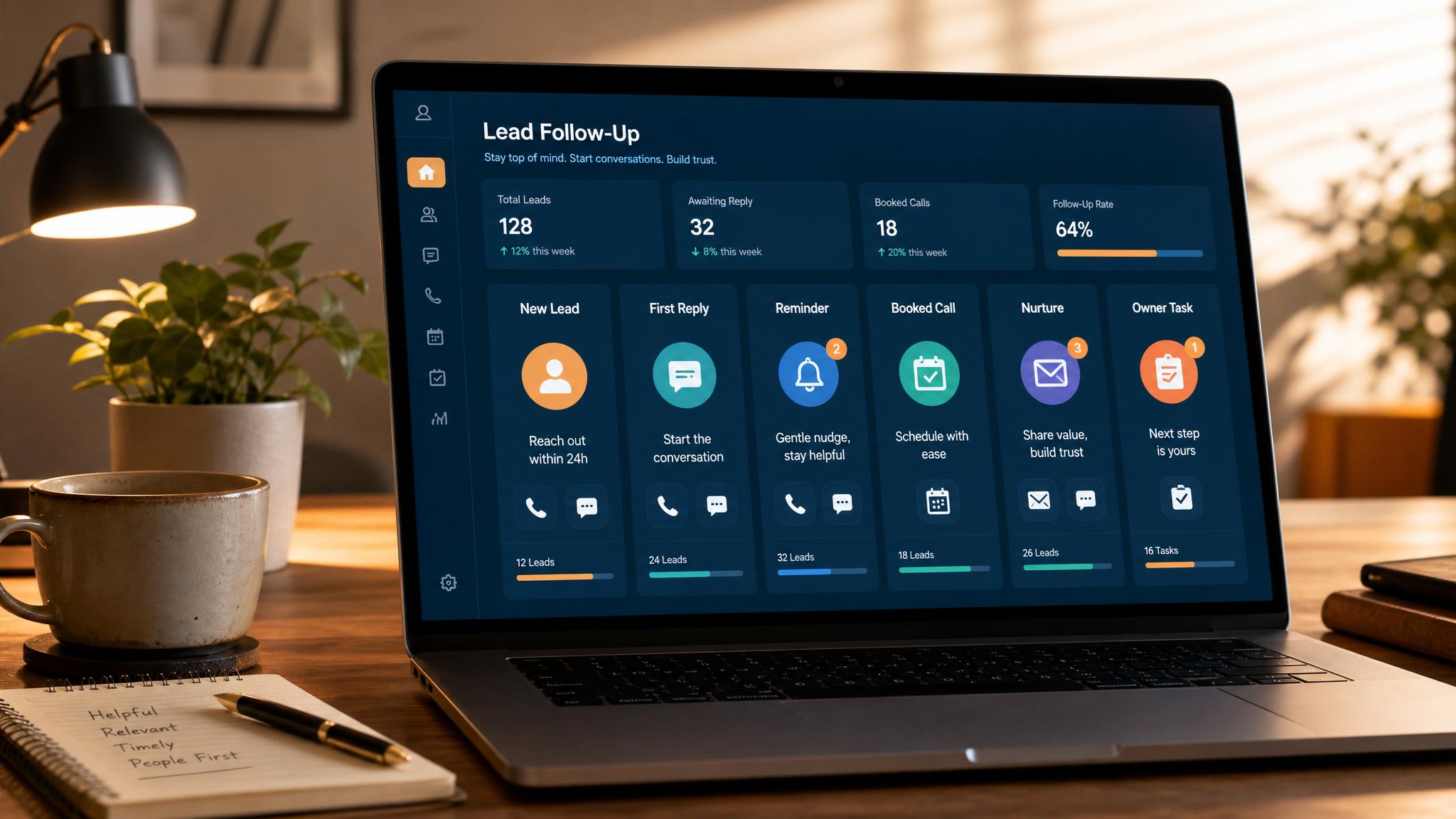
Following up with leads for a small business means contacting interested prospects quickly, clearly, and consistently until they either buy, say no, or go quiet. The best follow-up system is not aggressive, it is useful, timely, and easy for the lead to respond to.
Quick answer: Small businesses close more deals when lead follow-up is fast, clear, and consistent instead of random and delayed.
What is lead follow-up for a small business?
Lead follow-up is the process of staying in touch after someone fills out a form, asks for a quote, books a call, or shows interest in your business. For a small business, this usually happens by email, phone, text, or a mix of all three.
Most owners think follow-up is just “checking in.” It is more than that. Good follow-up answers the next question, reduces hesitation, and helps the lead take one simple next step.
Related next step: use the AI automation services page if you want to turn this idea into a practical Business Boomer workflow.
A lead usually does not disappear because they were never interested. They disappear because life got busy, your reply came too late, or they were unsure what to do next. That is why lead follow-up is really a speed and clarity problem, not just a sales problem.
For many small businesses, the current system is messy. One lead gets a reply in five minutes, another gets a reply two days later, and a third gets forgotten entirely. That inconsistency costs real revenue.
Why how to follow up with leads for small business matters
Lead follow-up matters because most sales do not happen on the first message. A lot of interested buyers need a reminder, a clearer explanation, or a second touch before they move forward.
Small businesses especially feel this because they usually do not have a full sales team watching every inquiry. The owner is doing sales, delivery, admin, and customer service all at once. When follow-up depends on memory, leads slip through the cracks.
Related next step: use the AI automation consulting page if you want to turn this idea into a practical Business Boomer workflow.
Fast follow-up also affects trust. If someone reaches out and hears back quickly, your business feels organized and reliable. If they wait too long, they assume you are busy, inconsistent, or hard to work with.
There is also a simple math reason to care. If your business gets 40 leads a month and better follow-up helps you close just 4 more of them, that can mean thousands of dollars in extra monthly revenue without spending more on ads or marketing.
This is one of the best operational improvements a small business can make because it improves conversion before you spend money trying to generate more traffic.
How to put this into practice
Start by replying fast. The first message should go out as soon as possible after the lead comes in. Even a short response is better than silence. Thank them, confirm you got their request, and tell them what happens next.
Next, make the next step obvious. Do not send a vague message like “let me know if you want to chat.” Instead, offer one clear action: book a call, reply with a preferred time, approve the quote, or answer one key question.
Related next step: use the automation guides page if you want to turn this idea into a practical Business Boomer workflow.
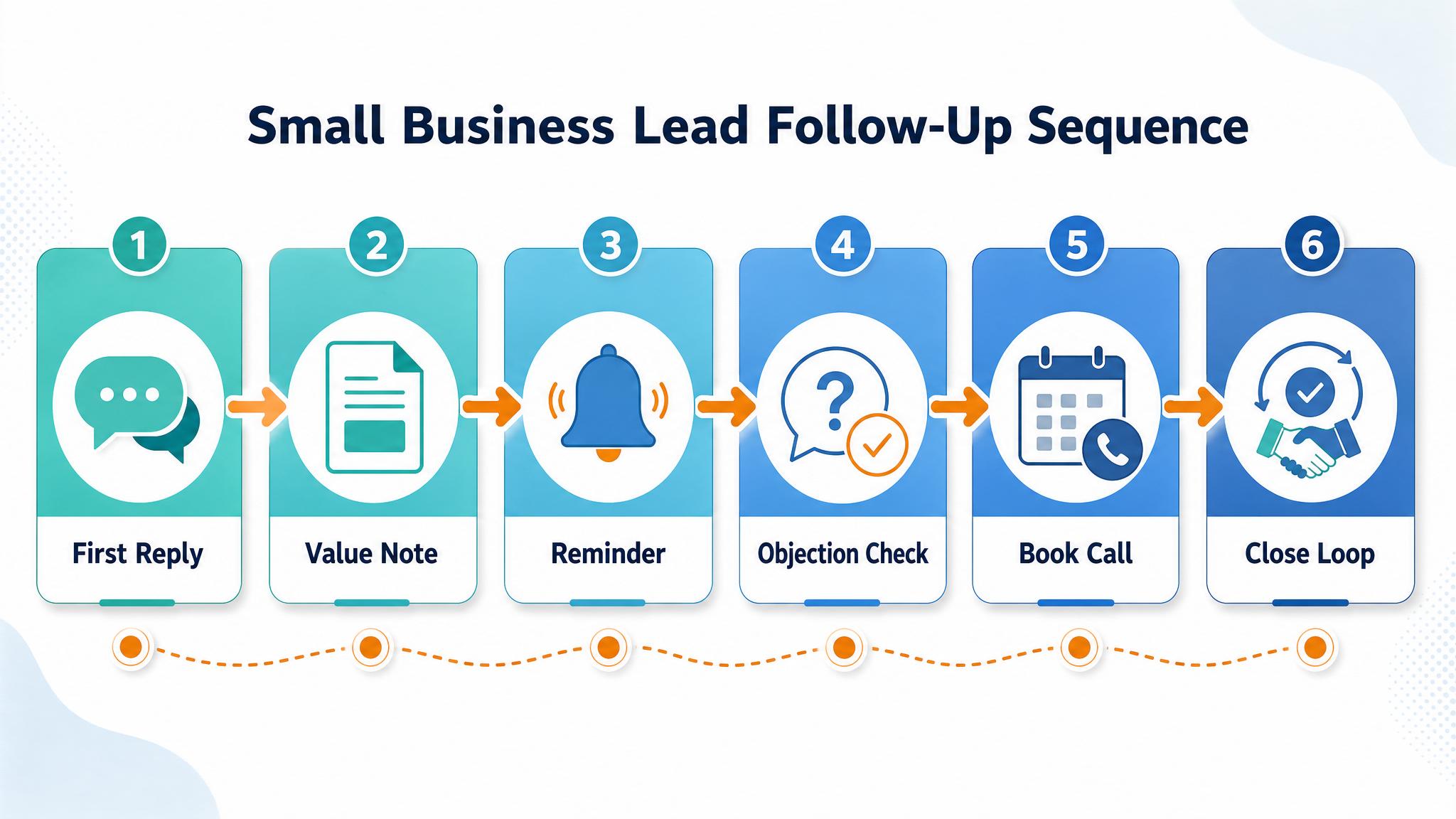
Then build a simple sequence. For most small businesses, a five-touch follow-up sequence works well:
- Day 0: quick response and confirmation
- Day 1: helpful follow-up with one useful detail
- Day 3: short reminder with clear next step
- Day 7: check-in message that reduces pressure
- Day 14: final follow-up that closes the loop politely
Each message should add value. That could mean answering a common objection, sharing pricing context, explaining your process, or clarifying timeline. If every message sounds identical, it feels automated in the worst way.
Use the channel that fits the lead. If they filled out a web form, start with email. If they texted, text back. If they booked a call but did not show, a text and email combination often works better than one long email.
Finally, track outcomes. Every lead should end in one of a few clear statuses: booked, won, not now, no response, or unqualified. If you do not track this, you cannot improve the system because you never see where leads are dropping off.
Best practices that keep this useful
Keep messages short. Long follow-up emails often get ignored. A few clear sentences beat a wall of text.
Be specific. Mention what they asked about, what you recommend, and the exact next step. Specific follow-up feels personal even when the process is templated.
Do not wait for the perfect message. Speed beats polish in early follow-up. A good reply now is better than a perfect reply tomorrow.
Use templates, but personalize the first line. That gives you consistency without sounding robotic.
Stop guessing and build a process. If follow-up only lives in your head, it will break when you get busy.
Automate reminders where possible. Even basic automation, like a CRM task or email sequence, can prevent dropped leads and free up hours every week. This is where businesses often benefit from better systems around routing, reminders, and response workflows.
Business Boomer helps small businesses build faster follow-up systems, cleaner workflows, and practical automation that turns more inquiries into real conversations.
What this should look like in practice
A good setup should make the next action obvious. The owner or team should be able to open one place and see what needs attention, what is waiting, and what can be automated.
Simple implementation checklist
| Step | What to check |
|---|---|
| 1 | Find the repetitive task or lead leak |
| 2 | Decide what information must be captured |
| 3 | Create a simple owner, stage, and next-step rule |
| 4 | Automate the reminder, handoff, or record creation |
| 5 | Review the workflow weekly and tighten what breaks |
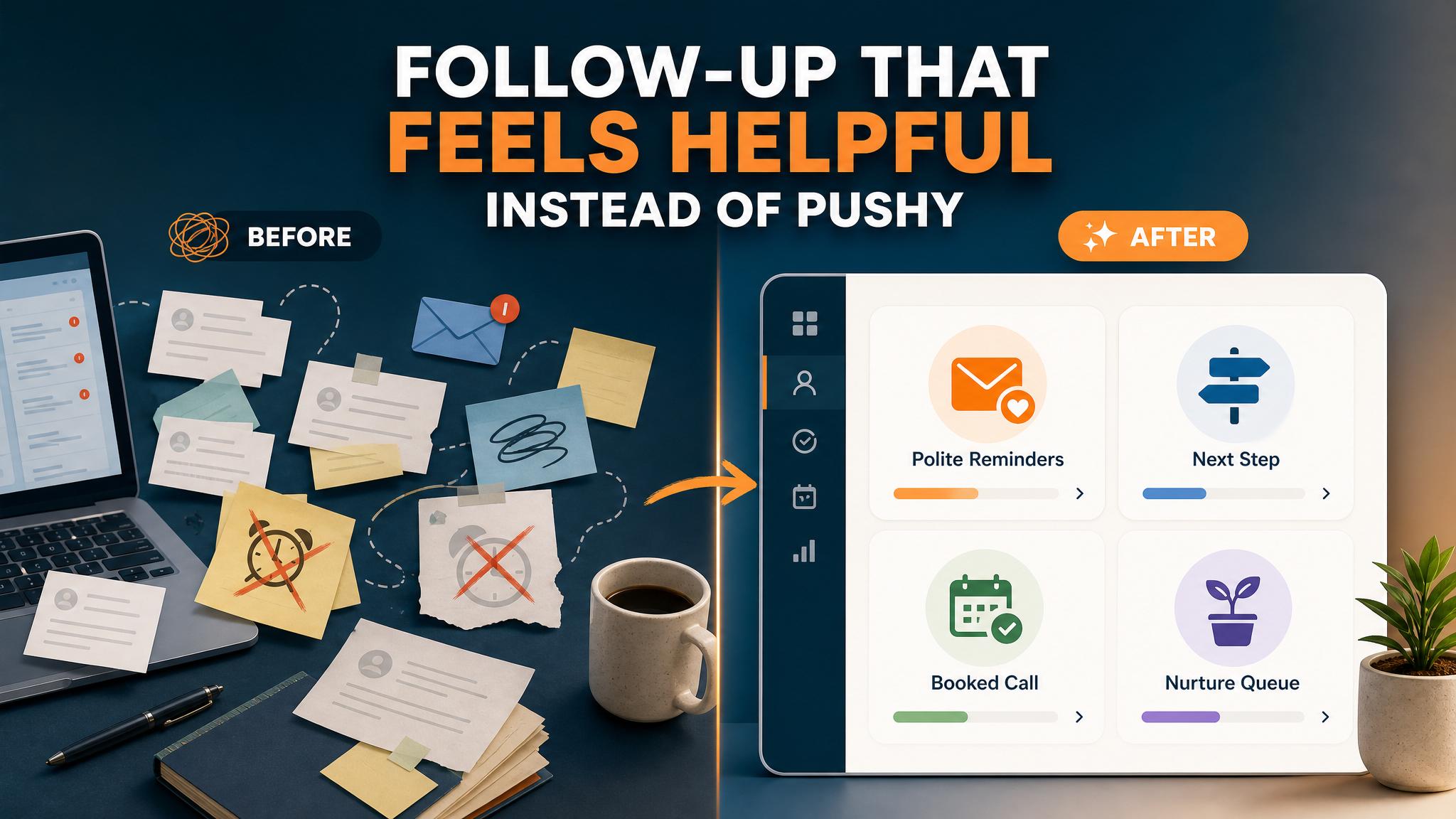
Business Boomer rule: If the workflow does not create a clearer owner, next step, or follow-up path, it is not automation yet. It is just another tool.
Next step
Ready to turn this into a working system?
Get a practical review of where AI automation, lead follow-up, CRM cleanup, or invoice workflows can create the fastest win in your business.
Keep building the system
Recommended next Business Boomer guides
These links are selected by topic and search intent so this guide connects to the most relevant service pages, industry pages, and supporting blog posts.
Service and setup pages
Use these when you are ready to turn the idea into an implementation path.
Industry-specific pages
See how the same workflow changes for specific business types.
Related blog posts
Read the connected guides that support this topic cluster.
Related AI automation guides
Keep going with the connected Business Boomer guides in this automation cluster.
How to qualify leads for small business
Capture the right details, route qualified prospects, and make follow-up easier for a small team.
How to automate invoices for small business
The guide already earning Google impressions. Covers invoice creation, reminders, payment tracking, and cash-flow follow-up.
What is a CRM for small business?
How a simple CRM supports better lead tracking, follow-up, sales visibility, and customer handoff.
How to use AI in a law firm
Intake, client follow-up, document workflow support, and admin cleanup for small firms.
Frequently Asked Questions
FAQ
Quick answers about this guide and how to put the idea into practice.
What is the main takeaway from How to Follow Up With Leads for Small Business (Without Sounding Pushy)?
Small businesses close more deals when lead follow-up is fast, clear, and consistent instead of random and delayed.
How does how to follow up with leads for small business help a small business?
how to follow up with leads for small business can help a small business reduce manual work, improve follow-up, organize repetitive tasks, and create a clearer operating process when it is tied to a real bottleneck.
Can Business Boomer help implement how to follow up with leads for small business?
Yes. Business Boomer can help turn the idea into a practical workflow, page, checklist, or automation system depending on what the business needs first.
Want help putting this into practice?
Business Boomer helps real businesses install better systems, not just read about them.
Talk to Sam →