
We Got 9 Impressions. So We Built the System We Should Have Had First.
AI Business Boomer started with nine social media impressions, then built a QA-gated Metricool publishing and readback loop instead of dumping generic AI posts into a scheduler.

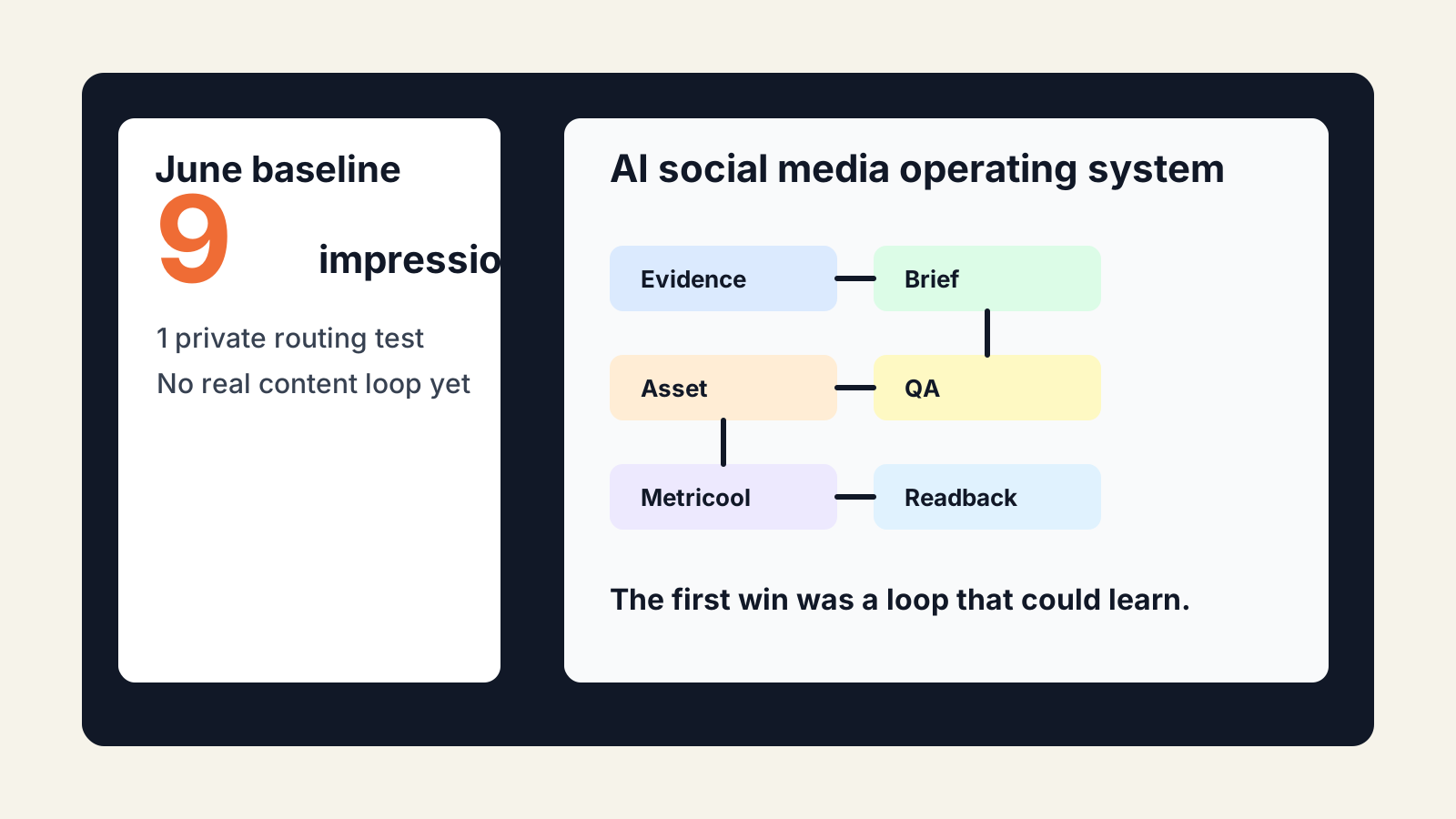
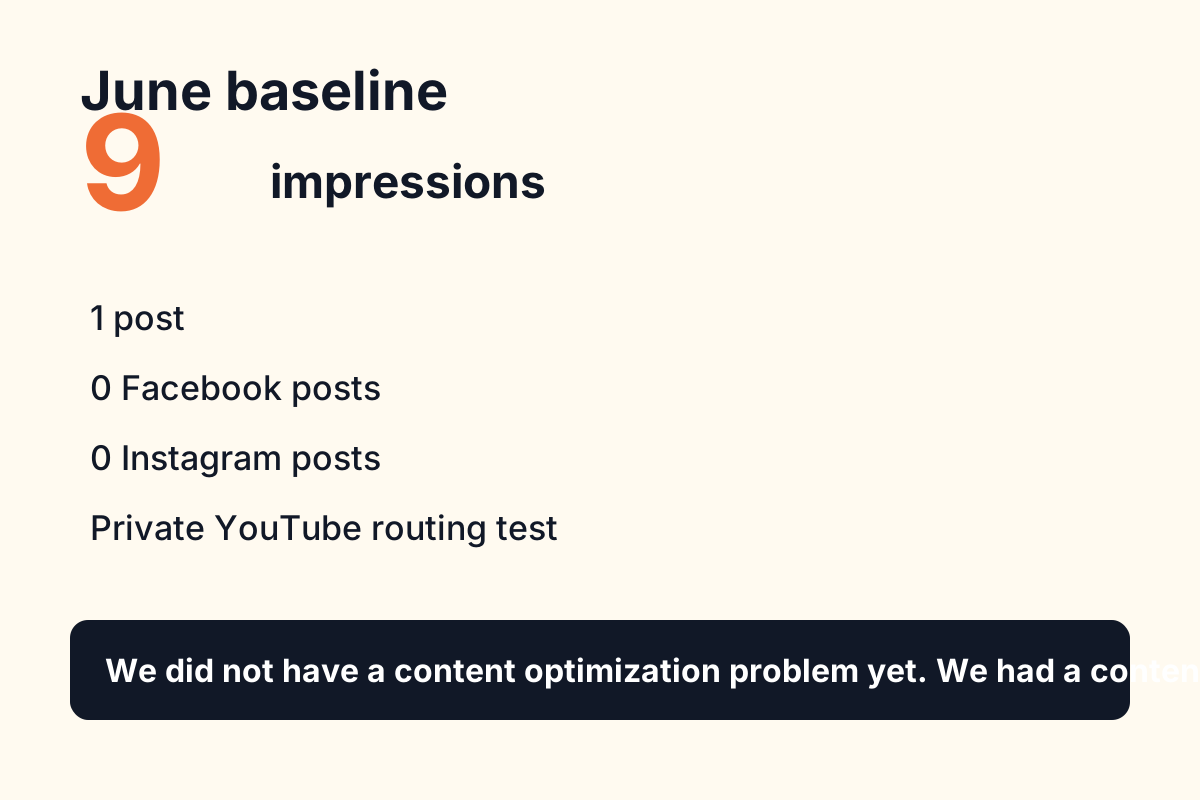
In June, AI Business Boomer generated nine social media impressions.
Not nine thousand. Nine.
The report showed one post during the period. That post was a private YouTube API-routing test, not a real public campaign. Facebook, Instagram, LinkedIn, Pinterest, and TikTok did not have enough real publishing history to teach us anything useful.
That was the useful part.
Nine impressions did not tell me that our market was wrong. It did not tell me that local business owners do not care about missed calls, slow follow-up, weak Google reviews, or practical AI systems.
It told me we did not have a content operation yet.
We had scattered work, good intentions, and too much of the coordination still sitting in my head. There was no reliable loop for choosing a business problem, proving the claim, building platform-native assets, checking the work, publishing through Metricool, reading the result, and improving the next post.
The lazy answer would have been to ask AI for 30 social posts and load them into a scheduler.
That would have created a busier version of the same problem.
So we built the system we should have had first.
Why scheduling was never the hard part
Most people talk about social media automation as if the hard part is getting a post to go live at 9:00 AM.
Scheduling matters. It is also the easiest part.
The hard part starts before the post exists:
| Question | Why it matters |
|---|---|
| Which owner problem are we talking about? | Generic AI content disappears because it sounds written for everyone. |
| What can we prove? | AI can invent clean numbers and fake screenshots faster than a person can catch them. |
| Who can reject weak work? | The creator of a post should not be the only quality gate. |
| What happens after publication? | A post without readback is just a guess with a timestamp. |
Metricool gives us a useful publishing and measurement layer. It can hold the calendar, distribute approved posts, and return performance data.
Metricool is not the brain of the operation.
The strategy has to happen before a post reaches Metricool. The same is true for claim checking, creative direction, platform adaptation, and quality control.
The real goal: zero daily coordination
I do not want to approve every hook, resize every image, check every caption, chase every agent, and remember every 24-hour readback.
I still own the business judgment.
That means I set the offers, the boundaries, the claims we are willing to make, the kind of local business owners we want to help, and the actions that need human approval.
The goal is not zero founder responsibility. The goal is zero daily founder coordination.
A mature system should bring me decisions, exceptions, and proof. It should not make me manage every moving part.
That distinction matters because "hands-off" content usually becomes low-accountability content. The work looks automated, but nobody knows whether the hook was strong, the CTA worked, the account posted correctly, or the same asset went out twice.
For AI Business Boomer, the system needs to earn more freedom by producing evidence.
The operating model we built
We split the workflow into roles because one system should not create, approve, and publish its own work.
The plain-English version looks like this:
- Start with a real business problem.
- Build a brief with evidence and claim boundaries.
- Produce the social asset and platform captions.
- Check the offer, CTA, and proof.
- Run human review when the piece needs judgment.
- Run independent QA.
- Add only approved content to the queue.
- Publish through Metricool.
- Verify the live result.
- Read performance and improve the next brief.
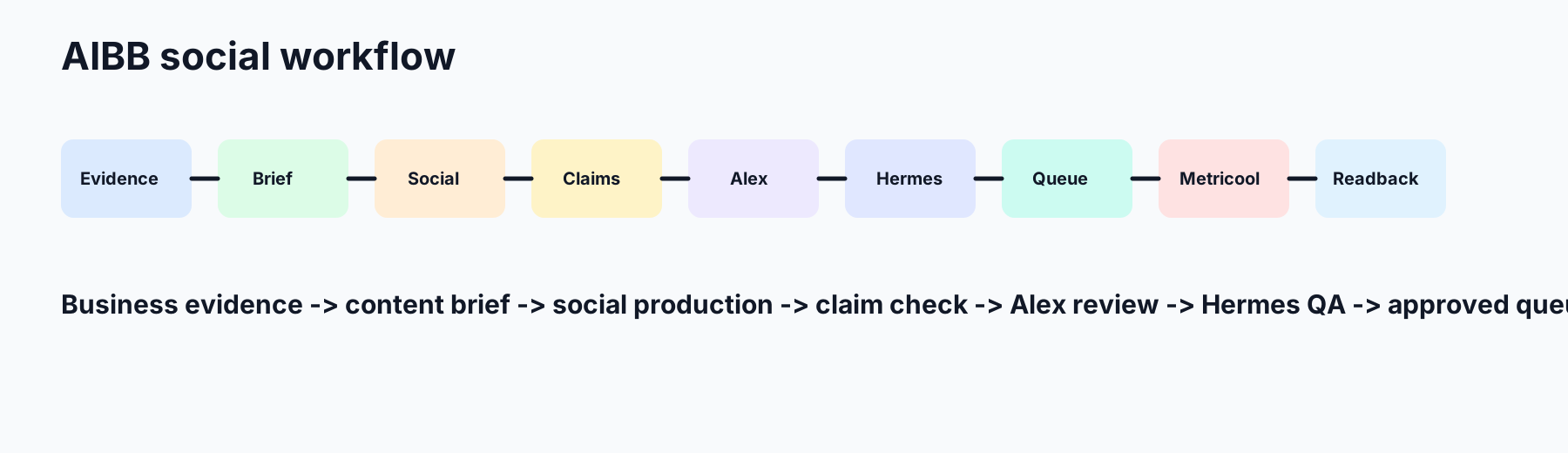
The internal team behind that loop has distinct responsibilities.
| Role | Responsibility |
|---|---|
| Sam | Business priorities, offers, approval boundaries, and final publication approval for protected work |
| Nancy | Queue ownership, coordination, local execution, verification, and proof packets |
| Codex | Local implementation, reconciliation, artifact creation, and source checks |
| Social agent | Structure, hook options, carousel/video concepts, and platform-native copy |
| AIBB/ops review | Offer accuracy, source evidence, queue state, controls, and fulfillment checks |
| Hermes | Independent QA, challenge, reliability review, and final quality score |
| Metricool | Approved distribution, calendar/history readback, and performance reporting |
The architecture sounds heavier than "make me some posts."
That is the point.
The complexity already existed. Before, it was invisible.
What changed after the nine-impression baseline
The June baseline gave us an honest starting line: one post, nine impressions, no meaningful multi-platform publishing history.
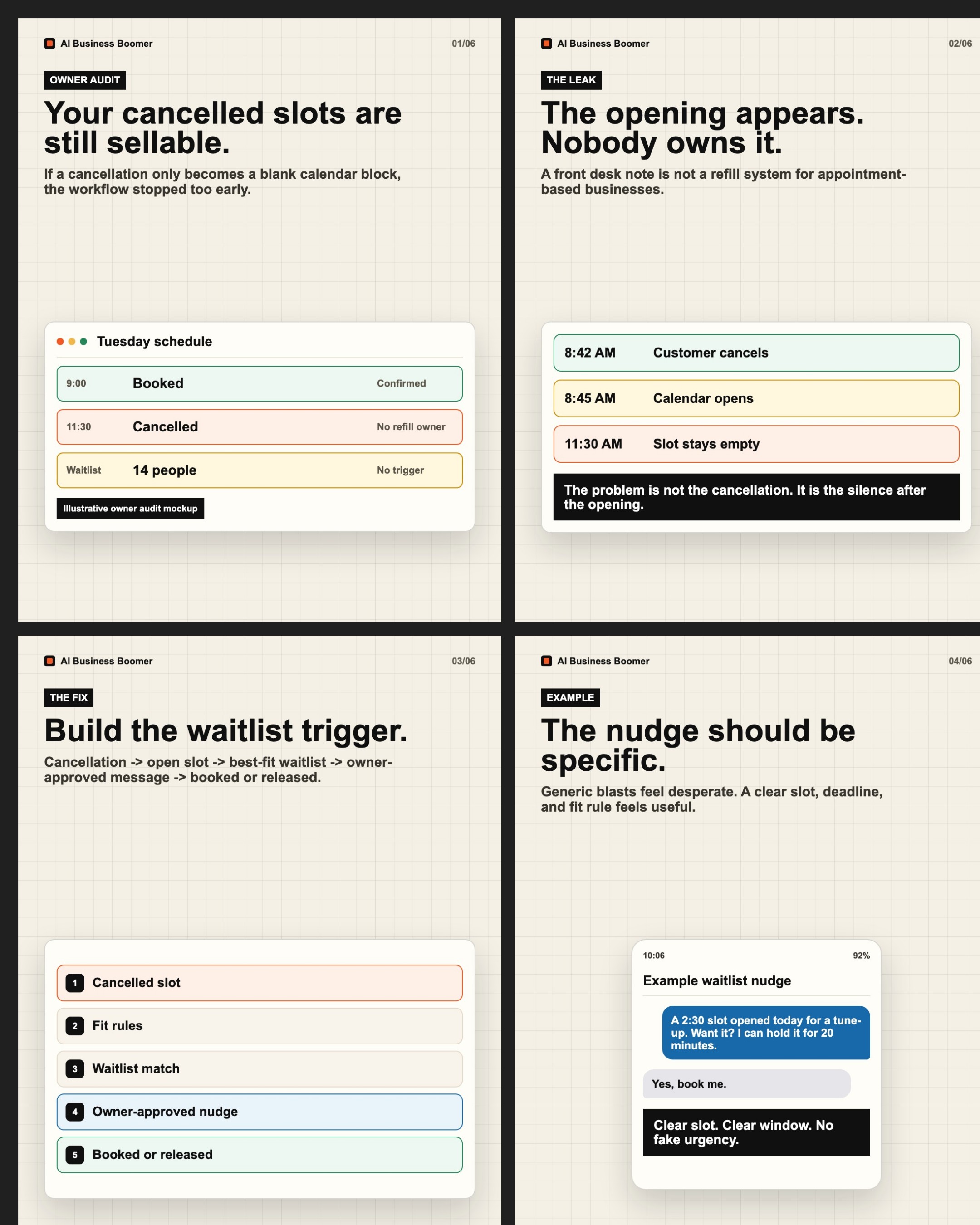
By July 27, the system had proof that the Metricool publishing path could work. A cancelled-slot carousel published through Metricool, and downstream readback confirmed Facebook and Instagram public URLs. A 24-hour readback showed Facebook reach/views at 1/1 and Instagram organic reach/views at 0/0.
That was not a growth win.
It was an operating proof.
We proved that a post could move from idea to carousel to Metricool to public URLs to readback without pretending the numbers were stronger than they were.
By July 29, the next step was larger: a 14-post Facebook and Instagram queue moved through Metricool. The final readback showed 28 of 28 platform rows published, with 14 Facebook URLs and 14 Instagram URLs returning HTTP 200.
That still does not prove content-market fit.
It proves the publishing loop can produce a verified baseline across Facebook and Instagram. That gives us something we can finally measure.
What a post has to prove before it ships
The first repeatable AIBB format is a six-slide carousel or short platform-native post built around one specific local-business leak.
The post cannot begin with "AI can help small businesses."
That sentence applies to everyone, so it lands with nobody.
The brief has to name a moment an owner recognizes:
- an HVAC lead calls after hours
- a dental inquiry turns into a sticky note
- a roofing quote request goes cold while the crew is on a job
- a happy customer never gets asked for a review
- a cancelled appointment slot sits empty because nobody owns the waitlist
Then we ask what we can truthfully show.
If we have a real controlled demo, local artifact, or public URL, we can cite it. If we only have an illustrative workflow, we label it that way. We do not turn a mockup into fake proof.
The claim ledger decides what copy survives.
| Claim type | Allowed wording |
|---|---|
| Verified public publishing | Say what published, where it published, and what the readback proved. |
| Local workflow design | Describe the workflow as a controlled example or internal operating model. |
| Future performance target | Call it a target, not a forecast. |
| Unverified revenue lift | Remove it. |
| Human review | Say review is required only when it actually happens. |
That one table saves the system from a common AI problem: polished overreach.
Why quality control matters more than prompt volume
More prompts do not create better content.
Better evidence and stronger review do.
The content system scores each post before it can enter the approved queue. The practical questions are simple:
- Does the hook stop the right owner?
- Does the post name one real operational leak?
- Is the proof clear on a phone?
- Does the visual look like an operator receipt instead of decoration?
- Does the CTA go somewhere real?
- Are we making a claim we can stand behind?
For the first July 29 queue, the system validated 14 unique posts across Facebook and Instagram rows. The content focused on missed calls, booking intake, speed to lead, review timing, Google trust gaps, and founder workflow teardowns.
That is the lane AI Business Boomer should own: practical AI systems for owner-operated local businesses.
Where Metricool fits
Metricool is the distribution and measurement layer.
It gives us a place to schedule, verify, and read the publishing state. It also gives us a shared calendar and performance source when the account has enough activity to learn from.
The important word is "approved."
Metricool should receive content only after the system has checked the brief, claims, assets, captions, CTA, and platform scope. The scheduler should not become a shortcut around quality.
Right now, Facebook and Instagram are the verified live scope for the queue-first loop. Other channels need separate health checks, format decisions, or approval boundaries before I would describe them as part of the autonomous system.
That restraint is intentional.
A viral post can hide a broken process. A verified loop exposes whether the system can repeat.
The performance loop
Publication starts the learning cycle.
For each post, the system needs 24-hour, 72-hour, and 7-day readbacks. The useful metrics depend on the format and platform, but the core questions stay consistent:
| Decision | What we look for |
|---|---|
| Scale | The post beats the account baseline or creates a qualified business action. |
| Iterate | The topic has promise, but the hook, proof, visual, timing, or CTA likely held it back. |
| Kill | A format fails after enough properly executed attempts that changing one variable at a time no longer makes sense. |
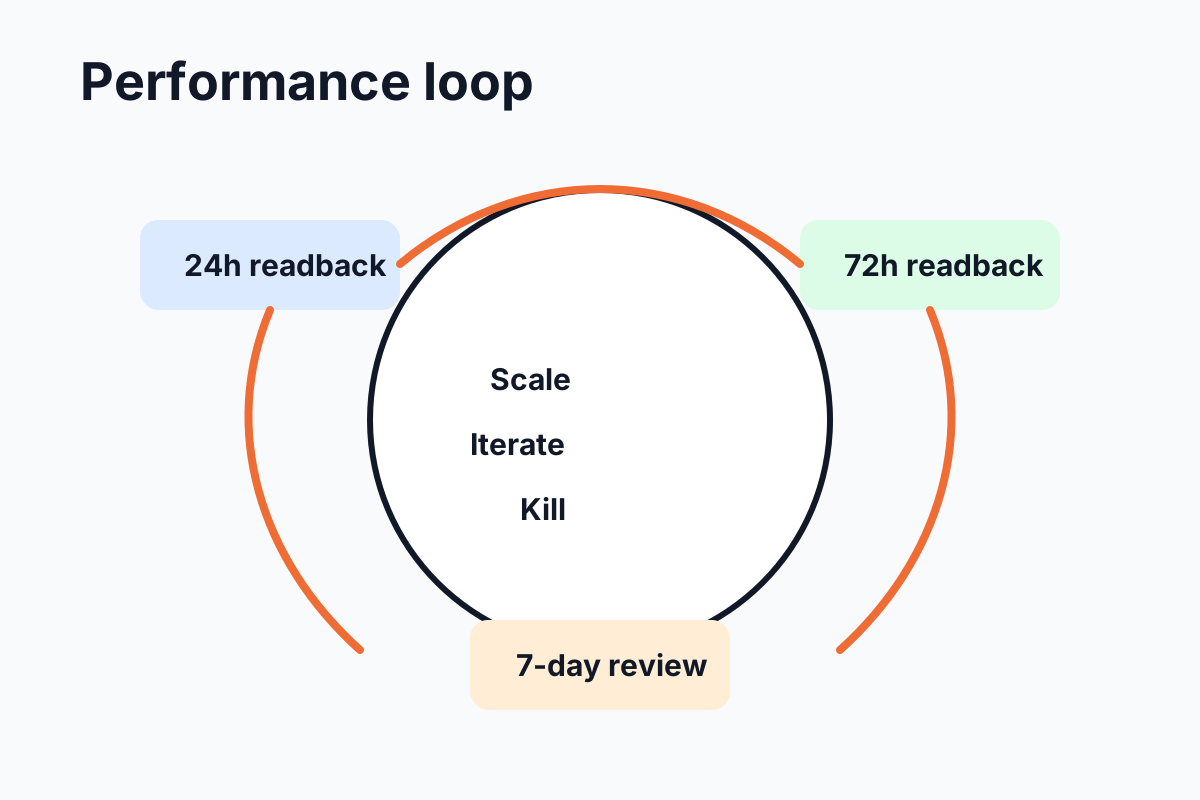
The early data is still thin. We should not pretend that one low-reach readback proves a best time, best hook, or best audience.
The first job is to create a trustworthy baseline.
Once the system has enough real posts and real readbacks, we can compare hook families, verticals, proof types, offers, and CTA paths with less guessing.
What this means for local businesses
Most local businesses do not need "AI content."
They need an operating workflow around the moments where money leaks:
- missed calls
- slow quote follow-up
- unanswered booking questions
- weak review timing
- stale leads
- manual intake
- owner tasks that live in someone's memory
The same lesson applies to marketing.
If the business cannot explain what happened, who checked it, where it published, and what changed afterward, it does not have an automation system. It has activity.
AI Business Boomer exists to turn that activity into practical systems.
The social workflow is our own build-in-public example. We found the messy internal leak, mapped it, built controls around it, and started proving the loop with real publication readbacks instead of confident guesses.
What is still unfinished
The system is not fully autonomous across every channel.
Facebook and Instagram have the strongest proof from the July 29 queue. LinkedIn, TikTok, Pinterest, Google Business Profile, and YouTube still need separate channel rules before I would call them approved autonomous scope.
Performance optimization is also early. We have publication proof and a first baseline, not a mature growth model.
That honesty makes the system stronger.
The finish line is not a dashboard that says everything is green. The finish line is a loop that keeps producing source-backed content, rejects weak work, publishes only inside approved boundaries, reads what happened, and improves the next post without daily founder coordination.
That is the AI social media automation system we are building at AI Business Boomer.
The first win was not reach.
The first win was finally having a system that can learn.
Proposed next step
Want to see where your business is leaking leads, reviews, or follow-up? Book a Free 30-Minute AI Consultation.
AI automation next step
Find the workflow worth fixing first.
Use the Free 30-Minute AI Consultation to map where leads, reviews, content, or follow-ups are slipping and choose the smallest useful next step.
Keep building the system
Recommended next Business Boomer guides
These links are selected by topic and search intent so this guide connects to the most relevant service pages, industry pages, and supporting blog posts.
Service and setup pages
Use these when you are ready to turn the idea into an implementation path.
Industry-specific pages
See how the same workflow changes for specific business types.
Related blog posts
Read the connected guides that support this topic cluster.
Related AI automation guides
Keep going with the connected Business Boomer guides in this automation cluster.
AI automation services for local small business
Planning examples for broader automation. Compare current managed calls and reviews on the Services page; confirm other work in a separate scope.
AI automation for local service businesses
Practical lead, scheduling, review, CRM, invoice, and admin automation for plumbers, HVAC companies, roofers, landscapers, cleaners, contractors, and other local operators.
Lead follow-up automation for small business
Turn form fills, missed calls, quote requests, emails, and voice notes into reply drafts, CRM updates, reminders, and next steps.
Missed call text-back automation
Turn missed calls and voicemails into text-back drafts, lead summaries, callback tasks, and owner-approved next steps.
Find the workflow worth fixing first.
Use the Free 30-Minute AI Consultation to map where leads, reviews, content, or follow-ups are slipping and choose the smallest useful next step.
Book a Free 30-Minute AI Consultation