
How to Forward Unanswered Calls to an AI Receptionist
Keep your business number while routing missed calls to an AI receptionist. Map the conditions, confirm provider rules, and test the return path.

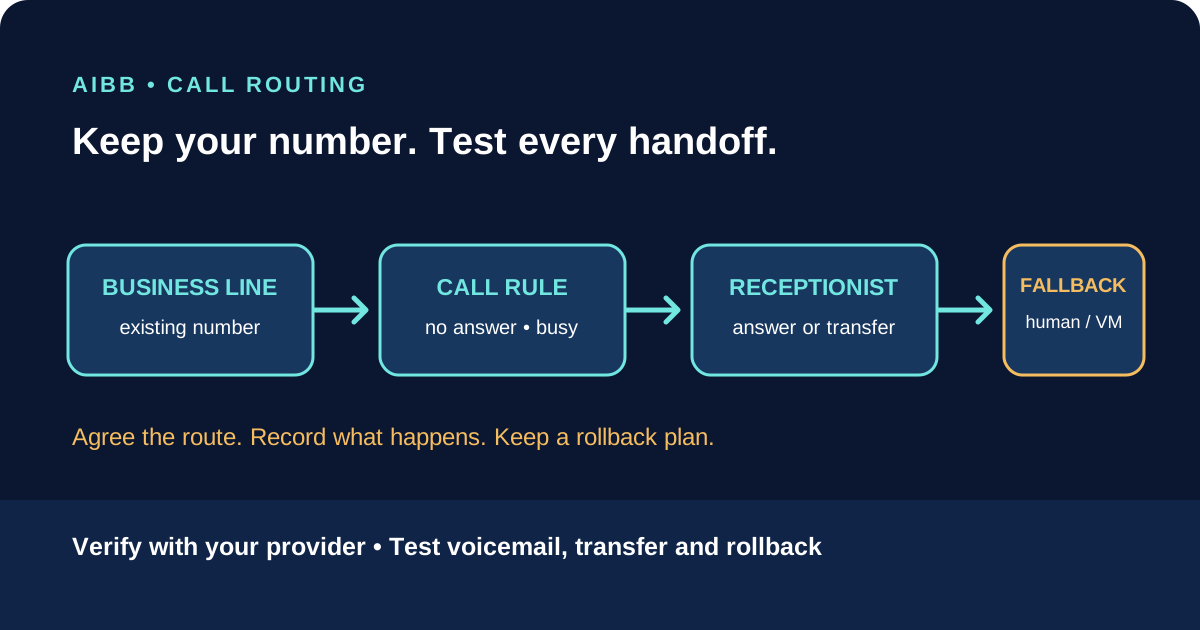
You can keep your business number and send missed calls to an AI receptionist when your phone provider supports the route. First decide which calls should move, then confirm the carrier settings and test what callers hear when the receptionist or your team cannot answer.
Forwarding and number porting do different jobs. Forwarding routes calls placed to your existing number to another destination. Porting transfers the number's service to a new provider. A forwarding trial can help you evaluate call handling without making a port the first step.
Choose which calls should forward
Write down the condition that should send a call to the receptionist. Phone services may distinguish unanswered calls, calls while your line is busy, and calls when the line is unreachable or out of service. Your provider may offer some, all or none of these options. Do not assume one setting covers every case.
| Condition | Question for your provider | What to observe in a test |
|---|---|---|
| No answer | How long does the phone ring before forwarding? | Call from a separate phone and let it ring through. |
| Busy | Does another call forward while the line is in use? | Keep the test line engaged, then call it from a second phone. |
| Unreachable | What happens if the handset or service cannot connect? | Ask the provider for a safe test method; do not disrupt a live line. |
| All calls | Can the line forward every call, and how is it switched off? | Use this only if it matches your intended coverage window. |
Verizon documents separate options for forwarding all calls and forwarding only unanswered calls, along with destination restrictions. Google Voice's conditional forwarding instructions rely on carrier support and carrier-specific setup. T-Mobile lists separate no-reply, busy and unreachable forwarding settings. These examples show why you should get the current instructions for your exact line from its provider; a code or menu for one service may not work on another. (Verizon call forwarding FAQ; Google Voice conditional call forwarding; T-Mobile self-service short codes)
Map the route before changing settings
Record the number receiving calls, the forwarding condition, the destination number supplied by the receptionist provider, your business hours, and the person who owns exceptions. Also record the current voicemail destination and the steps your carrier gives you to turn forwarding off. Keep this worksheet with your call-routing notes:
| Setup item | Your value |
|---|---|
| Business number (last four digits only in shared notes) | |
| Provider and plan to verify | |
| Forward when | No answer / busy / unreachable / all calls |
| Ring duration before no-answer forwarding | |
| Receptionist destination confirmed by provider | |
| Business hours and after-hours behavior | |
| Primary human fallback and owner | |
| Existing voicemail location | |
| Carrier instructions to disable forwarding | |
| Date, tester and test-line used |
Do not put a full phone number in a worksheet that other people can access unless they need it. Keep the provider's confirmation and rollback instructions beside the configuration so the person on call can act without guessing.
Protect voicemail and the return path
Decide whether unanswered calls should reach the receptionist before your carrier voicemail, and ask the provider how that order works on your line. A short ring interval may send callers onward quickly; a long interval may let callers hang up or leave a message first. Confirm caller ID behavior too, especially if staff use it to recognize returning customers.
Map what happens after the receptionist answers. If it transfers a caller to your person, decide what should happen when that person declines, misses the transfer or is already on another call. Test whether the call can return to the receptionist or continue to a voicemail box. If the transfer destination is the same public number that forwards to the receptionist, check whether the call circles back through the same rule. Ask for a direct staff destination or another supported fallback if needed. A transfer-back loop is a risk to test, not an outcome to assume. See our human-handoff guide for choosing who takes over.
Fictional example: Cedar Lane Heating (a made-up business) wants weekday overflow handled while its dispatcher is on another call. Its owner asks the carrier whether busy and no-answer routing are both available, confirms the destination with the receptionist provider, and sets the dispatcher as the human fallback. During a private test, the owner checks caller ID, voicemail order and what happens when the dispatcher declines a transfer. This example illustrates a test plan; it does not describe a real customer or verified carrier setup.
Run a small test before relying on it
Use a test line or an owner-approved route first. Ask someone outside the business to place calls from a separate phone. Keep each outcome in the call-forwarding test checklist; leave the status as Not tested until a person runs it and records what happened.
| Test | Pass condition to define before calling |
|---|---|
| Team answers | Staff can still answer normally before the forwarding condition applies. |
| Unreachable | A provider-approved test reaches the agreed route when the line cannot connect. |
| No answer | The caller reaches the intended receptionist after the agreed ring time. |
| Busy | The call follows the selected busy rule without disrupting the active call. |
| Voicemail | The correct mailbox answers at the intended stage and can accept a message. |
| Transfer back | A declined or unanswered transfer reaches the named fallback without repeating indefinitely. |
| Destination unavailable | The caller gets the tested voicemail or human fallback if the receptionist destination cannot connect. |
| Rollback | The owner can disable forwarding and confirm the original line answers normally. |
If a test fails, turn off the route using the provider's verified instructions, confirm normal calls work, then ask the provider or receptionist service to adjust the setup. Retest the affected cases and normal answered-call behavior, then record the result. Keep the route on a limited test window until the owner accepts the caller experience and knows who handles exceptions.
If you want help mapping the script, forwarding conditions and human fallback, AIBB's AI Voice Receptionist service can evaluate the provider rules and test the fallback before a live call path changes. Compatibility depends on your provider and approved routing rules. A captured request is not a guaranteed booking; confirm calendar connections, appointment rules and failure handling before promising callers an appointment.
If your coverage also depends on opening and closing times, use the receptionist hours test guide alongside this routing checklist.
FAQ
Quick answers about this guide and how to put the idea into practice.
Can I forward missed calls without moving my business number?
Often, but your provider and plan decide which forwarding options work. Forwarding routes calls from your existing number; porting moves the number to another provider. Ask your provider to confirm the route and how to reverse it.
Can I forward only calls I do not answer?
A phone service may support conditional forwarding for no-answer, busy or unreachable calls. Setup varies, so ask your provider which conditions your line supports and test each one.
What should happen if the receptionist cannot take a call?
Choose a named fallback, such as team voicemail or an on-call person. Test unavailable-destination and transfer-back cases, then confirm the caller hears a useful next step.