
Should an AI Receptionist Tell Callers It Is AI?

Author
Sam MonacFounder, Business Boomer | AI Operator & Growth Strategist
Sam Monac is a product and AI operator who builds automation systems, growth workflows, and practical AI tools for owner-operated businesses through Business Boomer and his broader portfolio.

Fact Checked By
S. VishwaSEO Specialist & Blog Writer, Business Boomer
S. Vishwa is an SEO specialist and blog writer focused on clear, useful content for digital marketing, fintech, and small-business automation topics.
Use a short name-role-choice greeting so callers know an AI receptionist answered, what it can do, and how to reach a person.
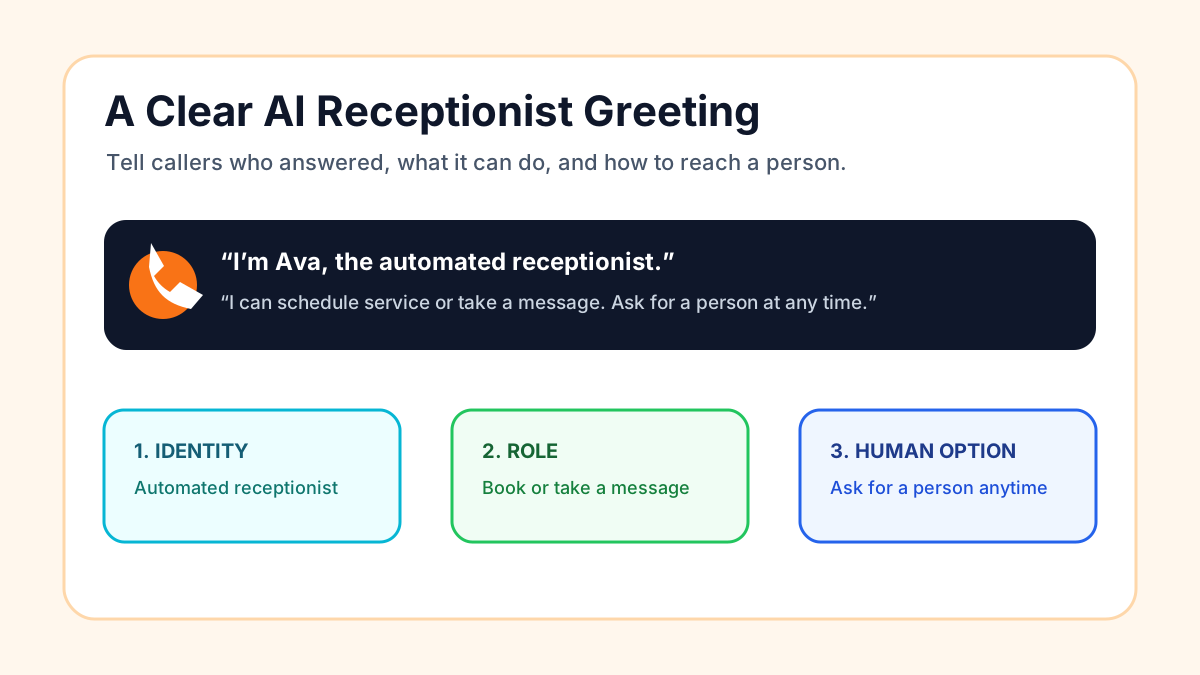
Yes. An AI receptionist should identify itself near the beginning of the call.
The disclosure can be short. Callers do not need a technical explanation, a model name, or a long disclaimer. They need to understand who is answering, what the system can do, and how to reach a person.
A useful opening sounds like this:
“Thanks for calling River Street Plumbing. I’m Ava, the automated receptionist. I can help schedule service or take a message. You can ask for a person at any time.”
That introduction takes only a few seconds. It establishes honest expectations without getting in the way of service.
Use the name, role, and choice framework
A clear AI-receptionist introduction contains three elements.
1. Name the business and the automated assistant
Start by confirming that the caller reached the correct company. Then identify the receptionist as automated or AI-assisted.
Avoid giving the assistant a human name without also explaining that it is automated. A human-sounding voice should not require callers to guess whether they are speaking with a person.
2. Explain its role
Tell callers what the receptionist can handle.
For example:
- Booking or changing appointments
- Collecting basic service information
- Answering approved questions
- Taking a message
- Routing an urgent call
- Creating a callback request
The description should match the system’s tested capabilities. Do not claim that it can resolve billing disputes, provide professional advice, approve exceptions, or guarantee appointment availability unless those actions are genuinely supported.
3. Give the caller a choice
Tell callers how to reach a person.
The option might be:
- “Say ‘person’ at any time.”
- “Press zero for the office.”
- “I can have someone call you back.”
- “Would you prefer to continue by text?”
A human option is especially important when the caller is upset, asks for an exception, disputes a charge, requests professional advice, or repeatedly has trouble being understood.
AIBB’s human-handoff framework explains how to define those transfer and callback rules.
Why disclosure helps the call
Clear identification gives the caller the right mental model for the conversation.
Someone speaking with an automated system may use shorter answers, spell a name, wait for confirmation, or request a person sooner. Those adjustments can reduce confusion.
Disclosure also makes mistakes easier to recover from. If the receptionist misses an address or mishears a name, the caller understands why the system is confirming the information.
The AI-receptionist recovery guide provides a three-step process for rephrasing, confirming details, and offering another channel instead of trapping the caller in repeated questions.
Transparency is more than an opening sentence
The greeting is only the first layer. The workflow should also be clear when the system:
- Records or transcribes the call
- Collects contact or appointment information
- Sends information to another system
- Uses information to create a quote or service request
- Transfers the caller
- Creates a callback task
Use the notice or consent process appropriate for the business, industry, and jurisdictions involved. Recording, privacy, and professional-service requirements vary, so businesses should obtain legal advice for their particular operation.
The voluntary NIST AI Risk Management Framework treats accountability and transparency as important characteristics of trustworthy AI. The FTC has also emphasized that existing rules against deceptive practices still apply when AI is involved.
For outbound calls, the distinction is particularly important. The FCC’s AI-voice ruling addresses AI-generated voices used to initiate outbound calls and explains the applicable consent and identification requirements. That ruling should not be casually generalized into a single legal rule for every inbound receptionist call.
What an AI receptionist should not say
Avoid introductions that create false expectations:
- “I’m exactly like a human receptionist.”
- “I can handle anything you need.”
- “Your information is completely secure.”
- “I guarantee someone will call you within five minutes.”
- “I’m Sarah,” with no indication that Sarah is automated
Promises should come from documented business rules, not improvisation by the system.
The receptionist should also avoid burying its identity in a long hold message. Tell the caller early, in plain language.
Test the disclosure before launch
Run five checks using people who did not help build the workflow:
- Can the caller tell within ten seconds that the receptionist is automated?
- Does the caller understand what it can handle?
- Can the caller reach a person or request a callback without struggling?
- Does the workflow provide the required recording or data notice?
- Does the transcript show that the disclosure and human option were delivered consistently?
After launch, track early hang-ups, human requests, repeated questions, completed bookings, and complaints. Review real failure patterns rather than relying only on successful test calls.
Use AIBB’s post-launch monitoring guide to assign an owner and review schedule.
The practical answer
An AI receptionist should tell callers that it is automated, explain what it can do, and offer a clear route to a person.
The best disclosure is short enough to keep the call moving and specific enough to prevent confusion. Honest expectations make the automation easier for callers to use and easier for the business to manage.
Business Boomer can help design an AI-receptionist greeting, handoff rules, recovery prompts, testing plan, and monitoring workflow.
Keep building the system
Recommended next Business Boomer guides
These links are selected by topic and search intent so this guide connects to the most relevant service pages, industry pages, and supporting blog posts.
Service and setup pages
Use these when you are ready to turn the idea into an implementation path.
Industry-specific pages
See how the same workflow changes for specific business types.
Related blog posts
Read the connected guides that support this topic cluster.
Related AI automation guides
Keep going with the connected Business Boomer guides in this automation cluster.
AI automation services for local small business
The main Business Boomer service page for lead response, missed-call follow-up, invoice reminders, reviews, CRM updates, scheduling, and OpenClaw setup.
AI automation for local service businesses
Practical lead, scheduling, review, CRM, invoice, and admin automation for plumbers, HVAC companies, roofers, landscapers, cleaners, contractors, and other local operators.
AI assistant for local business
Owner-controlled AI assistants that help local businesses handle missed leads, scheduling handoffs, FAQs, reviews, CRM updates, and follow-up.
AI website for service businesses
Clearer service pages, lead paths, FAQs, reviews, and AI-assisted follow-up for service businesses.
Frequently Asked Questions
FAQ
Quick answers about this guide and how to put the idea into practice.
Should an AI receptionist tell callers it is AI?
Yes. Identify the receptionist as automated or AI-assisted near the beginning of the call, explain what it can do, and give the caller a clear way to reach a person.
Does an AI receptionist need to repeat the disclosure during every turn?
Usually, a clear opening is enough for routine inbound calls. Repeat or expand the notice before recording, collecting sensitive information, changing channels, or taking another action that requires notice or consent. Requirements vary by jurisdiction and industry.
What should an AI receptionist say when it answers?
A useful greeting names the business, identifies the automated receptionist, explains its approved role, and offers a human option. For example: Thanks for calling River Street Plumbing. I am Ava, the automated receptionist. I can help schedule service or take a message. You can ask for a person at any time.
Find the workflow worth fixing first.
Use the Free 30-Minute AI Consultation to map where leads, invoices, notes, or follow-ups are slipping and choose the smallest useful system.
Book a Free 30-Minute AI Consultation