
What Happened When We Turned One X Space Into a Content System
One recorded Space exposed the real opportunity: Wave Wars already creates the raw material. The missing piece is a review-based system that turns each useful conversation into owned content.

The useful part of the Space did not sound like a polished strategy session.
It sounded like someone trying to find the red end button, asking how to download the replay, and realizing that a live conversation was about to disappear into X unless we grabbed it.
That was the lesson.
Wave Wars already has the hard part: people talking live, often, about music, builders, artists, community, and what the project is becoming. The missing piece is not more content ideas. The missing piece is a system that catches the best parts before they vanish into the replay layer.
By the end of the conversation, the plan was obvious: turn Spaces into owned media.
The Real Problem Is Content Leakage
Wave Wars runs frequent Spaces. In the call, the rhythm came up as roughly two Spaces a day during the week, plus a Sunday Space. Even if that number changes, the point holds: the community creates a lot of live audio.
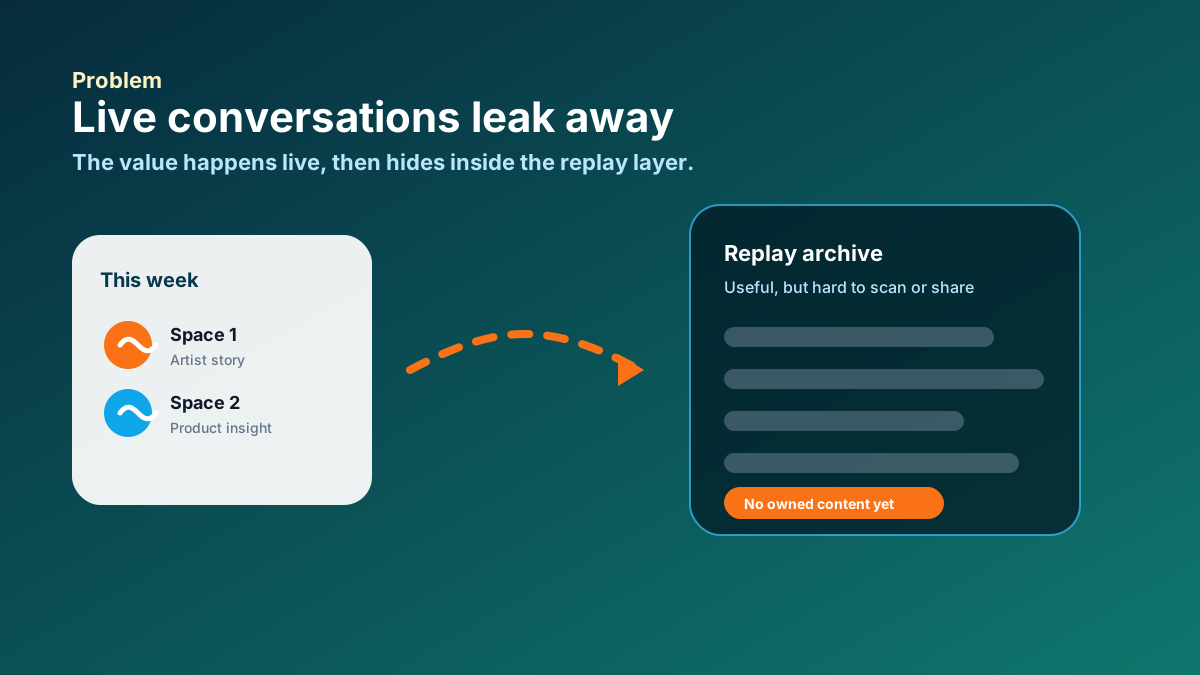
The problem is what happens after the Space ends.
The replay sits on X. The best explanation lives inside 29 minutes of audio. The strongest line is hard to find. The founder context does not become a blog post. The artist mention does not become an evergreen page. The social clips do not create themselves.
For a local business owner, this is the same pattern in a different outfit.
A contractor explains a great answer on a sales call, then never turns it into an FAQ. A salon owner teaches a client how to choose a service, then never turns that explanation into website copy. A real estate team answers the same buyer question every week, then lets the answer stay trapped in email.
The value already happened. It just never got promoted.
The Moment the Idea Clicked
The early part of the call was platform mechanics. How do you comment in a Space? How do you pin a post? Can you screen share? Can you download the audio?
Then the conversation shifted.
The idea was not "write a blog about Wave Wars" in the abstract. It became more specific:
- Wave Wars hosts regular conversations.
- Those conversations already contain useful explanations and community moments.
- AI can transcribe and summarize them.
- A human editor can choose the real angle.
- The best version can publish on
wavewars.info/blog. - AI Business Boomer can publish the case study of the system.
That is a much stronger premise than a generic post about AI content automation.
It starts with a real operating problem. It gives Wave Wars a practical media loop. It gives AI Business Boomer a public example of the kind of system it can build for other businesses.
Start With Review Before Autopilot
The wrong version of this system would publish every transcript automatically.
That would create a pile of dull posts fast.
The better version uses AI for speed and humans for judgment. The first build should produce a draft package, not push straight to the website.
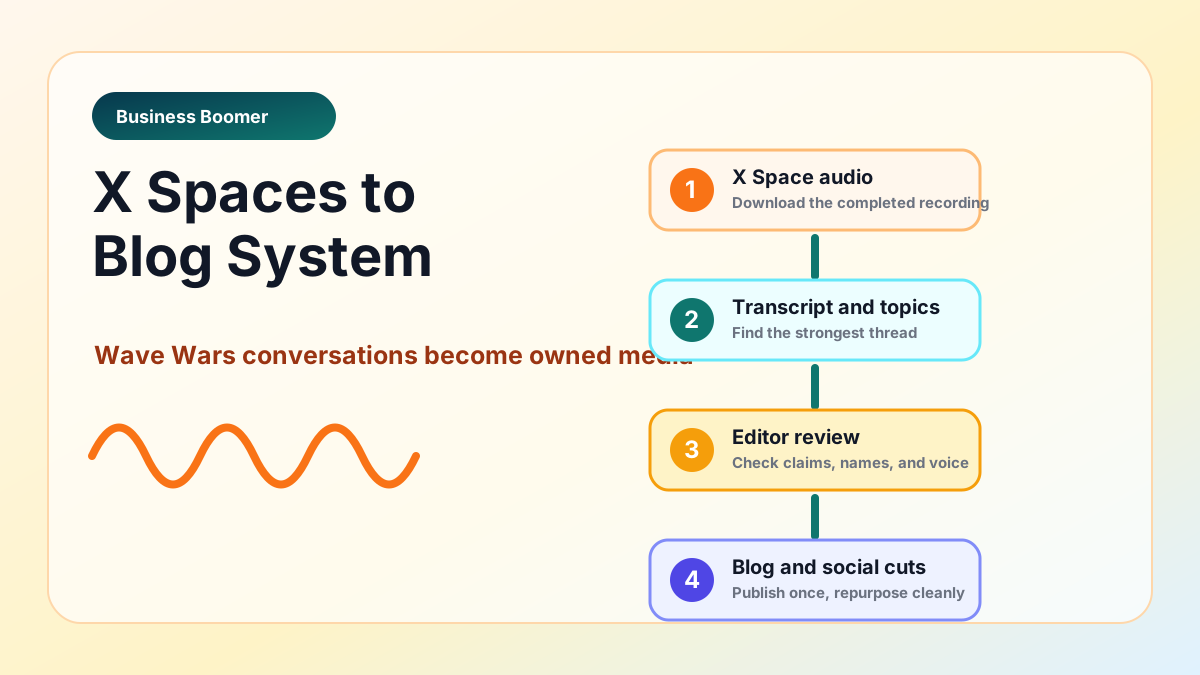
The first useful version needs six steps:
| Step | Output | Who checks it |
|---|---|---|
| Download the Space | Audio file or replay capture | Operator |
| Transcribe it | Clean transcript | AI plus human spot check |
| Find the best angle | Topic summary and recommendation | Editor |
| Draft the article | Blog post with title and links | Editor |
| Make social assets | Captions, clips, quote cards | Human reviewer |
| Publish | Website post and share links | Approved owner or team member |
This matters because the Space is not the final product. The Space is the source.
AI should help move the source through the system. It should not decide what the community should say publicly without review.
One Space Can Become a Week of Content.
The strongest version of the workflow does not stop at a blog post.
One good 30-minute Space can become a small content package. Not a fake content package. Not 20 generic captions. A useful set of assets that point back to the same real conversation.
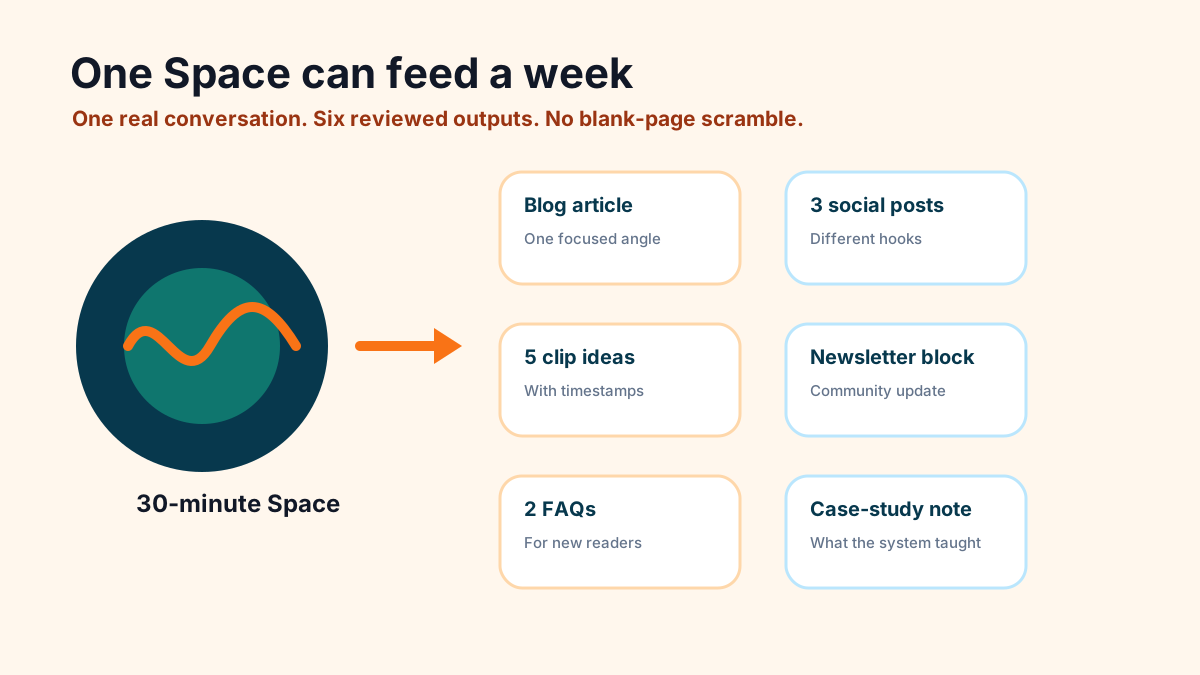
For example, one strong Wave Wars Space could produce:
- one article for the Wave Wars blog;
- three short social posts pulling out different angles;
- five clip candidates with timestamps;
- one newsletter block for the next community update;
- two FAQ entries for new people discovering the project;
- one AI Business Boomer note about what the workflow taught us.
That is the business case.
The team can stop staring at a blank page every morning. It can harvest what already happened, choose the best material, and publish it in the right form.
The Blog Should Not Try to Replace the Space.
The article should do a different job than the recording.
The Space gives people presence, voice, energy, and community. The blog gives the best parts an address. It lets someone search, skim, link, quote, and understand the point without listening to the entire replay.
That difference matters.
If the blog tries to summarize everything, it becomes a transcript with nicer spacing. If it chooses one useful angle, it becomes an asset.
A good post from a Space should answer one question:
What should someone understand after reading this that they would probably miss if they skipped the live audio?
For Wave Wars, that could be an artist story, a payout explanation, a product update, a community recap, or a builder insight. For a local business, it might be a buyer objection, a service explanation, a seasonal reminder, or a customer education moment.
The Minimum Useful System
The first version should be small enough to run every day.
If it takes a full afternoon to produce one post, the system will die after the novelty wears off. The pilot should aim for one good article package from one Space, then one week of repeatable production.
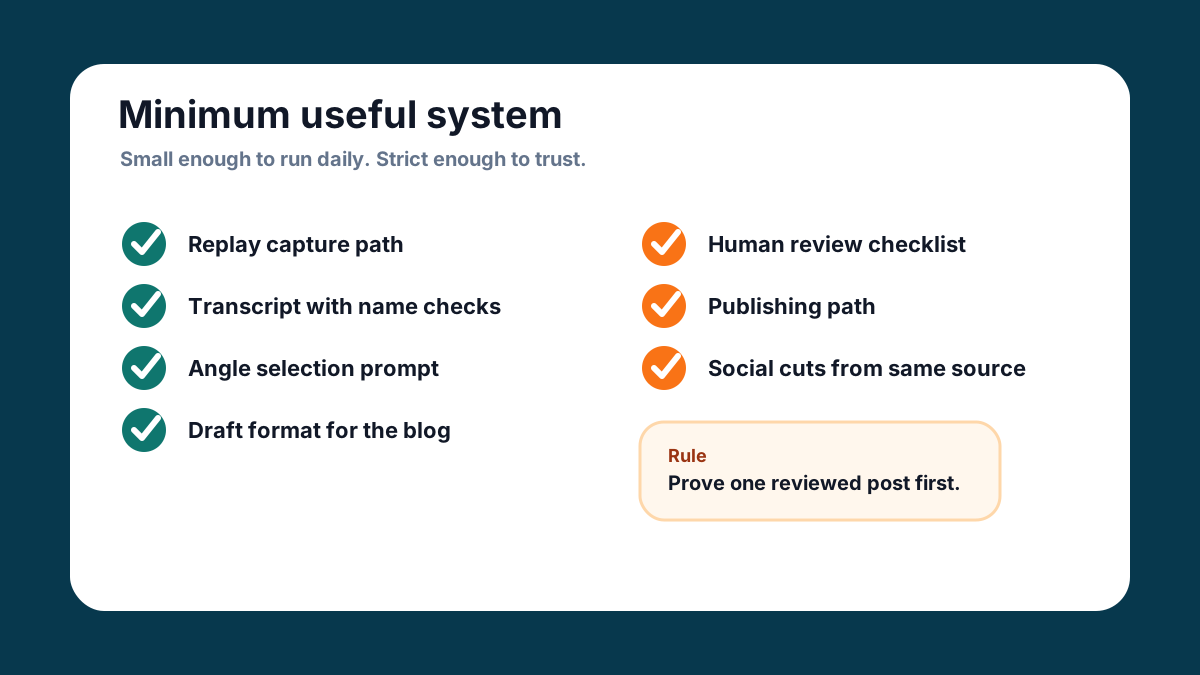
The minimum system needs:
- a reliable way to download or capture the replay;
- a transcription step that handles names and project terms;
- a prompt that asks for angles, not just a summary;
- a draft format for the Wave Wars blog;
- a human review checklist;
- a publishing path;
- a way to pull social cuts from the same source.
That is enough.
The mistake would be building a full autonomous newsroom before one reviewed post proves the workflow works.
Where It Should Publish
The call had one important clarification: the content does not all belong in the same place.
Wave Wars should publish the community-facing posts. AI Business Boomer should publish the case study.
That keeps the audience clean.
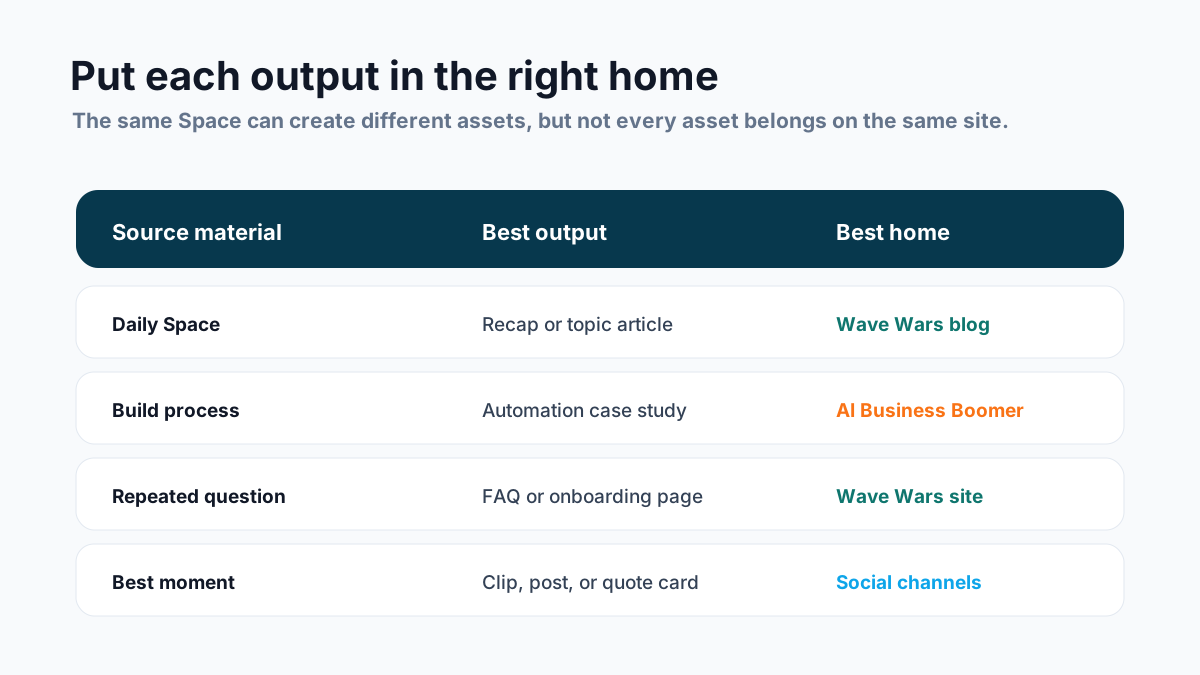
The split looks like this:
| Source material | Best output | Best home |
|---|---|---|
| Daily Wave Wars Space | Community recap or topic article | Wave Wars blog |
| Strong founder explanation | Product education post | Wave Wars blog |
| Automation build process | Case study | AI Business Boomer |
| Repeated listener question | FAQ or onboarding page | Wave Wars site |
| Best short moment | Clip or social post | X, Farcaster, LinkedIn, TikTok |
That same logic works for local businesses.
A plumber should not turn every phone call into a public article. But repeated customer questions can become FAQs. Estimate objections can become service-page copy. Strong explanations can become short videos or blog posts.
The system should respect the source.
What This Means for a Local Business
Most small businesses already produce useful content. They just do it in private.
They explain pricing on calls. They answer scheduling questions by text. They walk customers through options in the shop. They describe the same process in estimates. They train staff with voice notes.
That is raw material.
The AIBB version of this workflow is simple: take the conversation the business already has, extract the useful teaching moment, and turn it into something customers can find before they call.
For a service business, that could mean:
- a missed-call FAQ from the ten questions callers ask most;
- a quote follow-up email built from real sales-call objections;
- a review request message based on what happy customers actually say;
- a service page section from the owner’s best explanation;
- a social post from one strong customer education moment.
The business should still sound like the owner. The system should stop wasting the human explanations that already work.
The Pilot I Would Run First
I would not start with eleven Spaces.
I would start with one.
Pick a recent Wave Wars Space with a clear topic. Download it. Transcribe it. Ask AI for five possible angles. Choose one. Draft a post. Review it for names, claims, voice, and links. Publish it. Pull three social cuts from the same material.
Then do it for one week.
At the end of the week, review four things:
- Which Space produced the best article?
- Which transcript errors kept happening?
- Which social cut got shared?
- Which step slowed the team down?
That is enough to design version two.
The Takeaway
Wave Wars already creates the source material.
The useful move is to build the bridge from live conversation to owned media.
Download the Space. Transcribe it. Choose the angle. Draft the post. Review the claims. Publish the useful version. Cut the best moments for social. Repeat only after the first version proves it deserves repetition.
For any owner reading this, the same question applies:
What useful thing did you already explain this week that should not disappear?
Related Reading
- AI automation services for local small business
- How I use ChatGPT and Codex to coordinate projects
- OpenClaw operator setup sprint
AI automation next step
Find the workflow worth fixing first.
Use the Free 30-Minute AI Consultation to map where leads, reviews, content, or follow-ups are slipping and choose the smallest useful next step.
FAQ
Quick answers about this guide and how to put the idea into practice.
Can X Spaces become blog posts?
Yes. A recorded Space can be downloaded, transcribed, summarized, edited, and turned into a blog post with human review before publishing.
Should every Space become its own article?
Usually no. For a frequent show, one strong daily recap or one focused article from the best segment is cleaner than publishing thin posts from every recording.
What should stay human-reviewed?
The headline, claims, founder quotes, names, publishing decision, and final social captions should stay human-reviewed until the workflow proves reliable.
Why does this matter for local businesses?
Many owners already create useful spoken content in calls, meetings, webinars, and customer conversations. A simple AI workflow can turn those moments into pages, FAQs, social posts, and follow-up assets.