
AI Consulting for Small Business: What to Bring and Ask For
Prepare for an AI consultation with a clear workflow, service scope, acceptance test and measurable outcome. Compare calls and review support.

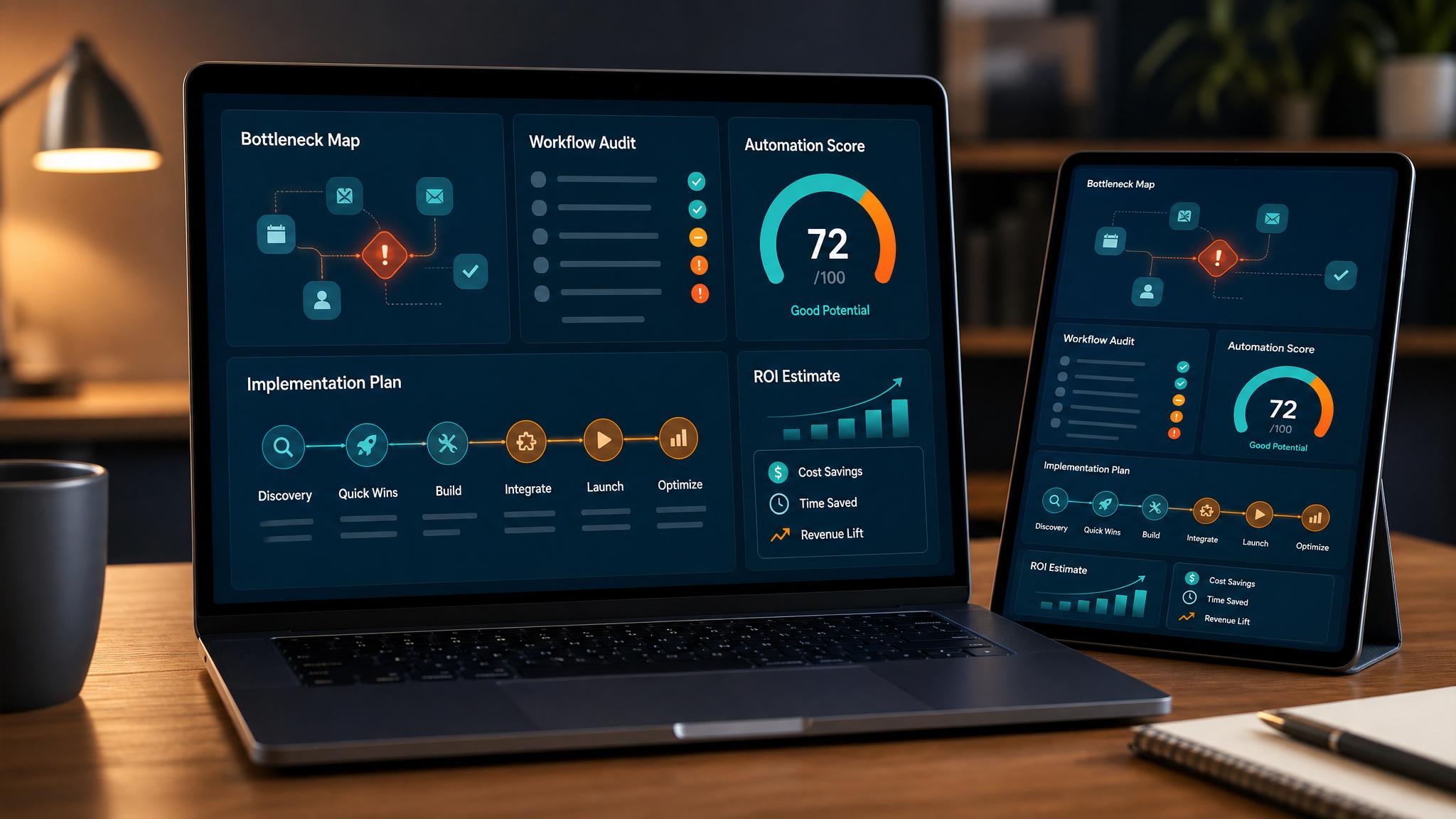
A useful AI consultation starts with a specific part of your customer process. Describe the missed call, repeated question or unfinished follow-up. Then ask which steps need a person and which could follow an agreed rule.
Business Boomer currently focuses on AI Voice Receptionist and Google Reputation Management. A consultation helps assess fit with those services. Billing systems, custom integrations and broad software changes need their own confirmed scope.
Bring these inputs; leave with a decision
| Bring | Leave with |
|---|---|
| One recent call or review example with names and private details removed | A fit decision: AI Voice Receptionist, Google Reputation Management, or not a fit yet |
| Current phone/review process, business hours or eligibility rules | A one-page workflow with trigger, owner, human approval, and exception path |
| Approved answers or neutral review wording and current tools | A written boundary between included service and separately scoped work |
| One routine case and one awkward case to test | Acceptance conditions, evidence to inspect, and the person who can approve launch |
A sample scope outline: “For [call answering / review process], configure [agreed steps]; the business supplies [approved facts and access]; a named person approves [calls/replies or exceptions]; test [routine and exception cases]; report [handoffs and unresolved tasks]. Booking, CRM, SMS, billing, or custom integration is excluded unless listed in writing.”
Bring a simple record of the problem
Prepare a recent example with personal details removed. Write down where the request arrived, who saw it, what happened next and where it stopped. Include the tools you use and the person who will own the process after setup.
For missed calls, bring your opening hours, service area, approved answers and callback process. For reviews, bring your current request wording, who qualifies for a request and who approves replies. You do not need to give a provider account access to begin this discussion.
Ask for a workflow you can follow
A proposed workflow should identify each handoff:
| Part | Example question to resolve |
|---|---|
| Trigger | Does this start with a phone call or completed customer work? |
| Information | What is the minimum information the team needs? |
| Response | Which wording and answers have you approved? |
| Exception | Who receives a request outside the agreed scope? |
| Evidence | Where can you see that the handoff reached its destination? |
This is a planning example, not a record of a client result. Your process and tools determine the actual setup.
Separate advice, setup and ongoing service
Ask what you receive after the meeting. A written scope should distinguish recommendations from configuration, testing, launch and ongoing support. Name the person responsible for each stage and agree on how you will pause the process if something fails.
For a receptionist, ask to inspect a sample call and the summary a person receives. For review management, inspect the request, review link and draft reply. Confirm any appointment-booking or CRM integration in writing; do not assume that a call summary proves those downstream steps work.
Agree on a small acceptance test
Use a routine inquiry and an exception. Record what you expected and what you observed. Include a test for an unavailable destination or a request that the approved script does not cover. Approve the final wording and handoff rules before real customer use.
After launch, count useful outcomes: requests that reached the right person, callbacks completed and inquiries that became qualified conversations. Keep test records separate. Compare a consistent period with your starting position and allow for other changes in the business.
Evaluate a return using your own records
No consultation can establish your future revenue from a generic percentage or hourly-savings claim. Estimate the current workload, include the service cost and the time your team spends reviewing exceptions, then compare the estimate with observed results.
The SBA's AI guide for small businesses is a useful starting point for considering applications and risks. Your own workflow test provides the evidence for a specific setup.
Choose the next step
Read the provider comparison guide to compare provider types and proposals, then use the pre-purchase acceptance checklist to review the written scope.
If missed calls or review follow-up are the problem, bring one recent example, your current process, and the person who owns the next step to a conversation about AIBB’s current services. You can book a free call about calls or reviews. Billing, CRM migration, SMS automation, booking integrations, and other custom work need separate scope confirmation.
FAQ
Quick answers about this guide and how to put the idea into practice.
What should I bring to an AI consultation?
Bring one recent workflow example with personal details removed, your current tools and the name of the person who owns the next action.
Does a consultation include implementation?
Confirm that in writing. Advice, configuration, testing, launch and ongoing support are distinct parts of a proposal.