
Best AI Automation Partner for Small Business: How to Choose
The best AI automation partner for a small business is the provider that can turn one real workflow into a tested, documented system your team can run.
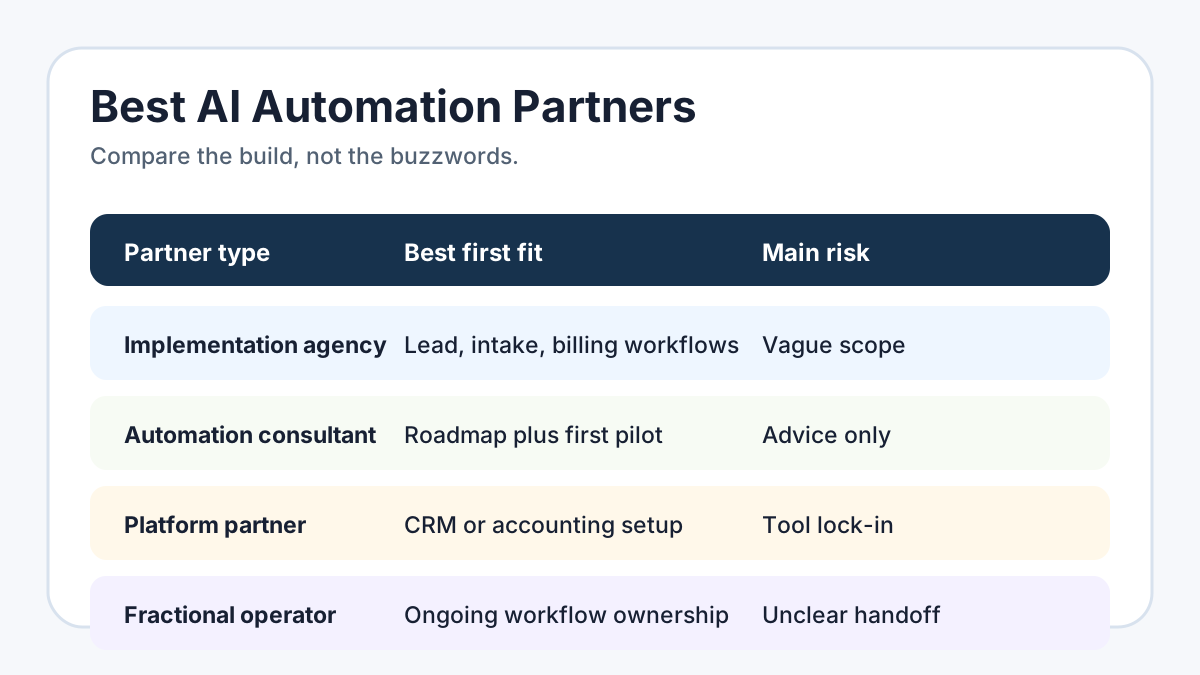
The best AI automation partner for a small business can choose one real workflow, connect the tools your team already uses, keep human review where it belongs, test the system with realistic examples, and hand it off in a way your business can run.
For a buyer considering Business Boomer, start by naming which of its two current services fits the problem. Choose AI Voice Receptionist when callers need an answer, routing, or a reliable handoff. Choose Google Reputation Management when the team needs a consistent, neutral review-request process and owner-reviewed replies. Other workflows need separately confirmed scope; this guide does not imply they are currently offered.
| Your current problem | First path to compare | What to verify |
|---|---|---|
| Calls go unanswered or callers cannot reach the right person | AI Voice Receptionist | Approved answers, transfer/fallback rules, call summary, and who handles exceptions |
| Review requests and replies are inconsistent | Google Reputation Management | Neutral eligibility for all eligible customers, owner approval, monitoring, and escalation |
| Billing, CRM migration, custom integration, or another workflow | Separate written scope | Confirm availability, owner, deliverables, cost, and acceptance test before treating it as an offer |
Comparing proposals? Download the automation-partner scorecard. Use the same questions for each provider and attach evidence to each answer. A polished demo is not proof that a real inquiry reached the right person.
If your immediate need is answering missed calls or managing Google reviews, compare Business Boomer’s two focused services. Use the scorecard to evaluate our scope as well.
Choose the kind of help you need
An implementation agency builds the system, a consultant may deliver advice, and an ongoing operator maintains it. Ask what is included in the written scope before comparing fees. This guide compares those service types rather than claiming to rank named providers we have tested.
Editorial note: Business Boomer currently lists AI Voice Receptionist and Google Reputation Management. The worked comparison below is fictional and illustrates questions to ask; it is not a quote, a tested vendor ranking, or a report of client results.
A worked, illustrative proposal comparison
In this fictional example, a local service business compares two proposals for its unanswered-call problem. Neither proposal is an actual provider offer. The comparison shows how to make scope and proof visible before choosing.
| Question | Proposal A: “AI package” | Proposal B: defined call-handling pilot |
|---|---|---|
| First workflow | “Automate customer operations” | Answer approved FAQs, identify service and town, then route or create a callback handoff |
| Human ownership | Not stated | Owner names a person for transfers, exceptions, and callbacks |
| Included proof | Product demo | Controlled sample calls for routine, unclear, urgent, and transfer-needed cases |
| Limits | “Works with your tools” | Booking, CRM connection, after-hours coverage, and usage charges are listed as confirmed or excluded |
| Acceptance decision | No observable pass condition | Launch only after expected and observed outcomes match and the business approves |
Proposal B is clearer because the buyer can test it. It is not automatically the better or cheaper choice; actual written terms and performance decide that. Apply the same exercise to review management by comparing eligibility rules, neutral request wording, approval steps, and escalation.
The main partner types
Different AI automation partners solve different problems. A small business should know which type it is buying before comparing proposals.
| Partner type | Best fit | Be careful if |
|---|---|---|
| AI automation agency | You need someone to build and connect a workflow. | The scope stays vague or demo-driven. |
| AI automation consultant | You need a roadmap, tool choices, and a first pilot plan. | The deliverable is only advice. |
| Platform implementation partner | You are already committed to a CRM, accounting tool, or operations platform. | The project forces a tool change before fixing the workflow. |
| Fractional AI operator | You need recurring ownership of workflows, prompts, reports, and improvements. | The role has no clear handoff or success measure. |
| Internal power user plus outside help | You have a capable team member who can own the system after launch. | The outside partner does not document how the setup works. |
If you are comparing providers and proposals, use the pre-purchase acceptance checklist after this guide. It turns the chosen scope into observable launch conditions.
Start with one business workflow
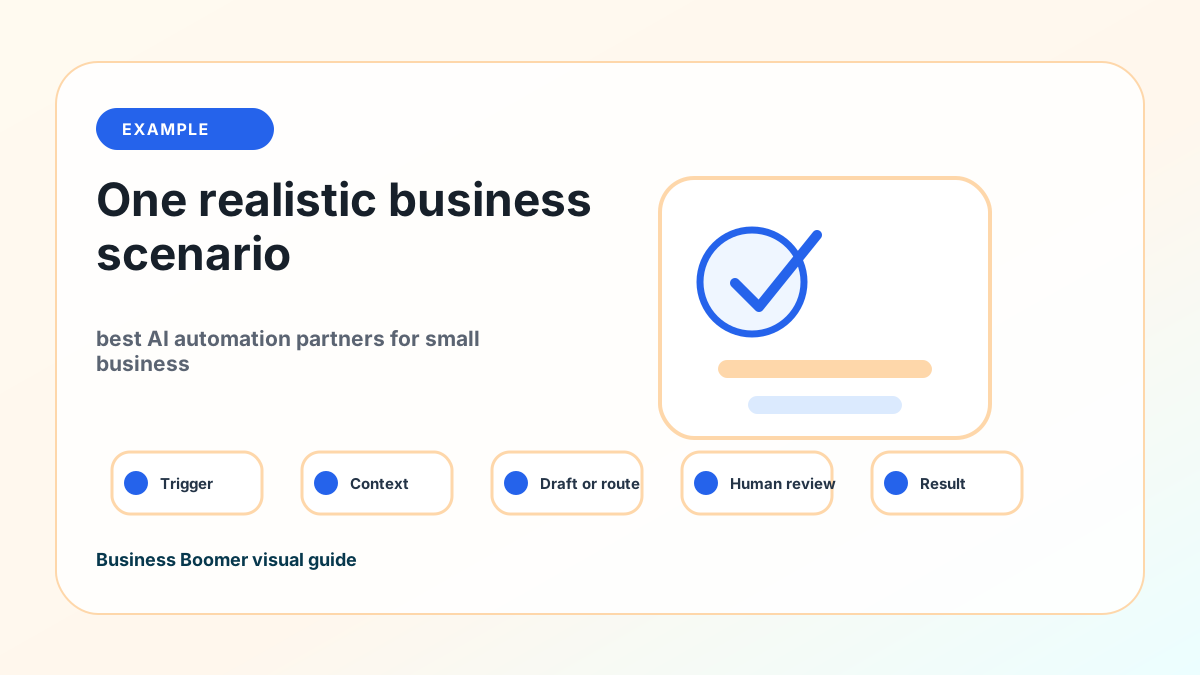
A strong partner should help you name the first workflow before discussing tools. That workflow needs a trigger, a source of truth, an AI-assisted step, a human review point, and a measurable handoff.
For a service-business buyer evaluating current AIBB offers, keep the first workflow to call answering and handoff or review requests and owner-approved replies. If your need is estimate follow-up, billing, tenant routing, or another custom workflow, evaluate it separately and confirm scope in writing.
If the partner cannot map that sequence in plain English, compare the proposal with AI workflow automation for small business. A clear workflow is easier to test, easier to train, and easier to fix.
Compare the build, not the category label
Two providers can both call themselves AI automation partners and deliver very different things. One may configure Zapier or Make. Another may connect a CRM, email, forms, calendar, and accounting system. Another may only write prompts and strategy documents.
The useful question is: what will exist after the project? You should expect a workflow map, tool configuration notes, tested examples, message templates, prompt instructions where relevant, a short SOP, and a clear support owner.
For a broader view of provider roles and deliverables, use this article to compare proposals, then use the pre-purchase acceptance checklist to check the final written scope.
What a strong first project looks like
The first project should be narrow enough to test with real records. A practical lead workflow could start when a form arrives, summarize the request, create or update the CRM record, draft a reply, alert the owner for urgent work, and create a follow-up task if no appointment is booked.
That kind of scope is specific. It names the trigger, record, AI task, approval point, follow-up rule, and handoff. It also leaves the owner in control of pricing, promises, unusual customer issues, and sensitive decisions.
For lead-heavy businesses, compare the proposed build with how to build an AI automation workflow for lead follow-up. If the partner cannot name the source, response rule, review point, and measurement plan, the scope is not ready. If you want that workflow installed instead of scoped, use the lead follow-up automation setup.
Check tool compatibility
Most small businesses do not need a brand-new stack on day one. They need a partner who can work with the tools already running the business: Google Workspace, Microsoft 365, QuickBooks, Stripe, Jobber, Housecall Pro, HubSpot, GoHighLevel, Airtable, Notion, Calendly, website forms, spreadsheets, and email.
The partner should explain where the record lives and what system is allowed to trigger the next action. If the answer is always "move everything into our platform," ask why. Sometimes a platform change is valid, but it should not be the default answer for a first automation project.
If billing or payment follow-up is the clearest first bottleneck, compare the partner's plan with invoice automation setup. A narrow money workflow is often easier to judge than a broad operations promise.
Ask how data and review will work
AI automation partners may need access to emails, calendars, customer records, invoices, form responses, call notes, or CRM data. That access should be limited, documented, and removable.
Ask which business-owned accounts will be used, what credentials are needed, what data goes to AI services, what data is excluded, who approves sensitive outputs, and how the business can remove access after the project. For regulated or trust-sensitive work, ask whether the partner understands the boundaries before anything goes live.
For the first project, identify the decisions that affect money, customer promises or sensitive information. Write down which person approves each decision and what happens if that person is unavailable.
Use a simple partner scorecard
Do not compare partners only by hourly rate or package name. Score the things that will make the workflow work after launch.
| Criterion | What to look for | Score |
|---|---|---|
| Workflow fit | They name one bottleneck close to revenue, cash flow, or owner time. | 1-5 |
| Implementation depth | They build, test, document, and train instead of only advising. | 1-5 |
| Tool compatibility | They can work with your current systems unless there is a clear reason not to. | 1-5 |
| Data and review | They explain access, storage, permissions, human approvals, and exceptions. | 1-5 |
| Launch support | They name who fixes issues after real use begins. | 1-5 |
Agree on a pilot duration, deliverables and an acceptance test that fit the workflow before committing to a longer engagement. If you need a broader buying checklist, use how to choose an AI automation company as a second pass.
Compare the full cost of two proposals
Ask each provider for the same cost breakdown. A lower setup fee may leave you paying for separate software, usage, maintenance or changes to the original scope.
| Cost line | Ask the provider to write down |
|---|---|
| Discovery and build | The fixed scope, deliverables, payment milestones and what would trigger a change request. |
| Software and usage | Which subscriptions you own, usage assumptions, volume limits and who pays any overages. |
| Support | Coverage hours, how to report a failed run, response expectations and what repairs are included. |
| Changes | The price or approval process for adding a new form, location, workflow or integration. |
| Exit | How you receive your data, prompts, configuration, project files and documentation if you leave. |
Use this comparison: first 90-day cost = setup + three months of recurring fees + estimated usage + separately priced changes. This is a planning formula, not a market price estimate. Keep monthly and annual billing commitments visible.
Download the automation partner proposal scorecard (CSV). Score each criterion from 1 to 5: 1 means unsupported or missing, 3 means documented but not demonstrated, and 5 means demonstrated with the evidence you requested. Leave a criterion unscored until you have evidence. A total helps organize a discussion; it does not override a missing acceptance test or unclear data ownership.
A pilot acceptance test you can put in the scope
For a hypothetical estimate-request workflow, ask the partner to demonstrate these cases in a test environment using fabricated records. Choose the expected outcome together before implementation.
| Test input | Expected result to agree on | Evidence to request |
|---|---|---|
| Complete estimate form | One customer record and one assigned follow-up task | Record IDs and a view of the owner's task list. |
| The same form delivered twice | The agreed duplicate rule is applied | A run log showing whether the record was updated or ignored. |
| Missing phone number | The missing detail is flagged; no number is guessed | The resulting record and draft request for clarification. |
| Request outside the service area | A person reviews the request before a booking promise | The exception task and the approved response path. |
| CRM temporarily unavailable | The failure is visible and can be recovered without duplicate messages | An alert, retry rule and demonstrated recovery. |
| Customer asks for a price exception | A person approves the exception | The approval record and final message. |
For each test, record input, expected result, actual result, evidence and owner. Agree who can authorize launch and how to turn off a failing workflow. Start with a limited release and review the first real records before increasing volume.
A proposal that promises better lead response should also name a measurement. For example, track the time from form submission to the first useful response, then separately track booked consultations. Faster replies alone do not establish more sales.
Red flags when comparing partners
Be careful when a partner will not name the first workflow, promises autonomous operations on day one, avoids data-access questions, cannot explain testing, skips documentation, or has no support plan after launch.
Another warning sign is a proposal that starts with complex custom AI before cleaning up the current handoff. If the intake form, CRM fields, estimate status, calendar process, or invoice tracking is messy, a stronger model will not fix the business process by itself.
NIST's AI Risk Management Framework is written for broader AI governance, but the practical takeaway still applies: define the system, measure how it behaves, manage risk, and keep responsibility clear.
Example: home service business
A home service business may receive leads from website forms, missed calls, referrals, and text messages. The best first partner project might capture website forms and call summaries, create or update a CRM record, draft a response, alert the owner for urgent jobs, and create follow-up tasks.
This project should not automatically quote prices, approve unusual work, or promise arrival windows without a human review step. It should make lead response faster while keeping the owner in control.
If unanswered calls are the issue, compare the AI Voice Receptionist scope. Ask separately about any CRM, booking, or downstream follow-up connection.
Example: professional service firm
A professional service firm usually needs more review. The first partner project might summarize intake forms, flag missing details, prepare a consultation brief, draft a follow-up, and create internal tasks. Customer-facing language should stay reviewed until the firm trusts the workflow.
A partner's judgment matters here. Sensitive work should stay reviewed. The automation should reduce the manual preparation and follow-up that slow the team down.
For a professional firm, evaluate data handling, owner approval, and handoff in a separate scope before assuming it fits either current AIBB service.
What to ask on the first sales call
Bring practical questions to the first call:
- Which workflow would you build first for a business like ours?
- What event starts the workflow?
- Which system owns the customer, job, invoice, or task record?
- What will AI summarize, classify, draft, or route?
- What decisions stay human at launch?
- What real examples will you test before we use it?
- What documentation and training do we receive?
- Who supports the workflow after launch?
- What would you recommend not automating yet?
Strong answers mention your tools and workflows. Weak answers drift back to generic AI benefits.
Bottom line
The best AI automation partner for a small business is the one that can turn one messy process into a reliable, documented workflow. Choose the partner that asks about your current process, explains the implementation, protects access, keeps human review in the right places, and supports the system after launch.
If the need is call answering or review management, compare the current AIBB services and bring the one-page problem brief to a consultation. Other workflow requests need confirmed scope before a commitment.
Next step
Find the workflow worth fixing first.
Use the Free 30-Minute AI Consultation to map where leads, invoices, notes, or follow-ups are slipping and choose the smallest useful system.
Keep building on this guide
Practical guides, examples, and resources you can use in your own business.
FAQ
Quick answers about this guide and how to put the idea into practice.
Should I hire an AI agency or a consultant?
Choose based on the deliverable. An agency may build and maintain the workflow; a consultant may provide a roadmap and specifications. Confirm implementation, testing, training and support in the written scope.
How do I compare the cost of AI automation partners?
Compare setup, recurring service fees, software, usage, support, change requests and exit costs over the same period. Ask who owns each account and what happens when volume increases.
What should an automation pilot prove before launch?
It should demonstrate the normal workflow, duplicate handling, missing information, an unavailable integration and a human approval case. Record expected and actual outcomes and agree who can authorize launch.