← Back to Blog
AI Marketing Automationai blog writingsmall business seoai content toolsJuly 10, 202613 min read

Best AI Blog Writing Tools for Small Business SEO

Sam Monac profile image

Author

Sam Monac

Founder, Business Boomer | AI Operator & Growth Strategist

Sam Monac is a product and AI operator who helped scale Token Metrics to $7M+ ARR and supported more than $6M in capital raises. Through Business Boomer and his portfolio of AI-enabled businesses, Sam writes from hands-on experience building automation systems, growth workflows, and practical AI tools for real operators.

S. Vishwa profile image

Fact Checked By

S. Vishwa

SEO Specialist & Blog Writer, Business Boomer

S. Vishwa is an experienced SEO specialist and blog writer with 10+ years of experience across digital marketing and fintech. He is passionate about crafting high-quality content that informs and engages readers in the finance and marketing sectors.

The best AI blog writing tool for small business SEO depends on the workflow: ChatGPT or Claude for flexible drafting, Frase or Surfer SEO for briefs and optimization, Jasper or Copy.ai for brand-controlled marketing content, and Semrush ContentShake or KoalaWriter for faster article production.

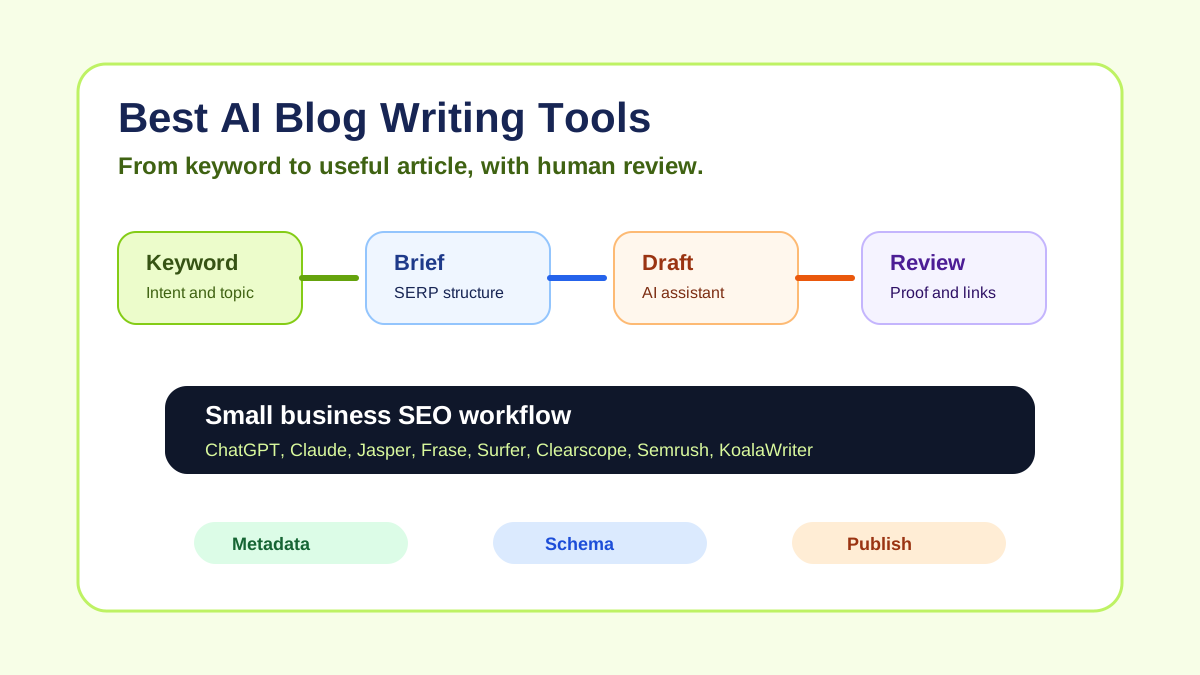
AI blog writing tool comparison for small business SEO showing keyword research, content brief, draft, editor review, schema, and publishing

Small businesses do not need an AI writer that produces more generic posts. They need a blog workflow that chooses the right topics, answers the searcher, supports the offer, links to the right service pages, and gets published with clean metadata.

Quick answer: ChatGPT and Claude are the most flexible AI blog writing assistants for small businesses. Frase and Surfer SEO are better when you need SERP research, briefs, and optimization. Jasper and Copy.ai fit teams that need brand-controlled marketing content. Semrush ContentShake and KoalaWriter can help owners publish faster when someone still edits the final article. AI Business Boomer helps small businesses choose, set up, connect, and maintain the right AI tools so they get practical business results without having to figure out the software themselves.

The best tool is not the one that writes the longest article. It is the one that helps your business publish the right page with a clear next step.

If your blog is meant to generate leads, connect the content plan to AI marketing automation, AI automation services, and the lead follow-up automation path before buying another writing subscription.

Quick recommendation

Use this shortlist first:

Business needBest first tool
Flexible blog outlines, drafts, rewrites, and content repurposingChatGPT
Long-form drafting, editing, and sharper article reviewClaude
Brand-controlled marketing content and campaign copyJasper
Sales and marketing content workflowsCopy.ai
Faster AI articles with SEO and AI search visibility featuresWritesonic
SERP research and SEO content briefsFrase
On-page optimization and content scoringSurfer SEO
Editorial-grade content optimizationClearscope
SEO topics, article generation, and Semrush-connected workflowSemrush ContentShake
Fast SEO article production for small content sitesKoalaWriter

For most owner-operated businesses, the safest starter stack is one general AI assistant plus one SEO brief or optimization tool. The owner or editor still needs to add real examples, service details, local proof, internal links, and a clear CTA.

Comparison table

Pricing changes often. Treat these notes as buying guidance and check each vendor's current pricing page before subscribing.

ToolCore useBest fitPricing and fit note
ChatGPTFlexible writing, outlining, rewriting, and research supportOwners who want one broad AI assistant for blog work and operationsPaid plans are usually enough for one owner or small team; needs human SEO process
ClaudeLong-form drafting, editing, and article reviewTeams that want stronger prose review and long-context editingGood writing assistant; pair it with keyword and publishing tools
JasperBrand-controlled AI marketing contentBusinesses publishing blog, email, ad, and social content from one brand systemMore useful when brand voice and campaigns matter
Copy.aiMarketing and sales content workflowsTeams that want reusable content workflows across sales and marketingCheck credits, workflow limits, and team needs
WritesonicAI article writing and search visibility workflowBusinesses that want faster drafts with SEO/GEO featuresReview article limits and whether the AI search features fit the business
FraseSERP research, briefs, outlines, and optimizationSmall teams that need practical SEO structure without enterprise costStrong fit for briefs and editor guidance
Surfer SEOContent Editor, optimization scores, and topical coverageBusinesses publishing several SEO posts per monthUseful when someone understands search intent and avoids score chasing
ClearscopeEditorial content optimizationTeams that want cleaner optimization and content quality checksOften a better fit for serious content teams than casual bloggers
Semrush ContentShakeTopic ideas, AI articles, and Semrush-connected SEO workflowBusinesses already using Semrush or wanting topic-to-draft helpCheck add-on and article limits before building around it
KoalaWriterFast SEO article productionSolo operators and niche sites that need drafts quicklyLow-cost entry can be useful, but editing matters more than volume

1. ChatGPT

ChatGPT is the best first AI blog writing tool for many small businesses because it can help with more than blog drafts. You can use it to brainstorm topics, turn customer questions into outlines, rewrite an intro, create FAQ ideas, summarize notes, draft metadata, and repurpose an article into email or social copy.

ChatGPT fits:

  • Local service businesses that need blog ideas from real customer questions
  • Consultants who want help turning notes into articles
  • Owners who need outlines, rewrites, and editing support
  • Teams that also want AI help with emails, SOPs, summaries, and follow-up

The weakness is structure. ChatGPT will not automatically know your real service pages, target cities, proof, booking path, internal links, or Search Console data unless you provide that context.

Use it as a writing assistant, not as the whole SEO system. A good prompt should include the keyword, target reader, offer, search intent, internal links, examples, proof points, and CTA.

2. Claude

Claude is strong for long-form drafting and editing. It is useful when you have rough notes, a transcript, a messy article, or a competitor-inspired outline that needs to become a cleaner business guide.

Claude fits:

  • Long-form blog drafts
  • Article cleanup and tightening
  • Human-sounding rewrites
  • Content review before publishing
  • Turning interviews or owner notes into clear sections

Small businesses can use Claude as an editor after a first draft from ChatGPT, Frase, Jasper, or another writing tool. It is good at spotting generic sections and making paragraphs easier to read.

Claude still needs the same guardrails: facts, examples, service details, internal links, and final review. Do not let any AI assistant invent case studies, customer results, pricing, credentials, or local proof.

3. Jasper

Jasper is built for marketing teams that care about brand voice, campaign assets, and repeatable content production. It can support blog posts, landing page copy, emails, social posts, ad copy, and content workflows.

Jasper fits:

  • Small marketing teams
  • Agencies
  • Service businesses with a defined offer
  • Brands publishing across blog, email, and social
  • Teams that need brand voice controls

For a solo owner, Jasper may be more tool than needed if the only goal is two blog posts per month. It becomes more useful when the business needs consistent messaging across several channels.

Use Jasper when the blog connects to a larger content system. If the article should also become a newsletter, sales email, short-form script, and landing page section, Jasper can help keep the campaign organized.

4. Copy.ai

Copy.ai is useful for teams that think about content as sales and marketing workflows, not only one-off blog drafts. It can help with content ideas, blog sections, email copy, outbound copy, product messaging, and reusable workflow steps.

Copy.ai fits:

  • B2B service businesses
  • Agencies and consultants
  • Sales-led teams
  • Businesses that want blog content tied to outreach and nurture
  • Teams that need repeatable prompts and templates

For small business SEO, Copy.ai works best when the blog supports a sales motion. For example, a post about "invoice automation for contractors" can also become a follow-up email, a lead magnet outline, and a sales call prep note.

The main buying question is whether you need workflows or just writing help. If you only need outlines and drafts, ChatGPT or Claude may be enough. If you want content connected to a revenue process, Copy.ai can make more sense.

5. Writesonic

Writesonic has moved toward AI search visibility and SEO content workflows, which makes it more relevant for businesses that care about Google results and AI answer visibility. It can help create articles, optimize content, and support search-focused publishing.

Writesonic fits:

  • Businesses publishing SEO articles regularly
  • Teams that want article generation plus optimization help
  • Companies watching AI search visibility
  • Owners who want faster drafts but still need an editor

The risk is the same as every fast article tool: speed can create thin content. Small businesses should use Writesonic to draft and structure, then add the real business layer: services, customer questions, local details, screenshots, internal links, and a clear next step.

Use it when you have a publishing process. Avoid using it to flood the blog with posts that do not support the offer.

6. Frase

Frase is one of the better fits for small business SEO because it focuses on SERP research, content briefs, outlines, and optimization guidance. It helps you see what competing pages cover before you write.

Frase fits:

  • Solo owners who want SEO structure
  • Freelance writers
  • Small content teams
  • Businesses creating briefs for outsourced writers
  • Teams that need a practical editor checklist

Frase is useful when you are moving from "write a blog post about this" to "answer this search intent with the right sections." That difference matters.

Use Frase before drafting. Build the brief, review competing headings, decide what belongs in your article, and then write with your own examples. Do not copy competitor structure blindly. Use the SERP to understand the searcher.

7. Surfer SEO

Surfer SEO is best known for content optimization. Its Content Editor helps writers compare topical coverage against competing pages and improve an article before publishing.

Surfer SEO fits:

  • Businesses publishing several SEO posts per month
  • Teams with a writer or editor
  • Agencies managing content calendars
  • Sites that need content refreshes
  • Businesses that want optimization scoring

The danger is score chasing. A high content score does not guarantee a useful article. A small business still needs a real answer, service-specific examples, internal links, clear metadata, and a CTA that matches the reader's next step.

Use Surfer after you know the article's purpose. Let it help you catch missing topics, but do not let it flatten the article into the same generic structure as every competitor.

8. Clearscope

Clearscope is a strong editorial optimization tool for teams that care about content quality and topical coverage. It is not the cheapest option, but it can help teams write and edit with a clear SEO lens.

Clearscope fits:

  • Serious content teams
  • Agencies with editorial review
  • Businesses investing in high-quality SEO content
  • Teams refreshing important pages
  • Writers who need clean term and topic guidance

For a small local business, Clearscope may be too much if the blog is still occasional. It becomes more practical when content is a real acquisition channel and the business wants to improve existing pages, not only draft new ones.

Use Clearscope for important posts and content refreshes where quality matters more than volume.

9. Semrush ContentShake

Semrush ContentShake can help with topic ideas, AI article drafts, and SEO suggestions inside the broader Semrush ecosystem. It is useful when a business wants blog workflow help tied to keyword and competitor data.

Semrush ContentShake fits:

  • Businesses already using Semrush
  • Owners who want help moving from topic to draft
  • Small teams that need SEO ideas and article generation
  • Marketers who want a tighter content workflow

The main advantage is the connection to a bigger SEO platform. The main caution is tool sprawl. If you do not use Semrush for keyword tracking, competitor research, or site audits, another writing setup may be simpler.

Use ContentShake when you want the article workflow to connect to broader SEO research. Review add-on pricing, article limits, and whether the tool fits your publishing volume.

10. KoalaWriter

KoalaWriter is built for fast SEO article production. It can be useful for owners, affiliate sites, and small content operations that need drafts quickly and can edit before publishing.

KoalaWriter fits:

  • Solo operators
  • Niche sites
  • Budget-conscious content workflows
  • WordPress publishing workflows
  • Businesses testing a small batch of SEO topics

KoalaWriter can help with speed, but speed is not the same as strategy. A local service business needs topic selection, proof, service-page links, local examples, and follow-up offers.

Use KoalaWriter for low-risk drafts and simple content tests. Use a stronger brief and editor process for pages that need to win qualified leads.

How to choose the right AI blog writing tool

Start with the content job, then choose the software.

QuestionWhy it matters
Are you writing from scratch or improving existing posts?Drafting tools and optimization tools solve different problems
Do you know the keyword and search intent?AI cannot fix a topic that no buyer is searching for
Do you have service pages to link to?Blog traffic needs a path to the offer
Who will edit before publishing?AI drafts need facts, examples, proof, and cleanup
Do you need SEO briefs?Frase, Surfer SEO, Clearscope, and Semrush help more than plain writers
Do you publish across blog, email, and social?Jasper and Copy.ai fit campaign workflows better
Do you track results in Search Console?Publishing without feedback turns content into guessing

For a small service business, a useful blog article should do six things:

  • Match a real customer question
  • Answer the search intent in the first few paragraphs
  • Explain the practical options
  • Link to the right service or guide
  • Include metadata, FAQ, and schema where appropriate
  • Give the reader a clear next step

The AI tool can help with the work. The business still needs the content strategy.

Mistakes small businesses make with AI blog tools

The first mistake is asking AI to "write an SEO blog post" without giving it the business context. That produces safe, vague writing.

The second mistake is publishing too fast. AI drafts often need tighter intros, clearer headings, better examples, and fewer repeated claims.

The third mistake is ignoring internal links. A blog post about lead follow-up should link to the lead follow-up offer, a related automation guide, and a practical next step. Otherwise the article may get impressions without leads.

The fourth mistake is skipping updates. Search Console may show that a page gets impressions for a different query than expected. That is a signal to improve the title, intro, sections, or internal links.

The fifth mistake is treating AI content as a replacement for proof. Add real screenshots, workflow examples, service details, checklists, pricing context, and owner insight where you can.

DIY vs done-for-you blog SEO setup

DIY works when the stakes are low and the owner has time to review the content.

Good DIY projects:

  • Turning customer FAQs into short blog posts
  • Drafting outlines from owner notes
  • Updating old articles with clearer metadata
  • Repurposing one guide into email and social posts
  • Creating a simple monthly content calendar

Done-for-you setup makes more sense when the blog is meant to drive leads, bookings, or local visibility.

Blog requirementWhy done-for-you helps
Keyword selectionThe topics need buyer intent, not only search volume
SERP briefsThe article should match intent without copying competitors
EditingAI drafts need facts, proof, tone, and structure
Internal linksBlog posts should connect to services, offers, and related guides
Schema and metadataTitle tags, descriptions, FAQ data, and article schema need clean setup
Publishing workflowResearch, draft, QA, image, build, deploy, and live readback need a system
Search Console reviewThe site needs feedback loops after publishing

AI Business Boomer helps small businesses choose, set up, connect, and maintain the right AI tools so they get practical business results without having to figure out the software themselves.

AI Business Boomer recommendation

Do not start by buying five writing tools. Start with one content workflow tied to revenue.

Good first blog workflows:

  • Customer question to SEO article
  • Service page support article
  • Local FAQ to booking page
  • Transcript to blog post
  • Blog post to email newsletter
  • Search Console query to content refresh
  • Blog brief to published article

For most small businesses, the first stack looks like this:

LayerPractical pick
Idea and draft assistantChatGPT or Claude
SEO brief and optimizationFrase, Surfer SEO, Clearscope, or Semrush ContentShake
Publishing systemWordPress, Webflow, Shopify blog, or the current website CMS
Internal link mapService pages, related guides, and contact page
Review loopOwner/editor review plus Search Console check

That stack is enough to publish useful content without turning the blog into a software project.

CTA: Build a practical AI blog workflow

If you are comparing AI blog writing tools and still do not know which one fits, start with the workflow.

Book a Free Bottleneck Audit with AI Business Boomer. We can map your first blog workflow, choose the right writing and SEO tools, connect the publishing steps, and show you what to review before each article goes live.

You can also start with AI automation services, AI marketing automation, or lead follow-up automation if the blog needs to connect to a broader lead system.

Keep building the system

Recommended next Business Boomer guides

These links are selected by topic and search intent so this guide connects to the most relevant service pages, industry pages, and supporting blog posts.

Related blog posts

Read the connected guides that support this topic cluster.

AI Automation Examples for Small Business WorkflowsThe best AI automation examples for small businesses are practical workflows: lead follow-up, appointment scheduling, invoice reminders, intake triage, customer updates, reporting, and owner admin capture.Benefits of AI Automation for Small BusinessThe real benefits of AI automation for small business show up when a repeated workflow gets faster, cleaner, and easier to manage: leads are answered sooner, admin gets summarized, invoices move without chasing, and owners see the next action before work slips.AI Automation Near Me: Local Setup Help for Small BusinessesThe best AI automation help near you is not just the closest provider. It is the person or team that can map one real workflow, connect your current tools, keep review in the right places, and support the setup after it goes live.Best AI Automation Tools: What to Use FirstThe best AI automation tools for small business are the ones that fix one repeated workflow first: lead follow-up, scheduling, CRM cleanup, invoicing, admin notes, customer support, or reporting. Start with the bottleneck, then choose the tool category.How to Choose an AI Automation CompanyChoose an AI automation company by starting with one real workflow, checking whether they can connect your current tools, asking how human review and data safety work, and requiring a simple launch plan before you buy.How to Use AI in Your Small Business: 10 Practical Ways to StartThe best way to use AI in your small business is to choose one repeated workflow, let AI prepare the next step, and keep a person responsible for review. Start with leads, scheduling, billing, customer service, admin notes, or weekly reporting before you try to automate the whole company.

Related AI automation guides

Keep going with the connected Business Boomer guides in this automation cluster.

Frequently Asked Questions

FAQ

Quick answers about this guide and how to put the idea into practice.

What is the best AI blog writing tool for small business SEO?

For most small businesses, ChatGPT or Claude is the best flexible writing assistant, Frase is a strong affordable SEO brief tool, Surfer SEO is useful for content optimization, and Jasper or Copy.ai fit teams that need brand-controlled marketing content.

Can AI write SEO blog posts that rank?

AI can help draft and optimize SEO blog posts, but rankings usually need real search intent, original examples, useful structure, internal links, accurate metadata, human editing, and ongoing updates. A generated article by itself is rarely enough.

Should a small business use ChatGPT or a dedicated SEO writing tool?

Use ChatGPT or Claude when you need flexible drafting, outlining, rewriting, and idea generation. Use a dedicated SEO tool like Frase, Surfer SEO, Clearscope, or Semrush ContentShake when you need SERP research, content briefs, optimization scoring, and repeatable publishing workflows.

How much should a small business spend on AI blog writing tools?

A solo owner can often start with one general AI assistant plus a light SEO tool. A business publishing several articles each month may need a writer, editor, SEO brief tool, and publishing workflow. Check current vendor pricing before committing because plans and limits change often.

When should a small business use done-for-you blog SEO help?

Done-for-you help makes sense when the blog needs keyword selection, briefs, editing, internal links, schema, images, publishing, Search Console review, and updates instead of only first-draft generation.

Find the workflow worth fixing first.

Use the Free Bottleneck Audit to map where leads, invoices, notes, or follow-ups are slipping and choose the smallest useful system.

Book a Free Bottleneck Audit
Claim Your Free Website Preview