
How to Qualify Leads for a Small Business
Lead qualification helps small businesses focus on the prospects most likely to buy, fit the offer, and move forward soon.


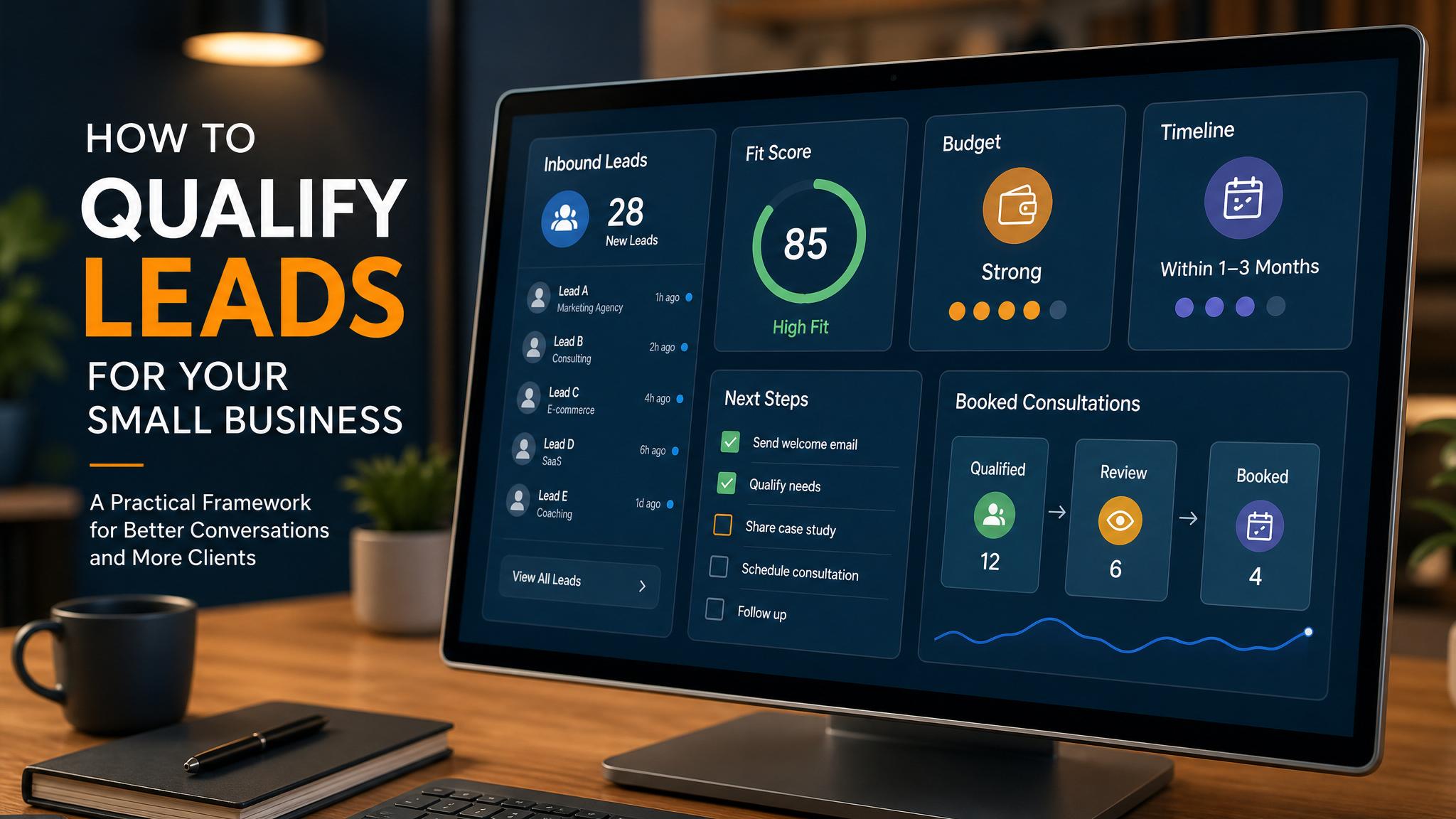
To qualify leads for a small business, ask a few clear questions that show whether the person has the right need, budget, timing, authority, and fit for your offer. The direct answer: create a simple intake process, score each lead consistently, and route the best opportunities to fast human follow-up.
Quick answer: Lead qualification helps small businesses focus on the prospects most likely to buy, fit the offer, and move forward soon.
What is lead qualification?
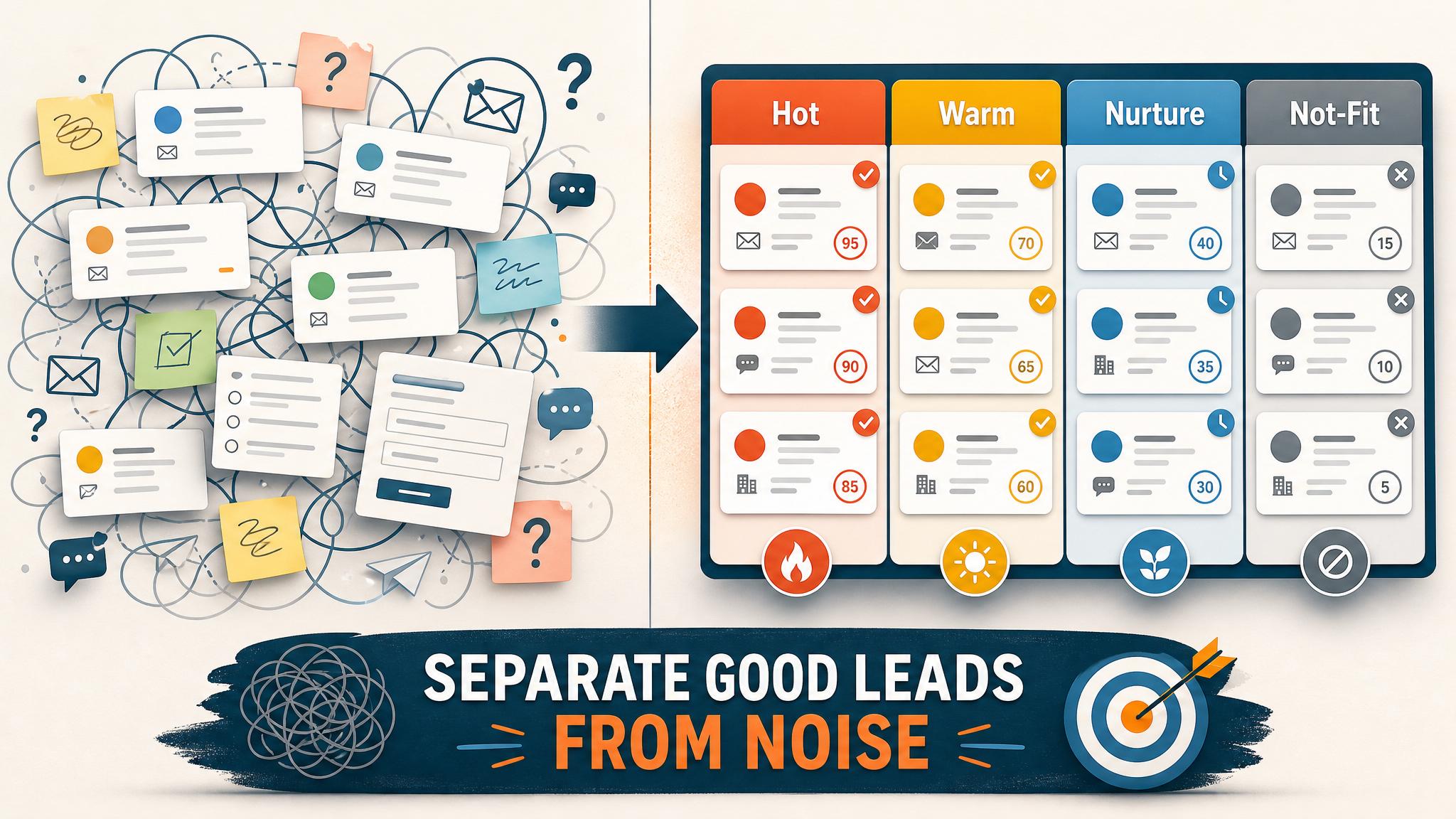
Lead qualification is the process of deciding which inquiries are worth immediate sales attention and which ones need nurturing, education, or polite disqualification. It turns a messy inbox of forms, calls, referrals, and DMs into a prioritized list of real opportunities.
For a small business, qualification does not need to mean a complicated enterprise sales system. It can be as simple as a web form with the right fields, a short discovery call script, a CRM stage, and a few rules for what counts as high priority. A plumbing company might qualify by location, urgency, job type, and property ownership. A marketing agency might qualify by monthly revenue, growth goal, decision-maker involvement, and whether the prospect has a budget.
Related next step: use the AI automation services page if you want to turn this idea into a practical Business Boomer workflow.
Why how to qualify leads for small business matters
Lead qualification matters because not every lead has the same value, urgency, or likelihood of closing. Without a qualification process, small businesses often spend the most time on whoever is loudest, newest, or easiest to reply to. That can mean ignoring high-intent prospects while getting stuck in long conversations with people who are not ready, not a fit, or not able to buy.
Poor qualification also makes follow-up inconsistent. One team member may think a lead is hot because they asked for pricing. Another may think the same lead is weak because they never shared a timeline. When there is no shared definition, sales activity becomes guesswork.
A simple lead qualification system creates clarity. The team knows who needs a same-day call, who should get a helpful email sequence, who should be referred elsewhere, and who should be closed out. That saves hours, improves close rates, and makes revenue less dependent on memory.
Related next step: use the AI automation consulting page if you want to turn this idea into a practical Business Boomer workflow.
How to put this into practice
Start by defining what a good customer looks like. Use your best past clients as the model. Look at what they bought, how quickly they decided, what problem they had, how much they were willing to spend, and what made the work successful. Then write down the common traits.
Next, identify the five qualification signals that matter most. Most small businesses can start with need, fit, budget, timing, and authority. Need means the prospect has a problem your business actually solves. Fit means they match your service area, niche, or offer. Budget means they can afford the realistic price range. Timing means they want to act soon enough to justify follow-up. Authority means the person can make or strongly influence the decision.
Then add these questions to your intake process. A form might ask, “What are you trying to solve?”, “When do you want to start?”, “What budget range are you considering?”, and “Are you the person responsible for choosing a provider?” Keep the form short. If it feels like homework, people will abandon it.
Related next step: use the automation guides page if you want to turn this idea into a practical Business Boomer workflow.
After that, create a simple scoring system. Give one point each for strong need, ideal fit, realistic budget, near-term timeline, and decision-maker involvement. Four or five points means fast personal follow-up. Two or three points means nurture or lower-priority follow-up. Zero or one point usually means close out or send a resource.
Put the score and next step inside your CRM. The system does not have to be fancy. HubSpot, Pipedrive, Airtable, Jobber, Housecall Pro, GoHighLevel, or even a structured spreadsheet can work if the team uses it consistently. The key is that every lead gets a status, owner, score, and next action.
Best practices that keep this useful
Ask only what you will use. Extra form fields create friction, and customers can feel interrogated if every question sounds like it is for your benefit instead of theirs.
Use ranges instead of exact budget questions. “Which range fits your project?” usually works better than “What is your budget?” because it feels easier to answer and sets expectations earlier.
Do not make automation sound cold. Automated lead replies should confirm the inquiry, explain the next step, and feel human. The qualification process should make the business more responsive, not less personal.
Separate disqualified from not-ready. A bad-fit lead should leave the pipeline. A good-fit lead with a longer timeline should go into nurture, reminders, or occasional check-ins.
What this should look like in practice
A good setup should make the next action obvious. The owner or team should be able to open one place and see what needs attention, what is waiting, and what can be automated.
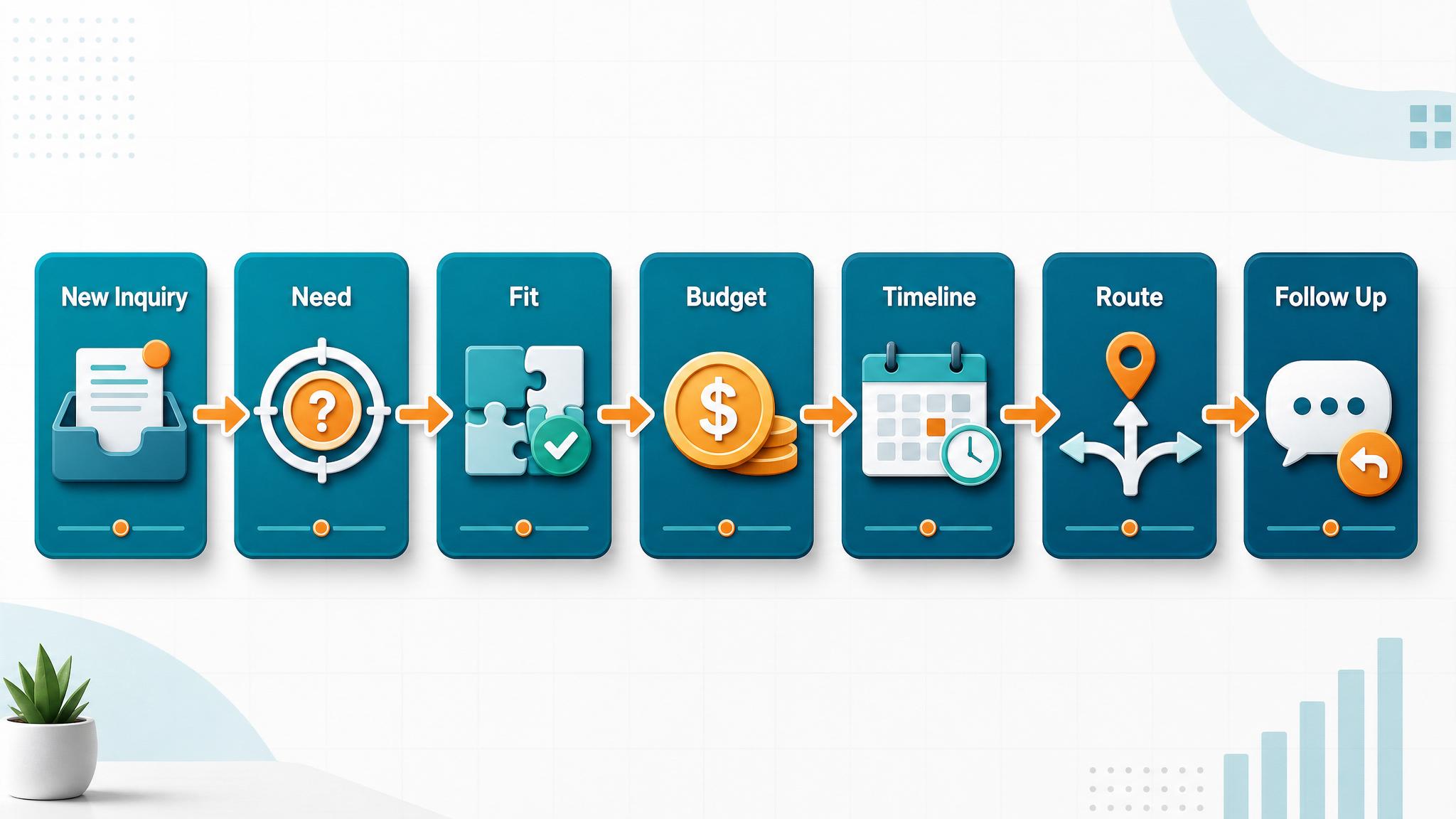
Simple implementation checklist
| Step | What to check |
|---|---|
| 1 | Find the repetitive task or lead leak |
| 2 | Decide what information must be captured |
| 3 | Create a simple owner, stage, and next-step rule |
| 4 | Automate the reminder, handoff, or record creation |
| 5 | Review the workflow weekly and tighten what breaks |
Business Boomer rule: If the workflow does not create a clearer owner, next step, or follow-up path, it is not automation yet. It is just another tool.
Qualification works better when the next task is clear, so connect it to lead follow-up automation.
Lead follow-up next step
Stop letting leads sit without a next action.
Business Boomer can install lead capture, first-response drafts, quote follow-up reminders, and a simple owner handoff.
Keep building the system
Recommended next Business Boomer guides
These links are selected by topic and search intent so this guide connects to the most relevant service pages, industry pages, and supporting blog posts.
Service and setup pages
Use these when you are ready to turn the idea into an implementation path.
Industry-specific pages
See how the same workflow changes for specific business types.
Related blog posts
Read the connected guides that support this topic cluster.
Recommended next steps
These pages connect this guide to the Business Boomer offer, related workflow, and next implementation path.
Lead follow-up automation
Turn qualified leads into reply drafts, owner tasks, and follow-up reminders.
AI automation for local service businesses
Connect qualification with the broader service-business workflow.
AI website for service businesses
Capture better lead details from the website before follow-up starts.
Related AI automation guides
Keep going with the connected Business Boomer guides in this automation cluster.
Lead follow-up automation for small business
Turn form fills, missed calls, quote requests, emails, and voice notes into reply drafts, CRM updates, reminders, and next steps.
AI sales team and lead follow-up setup
Turn sales calls, form fills, quote requests, and owner notes into follow-up emails, calendar invites, CRM updates, and next-step reminders.
How to follow up with leads for small business
A practical workflow for CRM stages, reminders, email, text, and human follow-up tasks.
What is lead response automation?
Why response speed matters and how small businesses can stop leads from slipping away.
FAQ
Quick answers about this guide and how to put the idea into practice.
What is the main takeaway from How to Qualify Leads for a Small Business?
Lead qualification helps small businesses focus on the prospects most likely to buy, fit the offer, and move forward soon.
How does how to qualify leads for small business help a small business?
how to qualify leads for small business can help a small business reduce manual work, improve follow-up, organize repetitive tasks, and create a clearer operating process when it is tied to a real bottleneck.
Can Business Boomer help implement how to qualify leads for small business?
Yes. Business Boomer can help turn the idea into a practical workflow, page, checklist, or automation system depending on what the business needs first.
Stop letting leads sit without a next action.
Business Boomer can install lead capture, first-response drafts, quote follow-up reminders, and a simple owner handoff.
See Lead Follow-Up Automation