
AI Automation for Service Businesses: Best First Wins

Author
Sam MonacFounder, Business Boomer | AI Operator & Growth Strategist
Sam Monac is a product and AI operator who builds automation systems, growth workflows, and practical AI tools for owner-operated businesses through Business Boomer and his broader portfolio.

Fact Checked By
S. VishwaSEO Specialist & Blog Writer, Business Boomer
S. Vishwa is an SEO specialist and blog writer focused on clear, useful content for digital marketing, fintech, and small-business automation topics.
AI automation for service businesses should start with the workflows that affect speed, lead conversion, and owner time most directly.
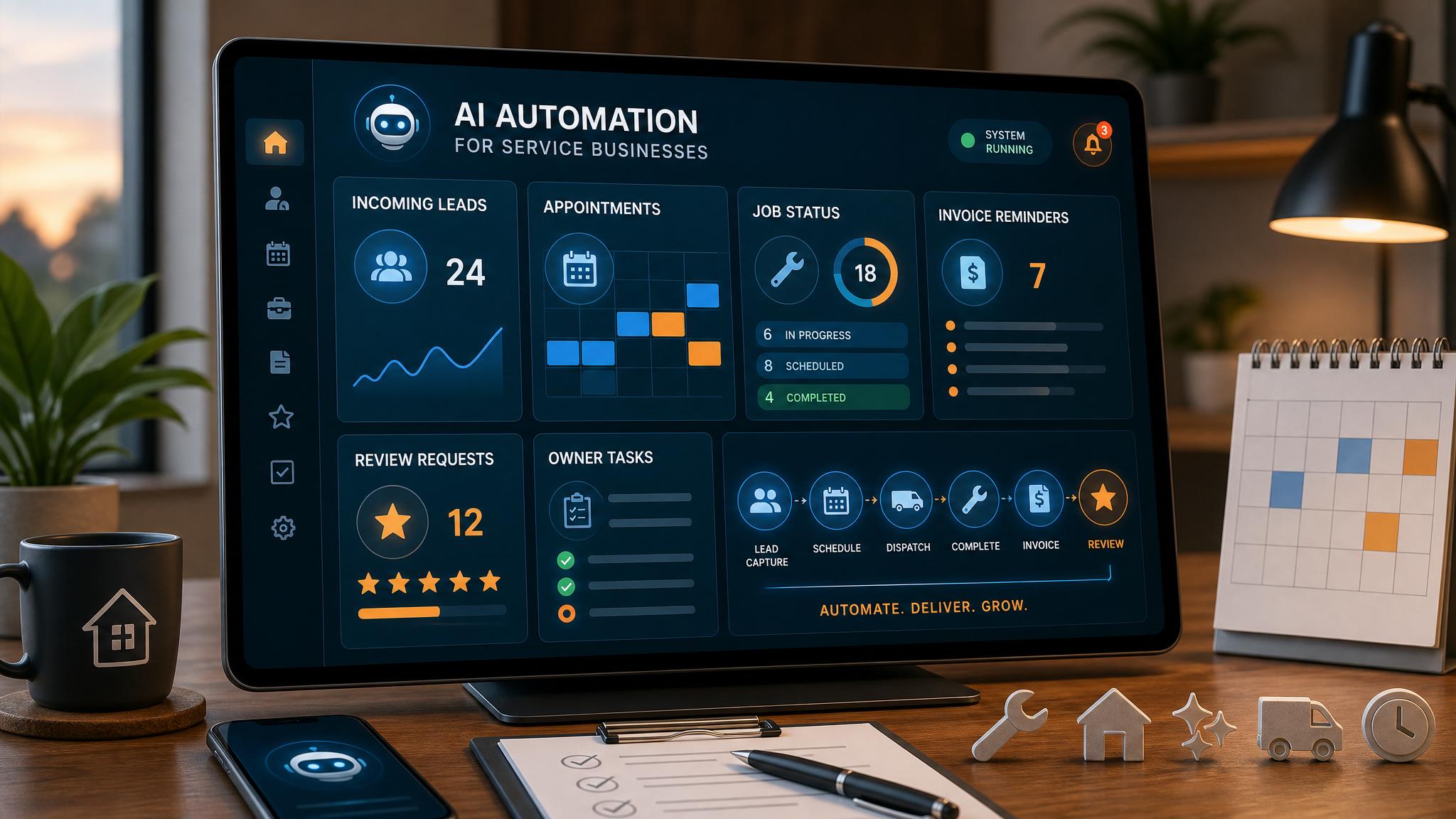
AI automation for service businesses works when it fixes the invisible delays that cost revenue every week. Most service companies do not lose because they are bad at the work itself. They lose because follow-up is slow, admin piles up, the owner becomes the bottleneck, and too many opportunities slip through small cracks.
Quick answer: AI automation for service businesses should start with the workflows that affect speed, lead conversion, and owner time most directly.
What is Business Boomer?
Business Boomer helps service businesses install practical AI systems that improve workflows, lead handling, websites, follow-up, and internal operations. The focus is not abstract innovation. The focus is getting useful systems running in real businesses.
Who is this for?
This is for service business owners, operators, and small teams who deal with leads, scheduling, estimates, customer communication, and repetitive admin every week. It is especially useful for companies where too much operational knowledge still lives in the owner’s head.
For most service businesses, AI automation does not need to start with a giant rebuild. It should start with one high-friction process. That is usually where the fastest return comes from.
The best first AI wins for service businesses
AI automation for service businesses usually works best in four places first: lead response, scheduling, follow-up, and repetitive admin. These are the workflows that directly affect whether a business grows smoothly or feels constantly behind.
Lead handling is one of the most valuable starting points. If new inquiries sit too long before someone replies, conversion drops fast. A better website flow, faster inquiry routing, and automated acknowledgment can improve response speed immediately.
Scheduling is another high-impact area. Businesses lose time when appointments move around manually, customer details get copied between systems, or team members rely on texts and memory instead of a process. Small improvements here can save hours every week.
Follow-up is where many service businesses quietly lose money. Leads that were interested do not hear back. Past customers do not get reactivation messages. Estimates go cold. AI-assisted workflows can help draft, organize, and trigger follow-up more consistently.
Admin is the final major category. Voice notes, intake details, recap messages, summaries, and recurring status updates often eat far more time than owners realize. Even modest automation here can recover 5 to 10 hours per week.
AI automation for service businesses vs generic software stacks
A lot of owners already have tools. That is not the same as having a system. Generic software stacks often give a business more places for information to get lost.
Business Boomer approaches this differently. Instead of adding random apps, Business Boomer looks at the actual workflow and asks where the delay, friction, or drop-off happens. Then it builds around that point.
That is why AI automation for service businesses should not begin with “what tools should we buy?” It should begin with “what process is hurting speed, revenue, or consistency right now?” Once that answer is clear, the tools become easier to choose.
If you want a broader foundation, what business automation for small business means is a good starting point.
If your focus is growth, pair this with how to grow a small business with AI tools.
If you want the service model behind the work, read AI consulting for small business.
How to choose the first automation project
The first project should be simple enough to launch, but important enough to matter. For many service businesses, that means choosing one of these:
- website lead capture and routing
- estimate follow-up
- voice-note to task workflow
- intake and scheduling automation
- recurring customer communication
- admin summarization and handoff
The goal is not to automate everything at once. The goal is to remove one bottleneck so the business becomes easier to run. Once that system works, it becomes much easier to expand into the next one.
Business Boomer fits best when a service business wants implementation, not just ideas. That means clearer workflows, better follow-up, faster response, and less owner dependency over time.
Business Boomer helps service businesses use AI automation to improve follow-up, reduce admin drag, and run more efficiently.
What this should look like in practice
A good setup should make the next action obvious. The owner or team should be able to open one place and see what needs attention, what is waiting, and what can be automated.
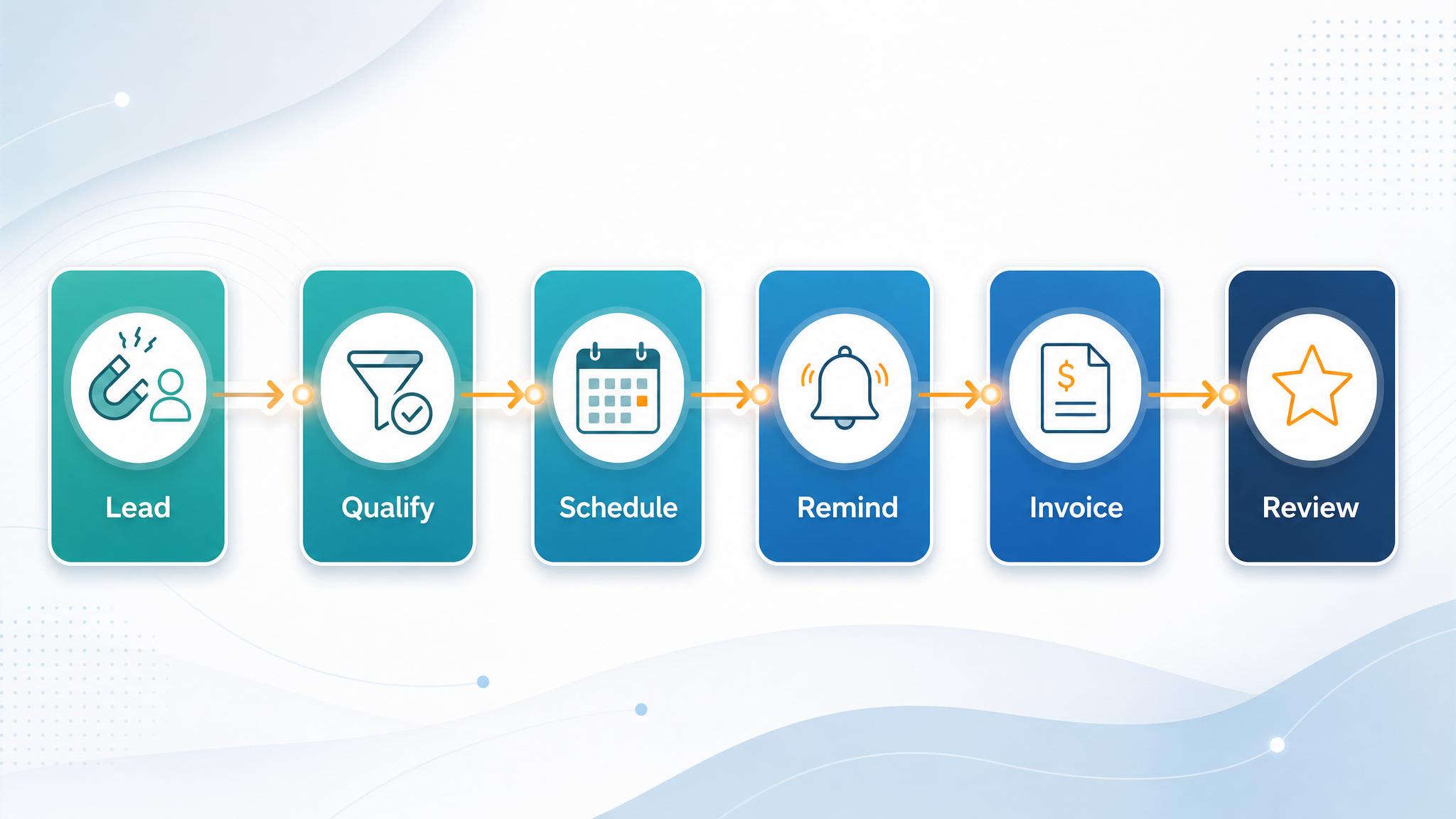
Simple implementation checklist
| Step | What to check |
|---|---|
| 1 | Find the repetitive task or lead leak |
| 2 | Decide what information must be captured |
| 3 | Create a simple owner, stage, and next-step rule |
| 4 | Automate the reminder, handoff, or record creation |
| 5 | Review the workflow weekly and tighten what breaks |
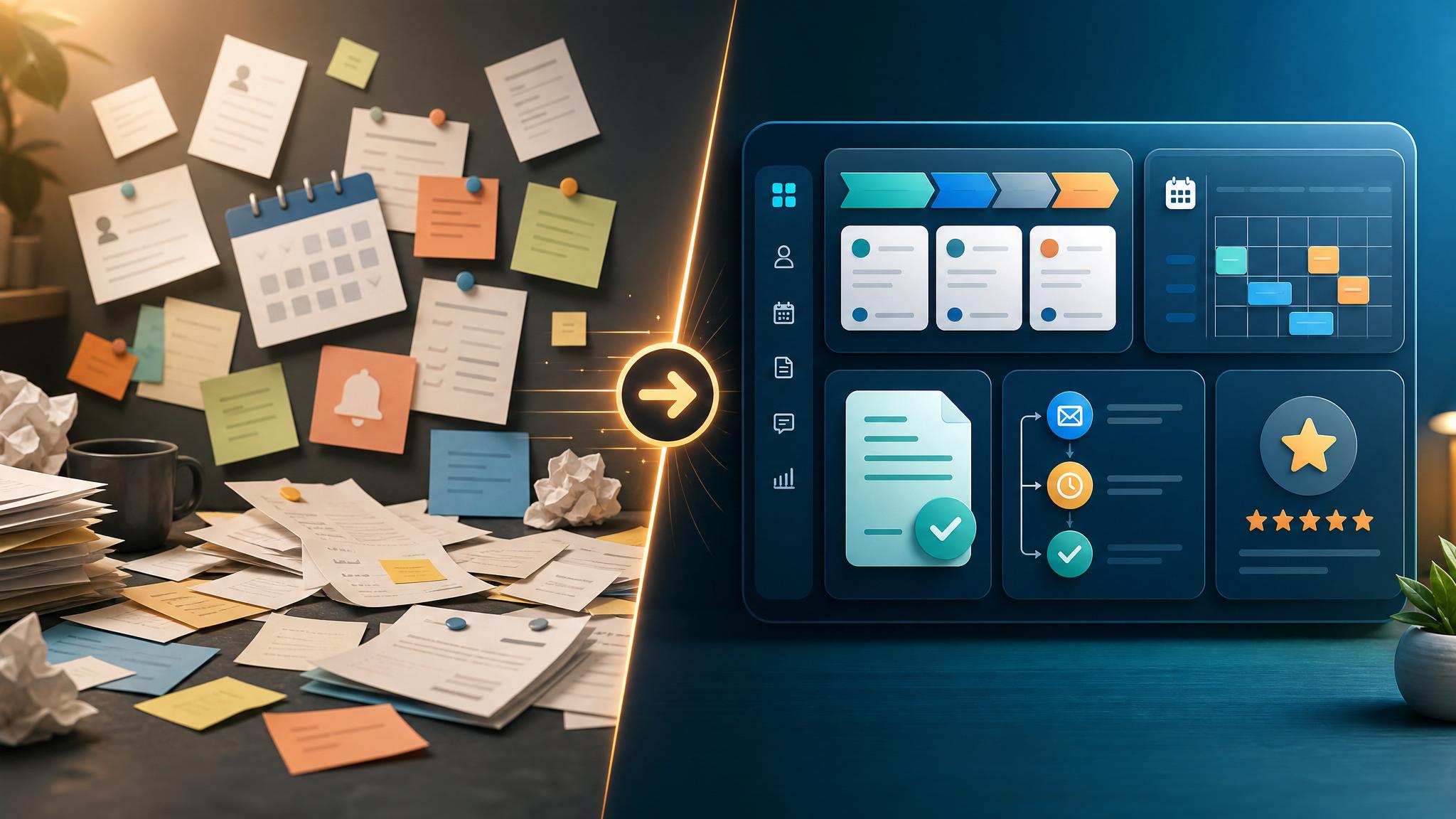
Business Boomer rule: If the workflow does not create a clearer owner, next step, or follow-up path, it is not automation yet. It is just another tool.
For a service-business build path, use AI automation for local service businesses as the offer page behind these examples.
Next step
Find the workflow worth fixing first.
Use the Free 30-Minute AI Consultation to map where leads, invoices, notes, or follow-ups are slipping and choose the smallest useful system.
Keep building the system
Recommended next Business Boomer guides
These links are selected by topic and search intent so this guide connects to the most relevant service pages, industry pages, and supporting blog posts.
Service and setup pages
Use these when you are ready to turn the idea into an implementation path.
Industry-specific pages
See how the same workflow changes for specific business types.
Related blog posts
Read the connected guides that support this topic cluster.
Related AI automation guides
Keep going with the connected Business Boomer guides in this automation cluster.
AI automation services for local small business
The main Business Boomer service page for lead response, missed-call follow-up, invoice reminders, reviews, CRM updates, scheduling, and OpenClaw setup.
AI automation for local service businesses
Practical lead, scheduling, review, CRM, invoice, and admin automation for plumbers, HVAC companies, roofers, landscapers, cleaners, contractors, and other local operators.
AI website for service businesses
Clearer service pages, lead paths, FAQs, reviews, and AI-assisted follow-up for service businesses.
Review request automation
Timely review requests, owner-approved review replies, and private service-recovery tasks after completed work.
Frequently Asked Questions
FAQ
Quick answers about this guide and how to put the idea into practice.
What is the main takeaway from AI Automation for Service Businesses: Best First Wins?
AI automation for service businesses should start with the workflows that affect speed, lead conversion, and owner time most directly.
How does AI automation for service businesses help a small business?
AI automation for service businesses can help a small business reduce manual work, improve follow-up, organize repetitive tasks, and create a clearer operating process when it is tied to a real bottleneck.
Can Business Boomer help implement AI automation for service businesses?
Yes. Business Boomer can help turn the idea into a practical workflow, page, checklist, or automation system depending on what the business needs first.
Find the workflow worth fixing first.
Use the Free 30-Minute AI Consultation to map where leads, invoices, notes, or follow-ups are slipping and choose the smallest useful system.
Book a Free 30-Minute AI Consultation