
AI for Business Process Automation
AI for business process automation helps small businesses improve repeatable workflows when it is tied to clear triggers, clean data, useful AI steps, and human review.


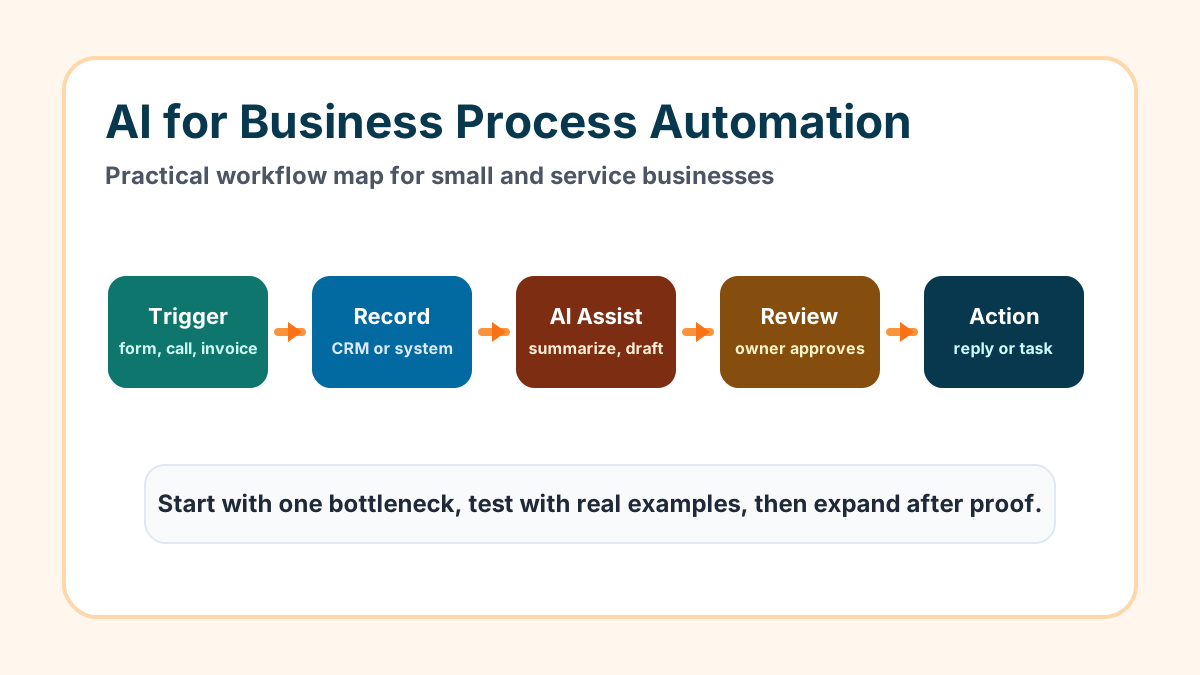
AI for business process automation means using AI inside repeatable business workflows so the company can capture information, summarize messy inputs, draft the next step, update the right system, and alert a person when judgment is needed.
For most U.S. small and service businesses, the useful version is not a fully autonomous company. It is a set of practical workflows for lead response, intake, scheduling, invoice follow-up, customer updates, reporting, and owner admin. The win comes from making the same important handoffs happen more consistently, with human review where trust, pricing, compliance, or customer relationships are at stake.
Search intent and top-result pattern
People searching for AI business process automation usually want a practical guide, tool shortlist, or implementation path. Current U.S. results are dominated by software vendors, automation platforms, and broad guides that explain AI, RPA, workflow automation, orchestration, and implementation steps.
The recurring SERP pattern is clear: define AI business process automation, list use cases, mention tools, and explain how to start small. The gap for small businesses is operational detail. A local service company needs to know which process to automate first, what AI should actually do, where the source of truth lives, and which steps still need a person.
What AI adds to business process automation
Traditional automation is good at predictable steps: send this email, move this record, create this task, update this spreadsheet, or notify this person. AI helps with the less tidy parts of the same process, such as summarizing a long customer message, classifying a request, extracting dates, drafting a reply, or flagging a missing detail.
That is why AI works best when the process already has a clear shape. If the workflow is still unclear, start with the plain business process first, then add AI where the manual step is repetitive but not perfectly structured. The broader guide to business automation for small business is a useful foundation before choosing tools.
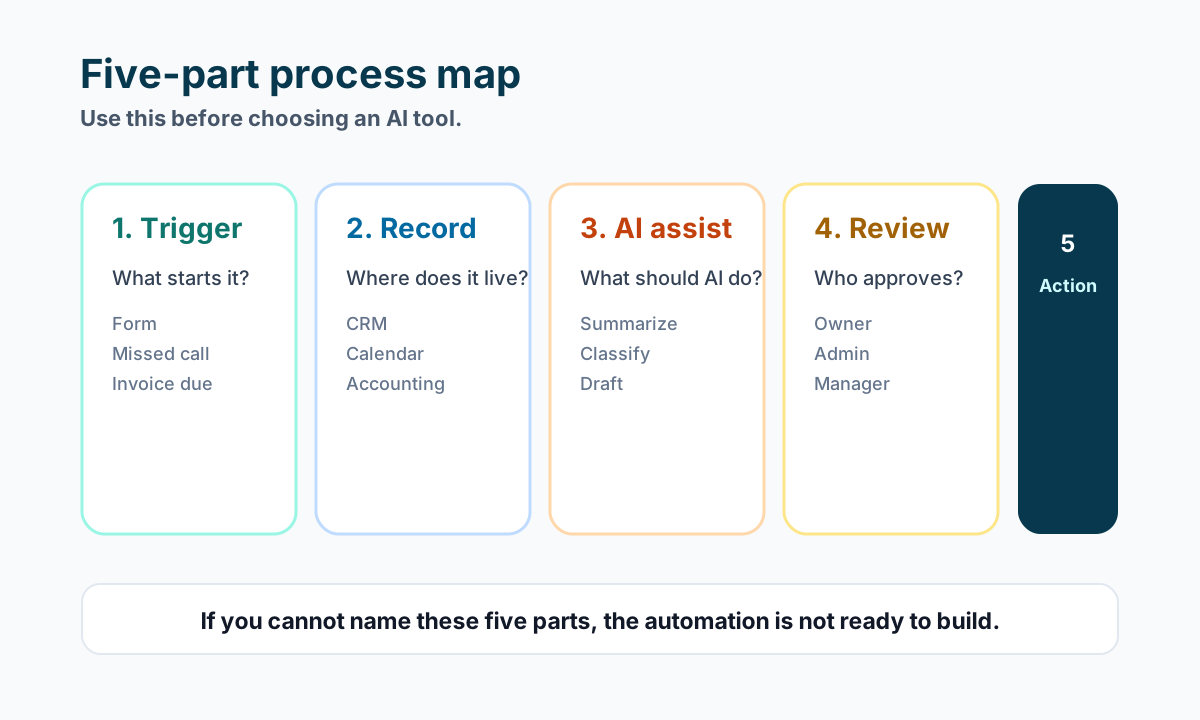
The five-part process map
Every useful AI automation needs five parts. If one is missing, the workflow usually turns into a demo instead of a business system.
| Part | Question to answer | Service-business example |
|---|---|---|
| Trigger | What starts the process? | New form, missed call, invoice due date, booked appointment |
| Source of truth | Where does the record live? | CRM, job software, calendar, accounting tool, task board |
| AI assist | What should AI read, summarize, classify, draft, or extract? | Lead summary, intake category, reminder draft, call recap |
| Human review | Where does a person approve or decide? | Pricing, exceptions, upset customers, legal or financial language |
| Business action | What happens next? | Reply, task, booking link, invoice reminder, owner report |
This map keeps the project grounded. It also prevents the common mistake of asking AI to own a vague outcome like "handle operations." A better request is: read this lead form, summarize the request, classify the service type, create a CRM note, and draft a reply for owner approval.
Best first processes to automate with AI
The best first process is frequent, visible, and painful enough that the owner will notice the improvement. It should also be safe to test with real examples before customers depend on it.
New lead response
Lead response is often the strongest first workflow because slow follow-up is easy to spot. The trigger is a form, call transcript, chat, or email inquiry. AI summarizes the need, classifies the service type, detects urgency, and drafts a short acknowledgment or owner task.
This should not replace sales judgment. It should help the team respond faster and keep the lead from disappearing. If this is your main leak, compare the workflow with lead response automation before adding more features.
Intake cleanup
Intake forms, emails, photos, voicemail notes, and customer histories can be technically complete but hard to use. AI can turn the raw material into a clean prep note, flag missing fields, extract dates and locations, and route the next step.
For a contractor, the system might pull job type, address, urgency, photo links, and access notes into a single record. For a law firm or medical-adjacent practice, the workflow should be more conservative and include human review before advice, eligibility, or sensitive language is used.
When the process differs by trade, use the industries guide to keep the workflow grounded in how that business actually sells, schedules, and serves customers.
Appointment scheduling and prep
Scheduling automation handles booking links, calendar rules, confirmations, reminders, and rescheduling. AI adds value by turning the customer's intake answers into a short prep brief so the appointment starts cleaner.
This is useful for appointment-heavy businesses like med spas, salons, real estate teams, professional services, and home services. The calendar rules still matter, so pair AI with a clean appointment scheduling automation setup instead of bolting it onto a messy booking process.
Estimate and sales follow-up
Many small businesses respond to the first inquiry and then lose momentum after the estimate, consultation, or proposal. AI can summarize call notes, draft a follow-up message, create a reminder task, and stop the sequence when the customer replies.
This process needs guardrails. AI should not invent urgency, pressure the buyer, or change pricing. It should help the owner follow up politely and consistently with the context already known.
If the follow-up rules are not clear yet, define the human sales rhythm with small-business lead follow-up before automating the reminders.
Invoice reminders and payment admin
Invoice follow-up is a good fit because the process is repetitive, but the tone still matters. AI can draft polite reminders, summarize overdue accounts, classify customer responses, and alert the owner when a personal reply is better than another automated nudge.
If billing is the painful bottleneck, it may be smarter to start with the invoice automation setup path than to build a separate reminder spreadsheet. The process should connect to the accounting tool, payment link, and customer record whenever possible.
Weekly owner reporting
AI can turn lead counts, overdue invoices, appointment changes, open tasks, and customer messages into a short weekly owner summary. This is useful when the owner does not want another dashboard but does need to know what is stuck.
The report should cite the source systems it used and separate facts from suggested next steps. A simple owner report can become a practical bridge between daily operations and bigger AI automation services work.
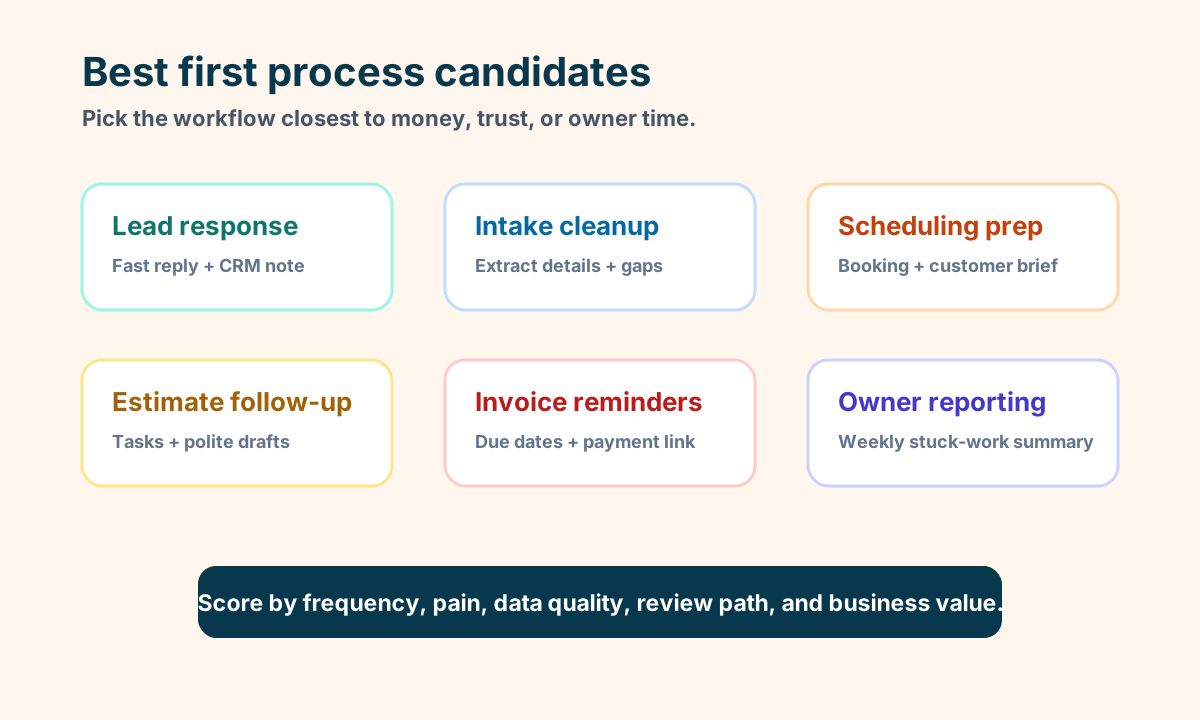
How to choose the first process
Use a simple scoring pass before building. A workflow is a good candidate when it happens often, wastes visible time, affects revenue or customer experience, has clear inputs, and can be reviewed by a person.
Avoid starting with processes that are rare, politically sensitive, legally risky, or undefined. AI will not fix an unclear process. It will make the unclear process move faster.
For lead-heavy businesses, a simple lead qualification workflow can be the deciding layer between "reply to everyone the same way" and "route the right leads faster."
| Candidate process | Good first project when... | Wait when... |
|---|---|---|
| Lead response | New inquiries sit unanswered or scattered | The offer and service area are unclear |
| Intake cleanup | Staff re-read the same messy details | Intake questions are not defined |
| Scheduling prep | Appointments need better context | Calendar rules are changing every week |
| Estimate follow-up | Quotes go quiet after the first contact | Pricing requires custom negotiation every time |
| Invoice reminders | Payment follow-up is manual and inconsistent | Accounting records are unreliable |
| Owner reporting | The owner asks for status by checking five tools | No system has trustworthy activity data |
If you are still deciding what kind of automation to buy first, start with AI automation services for small business and choose the service around the bottleneck, not around the flashiest tool.
Tool stack: keep it boring at first
A small business does not need an enterprise platform to prove the first AI process. It needs a trigger, a system of record, a workflow connector, an AI step, and an approval or exception path.
Common pieces include website forms, email, phone transcripts, CRMs, job management software, calendars, accounting tools, Zapier, Make, native integrations, and custom scripts. The tool stack should follow the process map. If the team cannot explain the trigger, data, AI assist, review point, and next action, the tool choice is premature.
For owner-led teams that want an operator-style assistant around internal notes, reminders, and recurring tasks, OpenClaw onboarding is a better fit than another disconnected AI chat thread.
For a more detailed workflow design sequence, use AI workflow automation for small business as the setup companion to this article.
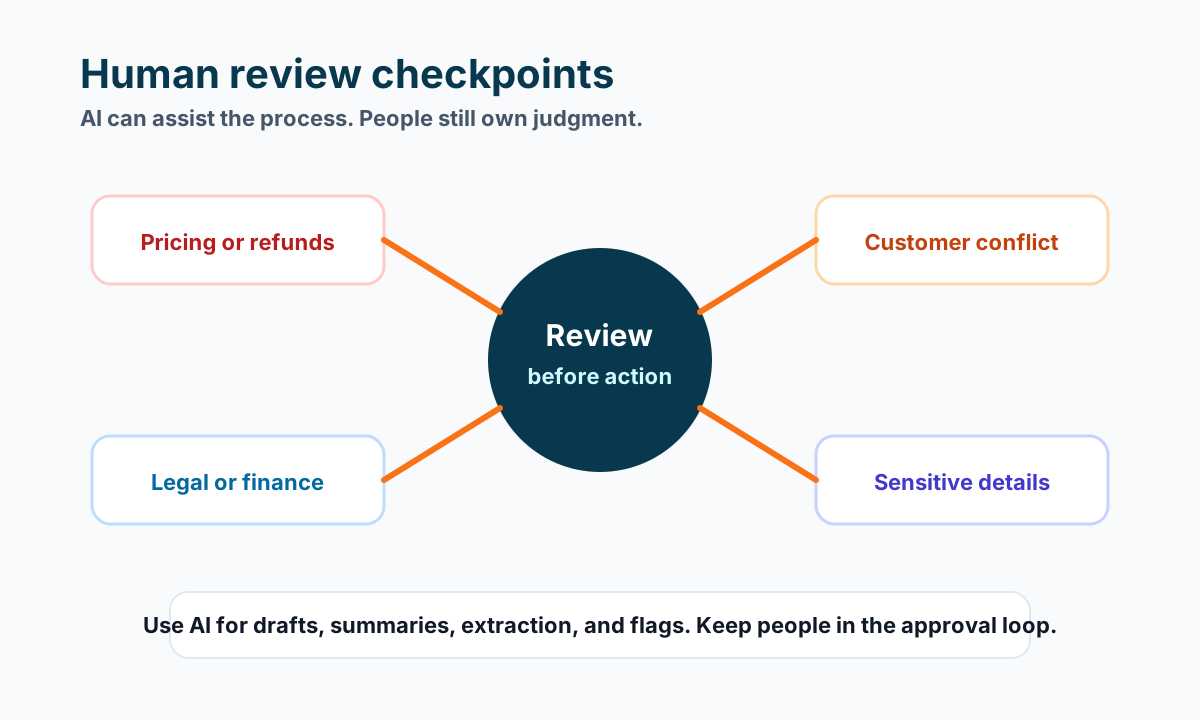
Human review is part of the system
Human review is not a failure mode. It is how AI business process automation stays useful in real operations.
Keep a person involved when the process touches pricing, contracts, refunds, legal matters, medical details, tax decisions, hiring, payroll, sensitive customer situations, or anything that could damage trust if the output is wrong. The U.S. Small Business Administration has a practical AI for small business overview, and the NIST AI Risk Management Framework is a stronger reference when the business needs formal risk thinking.
A practical rollout checklist
Before launch, test the process with real examples from the business. Use normal cases, edge cases, incomplete inputs, angry customer messages, duplicate records, and situations where the system should stop and ask for review.
- Name the process in plain English.
- Write the current manual steps.
- Pick the trigger and source of truth.
- Decide what AI is allowed to do.
- Decide what AI is not allowed to do.
- Write the human review rule.
- Test with real examples.
- Add an error path for missing data or failed tool connections.
- Measure response time, stuck work, manual touches, or owner time saved.
- Document the process so the team can run it without guessing.
The checklist matters because AI systems fail in ordinary ways: bad inputs, duplicate records, missing context, broken integrations, unclear ownership, and outputs that sound confident but need review.
If the team still needs the plain-English definition first, revisit what AI automation means for small business before turning this checklist into a build plan.
Example: lead-to-estimate process
Here is a small version Business Boomer would consider for a local service business:
| Step | Automation action | Human role |
|---|---|---|
| New inquiry arrives | Capture form, email, or call transcript | Make sure the intake questions are useful |
| AI creates a lead brief | Summarize need, location, urgency, and missing details | Review any unclear or sensitive note |
| CRM record updates | Add source, service type, next step, and owner | Keep duplicates clean |
| First reply is drafted | Acknowledge request and ask for missing details | Approve tone and pricing boundaries |
| Follow-up task is created | Remind owner if the lead goes quiet | Customize if the customer replies |
| Weekly report runs | Show stuck leads and next actions | Choose what to fix next |
This is intentionally narrow. It does not automate the whole company. It improves one process that already matters.
What Business Boomer would build first
For most service businesses, Business Boomer would start with one process close to money or owner time: lead response, estimate follow-up, appointment prep, invoice reminders, or owner admin capture. The first build should be small enough to test quickly, useful enough that the team feels the difference, and documented enough that the business can keep using it.
If you want help choosing and building the first workflow, book a Free 30-Minute AI Consultation and bring one messy process plus the tools you already use.
For local service processes, connect the workflow map to AI automation for local service businesses.
Next step
Find the workflow worth fixing first.
Use the Free 30-Minute AI Consultation to map where leads, invoices, notes, or follow-ups are slipping and choose the smallest useful system.
Keep building the system
Recommended next Business Boomer guides
These links are selected by topic and search intent so this guide connects to the most relevant service pages, industry pages, and supporting blog posts.
Service and setup pages
Use these when you are ready to turn the idea into an implementation path.
Industry-specific pages
See how the same workflow changes for specific business types.
Related blog posts
Read the connected guides that support this topic cluster.
Related AI automation guides
Keep going with the connected Business Boomer guides in this automation cluster.
AI automation services for local small business
Planning examples for broader automation. Compare current managed calls and reviews on the Services page; confirm other work in a separate scope.
AI automation for local service businesses
Practical lead, scheduling, review, CRM, invoice, and admin automation for plumbers, HVAC companies, roofers, landscapers, cleaners, contractors, and other local operators.
How to automate invoices for small business
A practical guide to invoice creation, reminders, payment tracking, and cash-flow follow-up.
How to follow up with leads for small business
A practical workflow for CRM stages, reminders, email, text, and human follow-up tasks.
FAQ
Quick answers about this guide and how to put the idea into practice.
What is the main takeaway from AI for Business Process Automation?
AI for business process automation helps small businesses improve repeatable workflows when it is tied to clear triggers, clean data, useful AI steps, and human review.
How does AI for business process automation help a small business?
AI for business process automation can help a small business reduce manual work, improve follow-up, organize repetitive tasks, and create a clearer operating process when it is tied to a real bottleneck.
Can Business Boomer help implement AI for business process automation?
Yes. Business Boomer can help turn the idea into a practical workflow, page, checklist, or automation system depending on what the business needs first.
Find the workflow worth fixing first.
Use the Free 30-Minute AI Consultation to map where leads, invoices, notes, or follow-ups are slipping and choose the smallest useful system.
Book a Free 30-Minute AI Consultation