A plain-English setup guide for business owners who want an AI agent but do not want to configure servers, terminals, Telegram bots, or runtime tooling themselves.
Before comparing QuickBooks vs Stripe invoice automation, small businesses should understand the AI agent skills that make workflows safer and more useful.
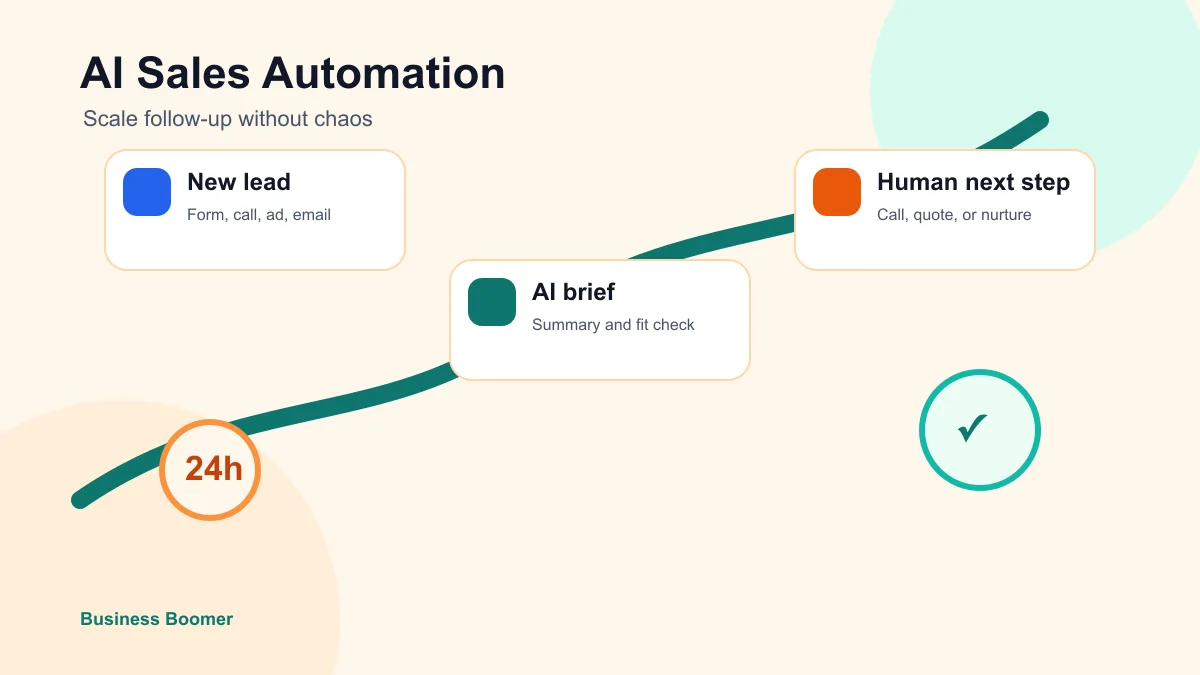
AI sales automation helps a small business respond faster, keep every lead visible, and scale follow-up without turning the sales process into a messy pile of disconnected tools.
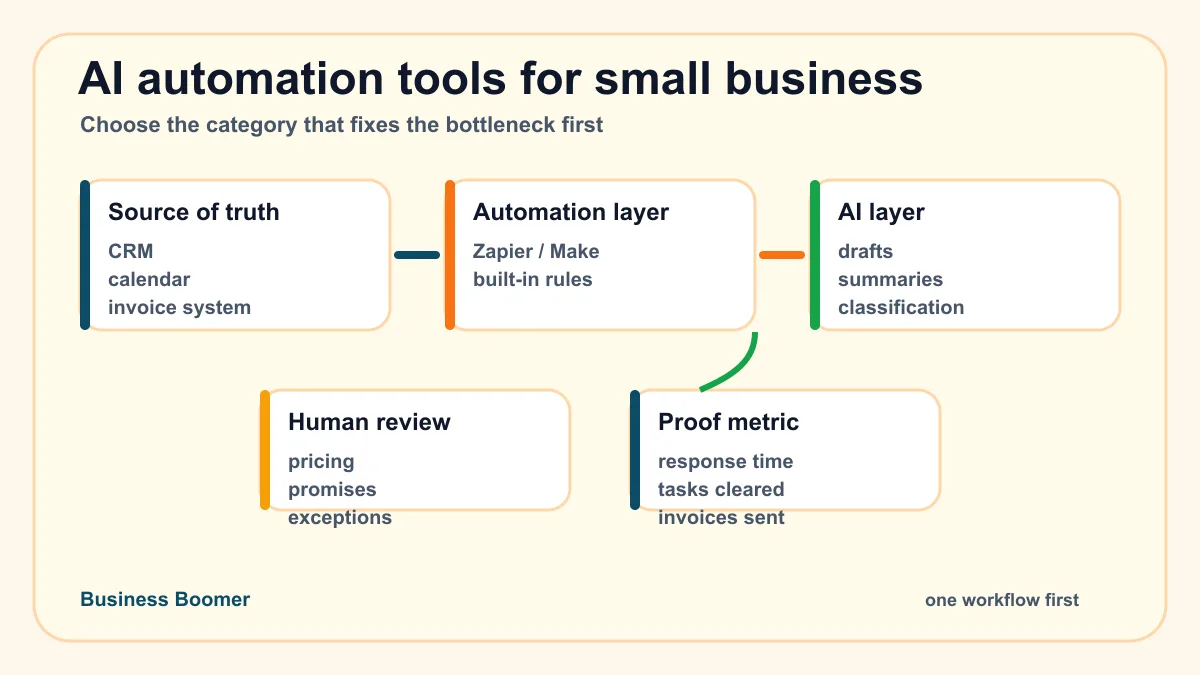
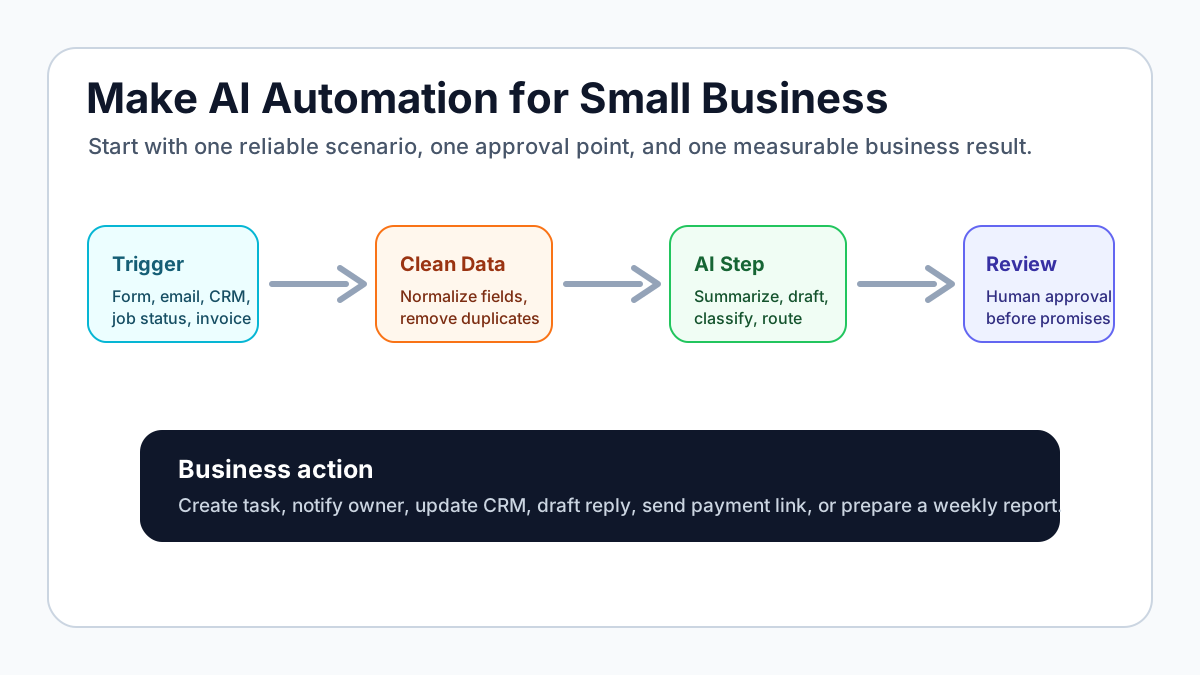
The best AI automation tools for small business are the ones that fix one repeated workflow first: lead follow-up, scheduling, CRM cleanup, invoicing, admin notes, customer support, or reporting. Start with the bottleneck, then choose the tool category.
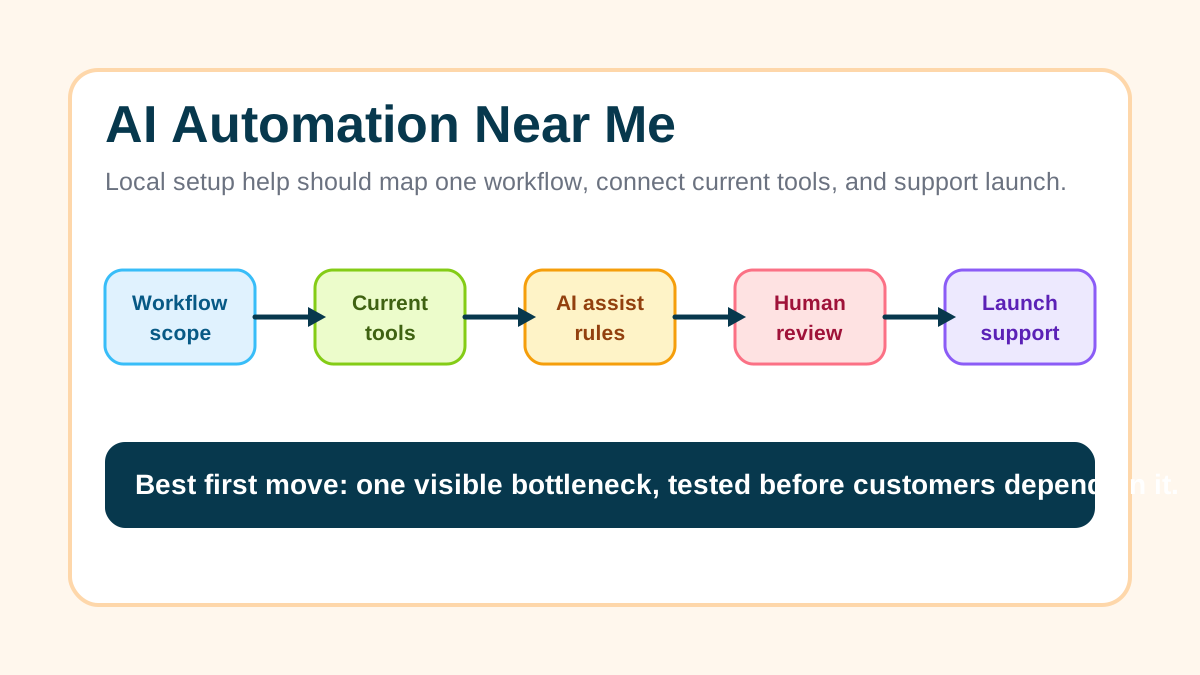
The best AI automation help near you is not just the closest provider. It is the person or team that can map one real workflow, connect your current tools, keep review in the right places, and support the setup after it goes live.
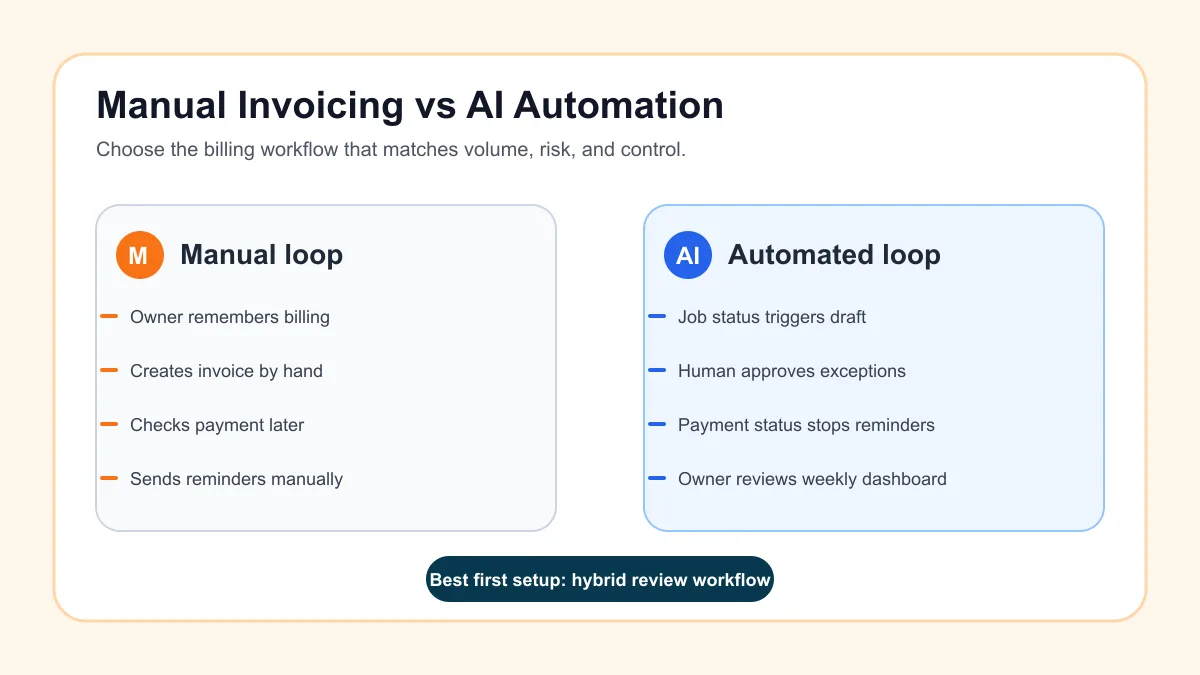
Manual invoicing is better when every invoice needs judgment or the business sends only a few simple bills. AI automation is better when invoices are repeatable, late, hard to track, or dependent on reminders, payment links, and owner follow-up.
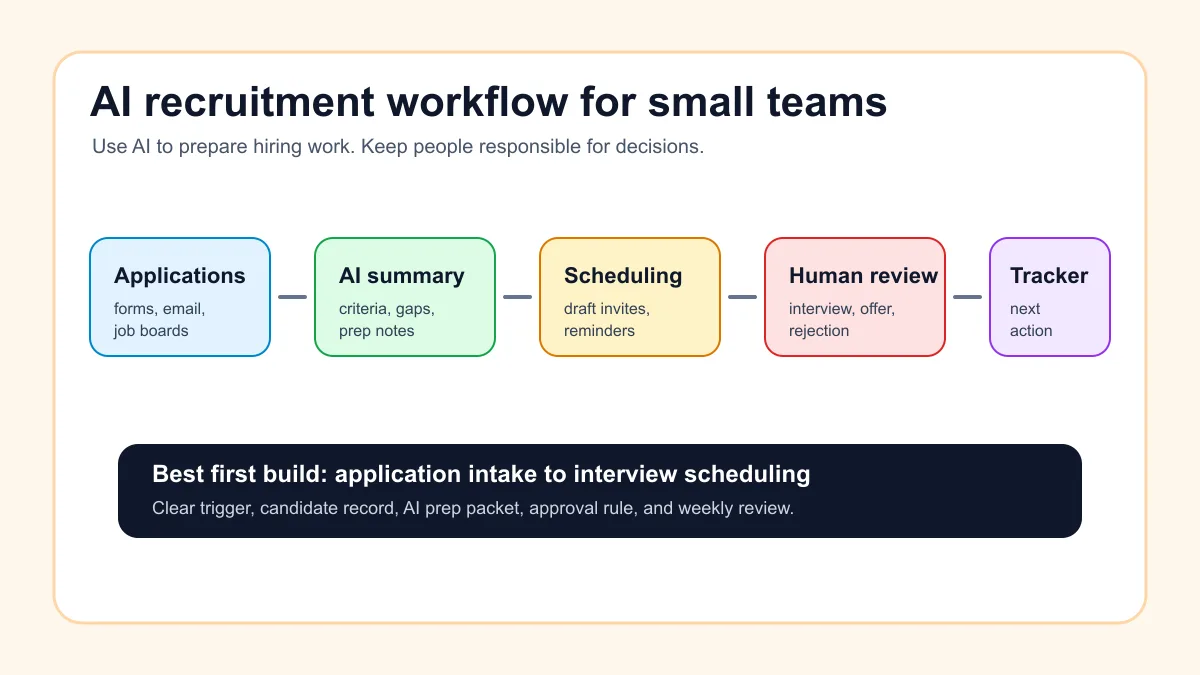
AI automation for recruitment works best when it helps a small team move candidates through a clear hiring workflow: capture applications, summarize fit, schedule interviews, draft follow-up, update records, and keep final decisions with people.
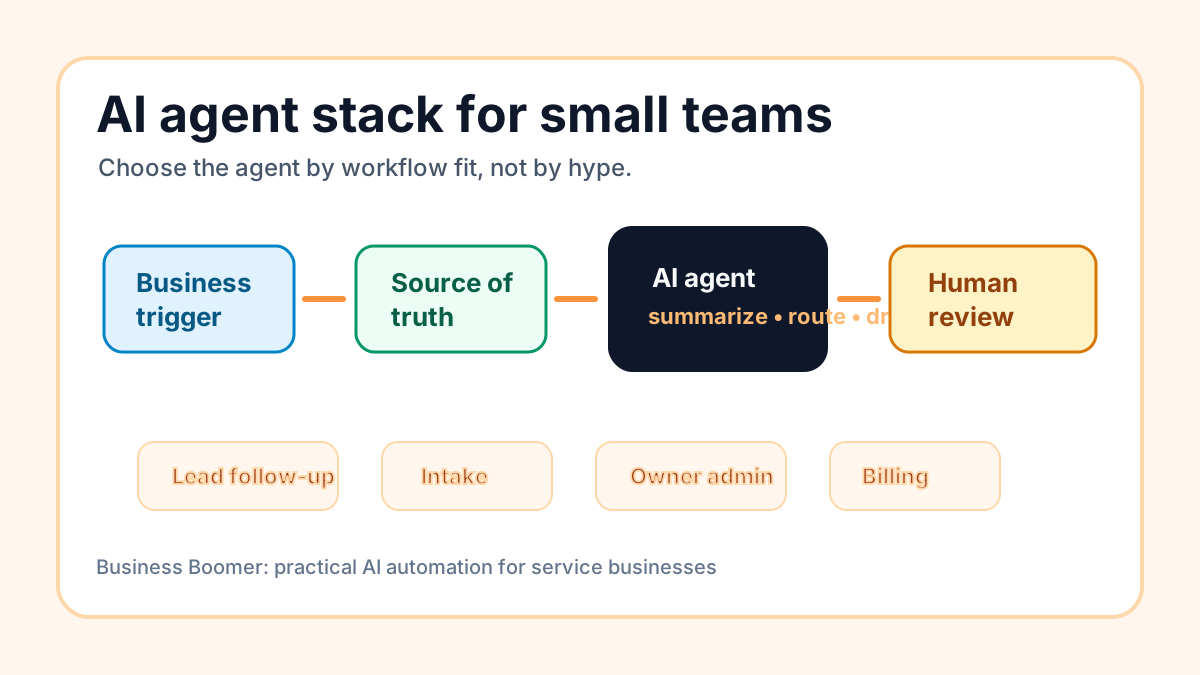
The best AI agents for business automation are not the flashiest autonomous tools. For a small team, the best choice is the agent setup that improves one real workflow, connects to the tools already running the business, and keeps human review where mistakes would be expensive.
Invoice automation examples work best when they start from a real trigger: completed job, accepted estimate, recurring service date, overdue invoice, or customer reply.
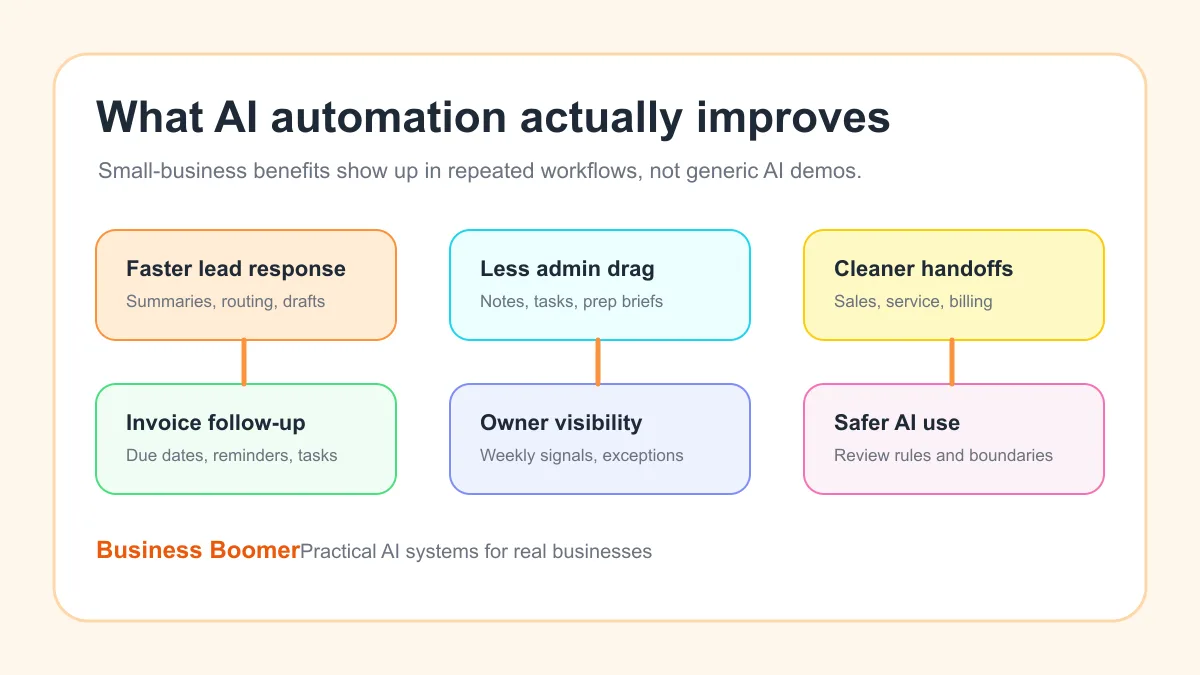
The real benefits of AI automation for small business show up when a repeated workflow gets faster, cleaner, and easier to manage: leads are answered sooner, admin gets summarized, invoices move without chasing, and owners see the next action before work slips.
Behind the guides: our publishing process and search data
Inside our publishing process
How we’re building a more useful blog with AI.
See our actual search growth, the pages behind it, and the structure we use to research, refresh, review and publish. Then adapt our skills and automation prompts to your own business.
Same blog cohort, compared per day. September covers 14 days; July and August each cover 31.
Average daily impressions · scale 0–500
July126.7
August169.5
September 1–14partial461.7
July → August: +33.7% impressions over two full months. September’s observed daily rate is 2.72× August’s, not a full-month result or forecast.
Source: Search Console daily table, read September 16, 2026. Web search; pages containing aibusinessboomer.io/blog/. Dates use Pacific Time. Filtered data can be partial. These are search appearances and clicks, not ChatGPT referrals, leads or revenue.
Questions about the AI automation guides and how to use them
What topics does the Business Boomer blog cover?+
The blog covers AI automation, small-business workflows, invoice automation, lead follow-up, industry use cases, OpenClaw setup, and practical ways business owners can use AI.
How should I use these AI automation guides?+
Use each guide to identify one process to improve, then continue to the relevant service, checklist, calculator, or consultation if you want help implementing it.
Are these articles for technical teams or business owners?+
They are written mainly for business owners and operators who care about saving time, improving follow-up, and building practical systems rather than studying AI theory.