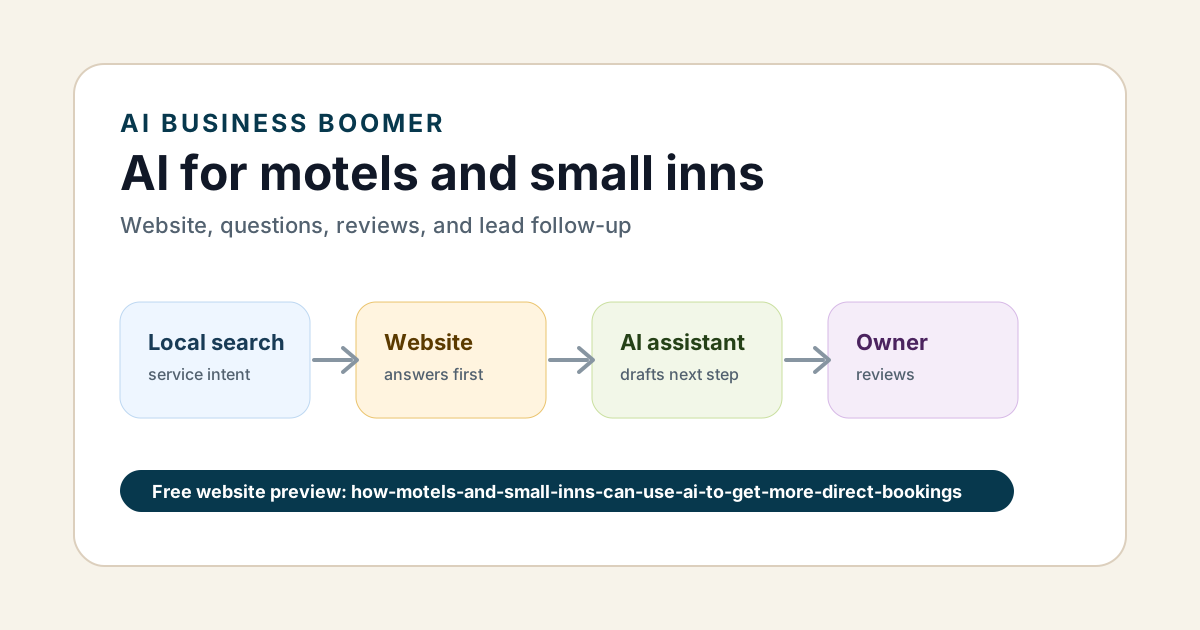
An illustrative, owner-reviewed AI workflow for motels and small inns: A room inquiry depends on dates, party size, and the property’s actual policies. A useful handoff keeps those details together while staff confirm current availability and rates.
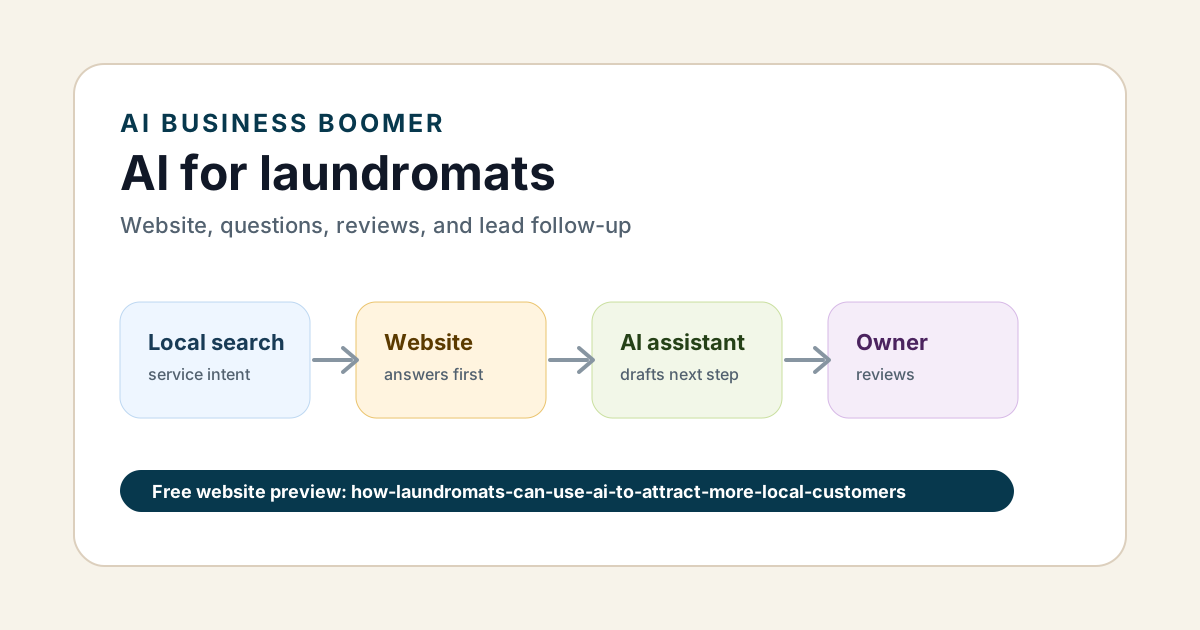
An illustrative, owner-reviewed AI workflow for laundromats: Customers may need to know whether a location offers self-service, wash-and-fold, pickup, or commercial laundry. Answers depend on current hours, turnaround, and location-specific rules.
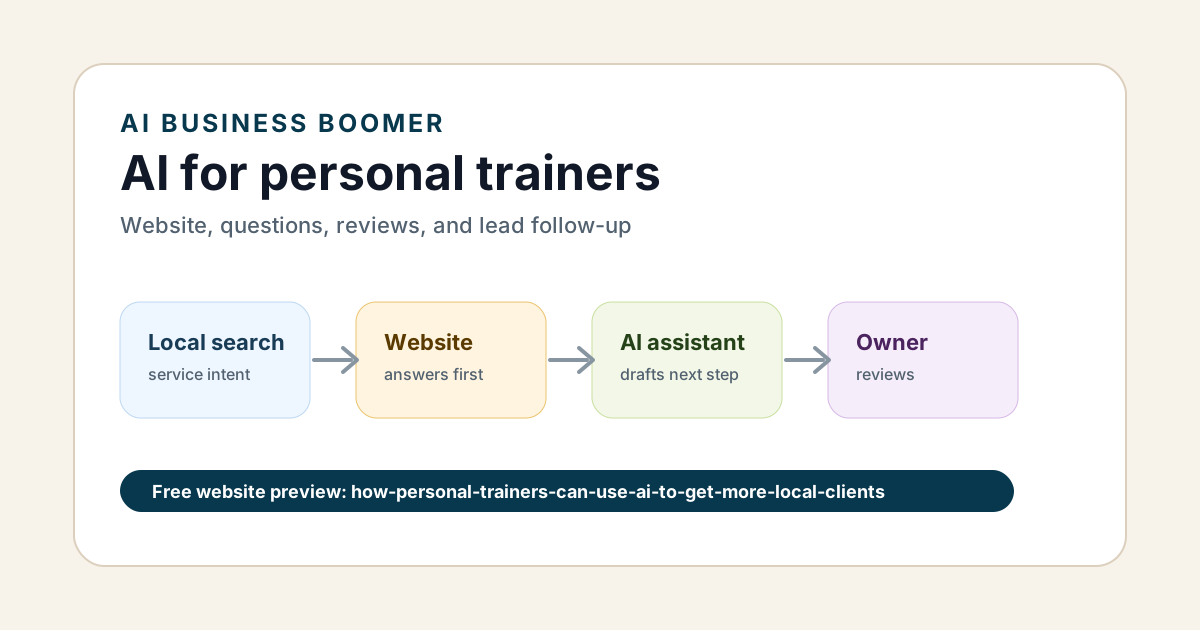
An illustrative, owner-reviewed AI workflow for personal training businesses: A new client inquiry often asks about session format, location, and schedule. Keep early intake focused on logistics and route health or injury questions to the trainer.
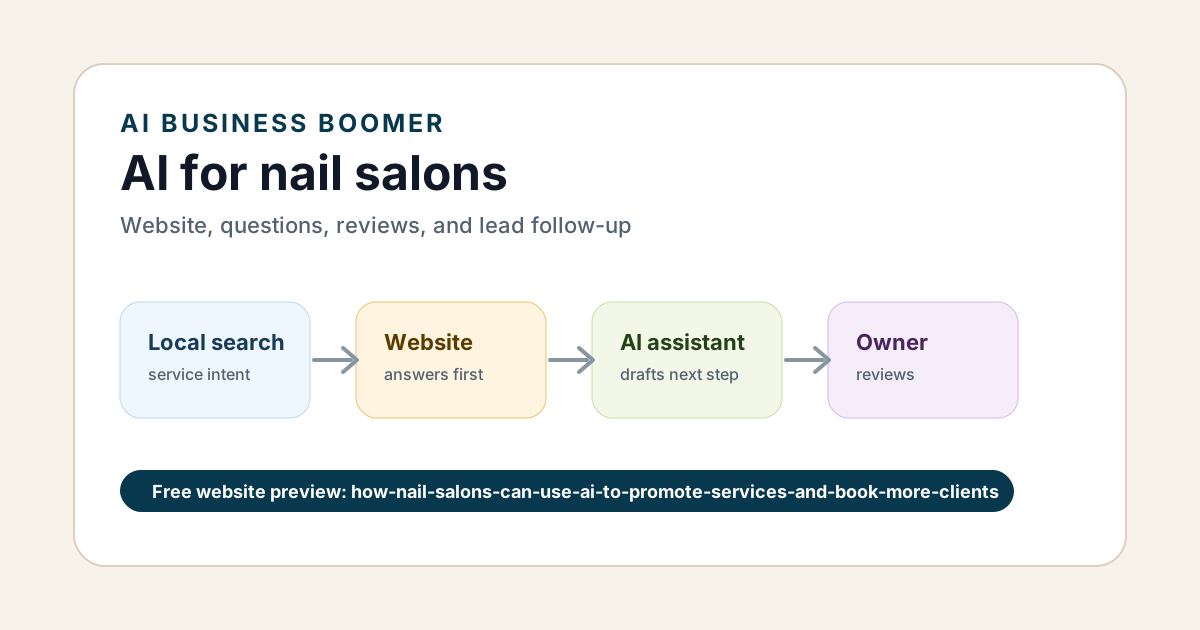
An illustrative, owner-reviewed AI workflow for nail salons: A nail appointment may include a new set, a fill, removal, or a repair, and the service length differs. Intake can help staff schedule the right conversation.
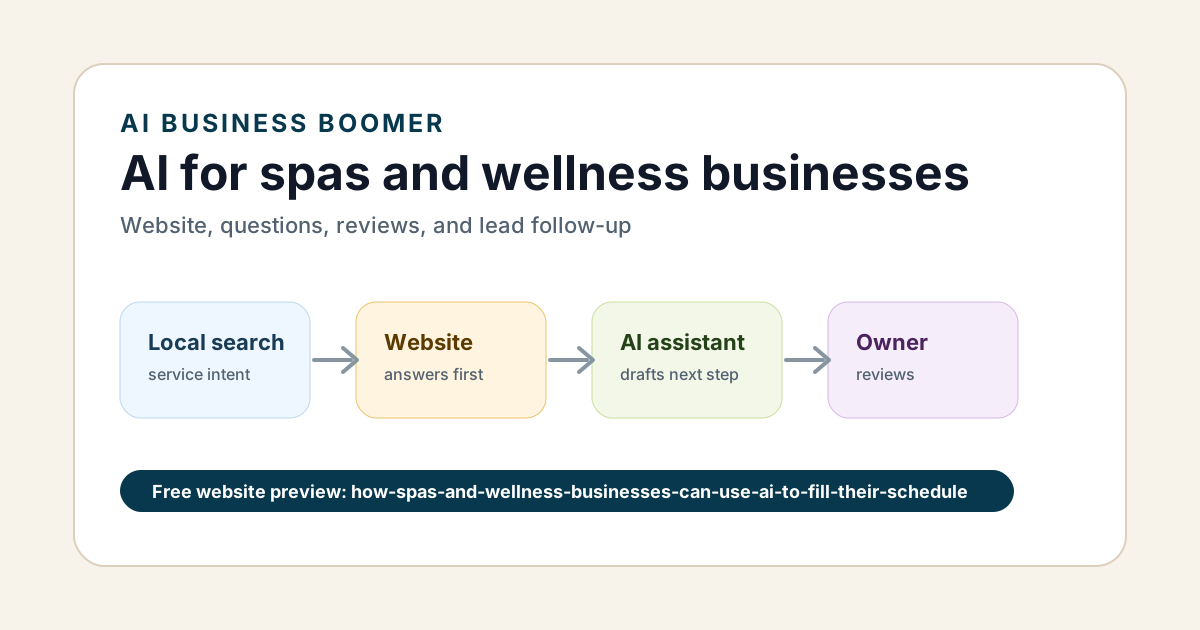
An illustrative, owner-reviewed AI workflow for spas and wellness businesses: Service questions can cross into personal health information. Early contact should focus on the service requested and scheduling, routing health or treatment questions directly to qualified staff.
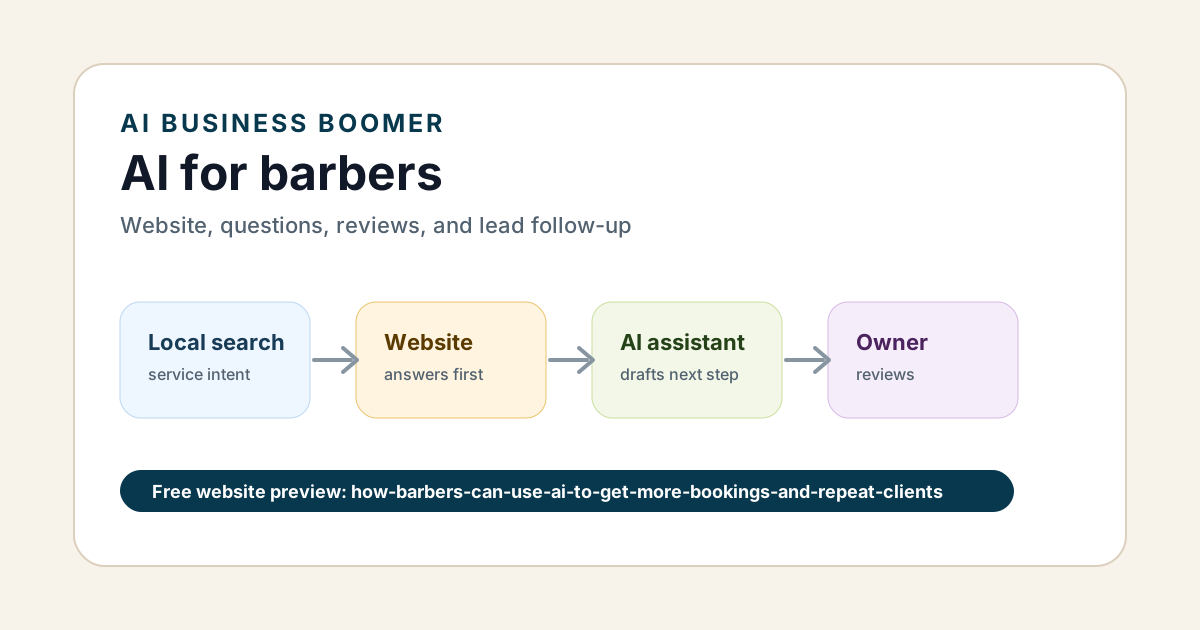
An illustrative, owner-reviewed AI workflow for barber shops: Booking requests often need a quick distinction between a standard cut, a beard service, and a longer appointment. A person should confirm the service duration and available chair time before anything is booked.
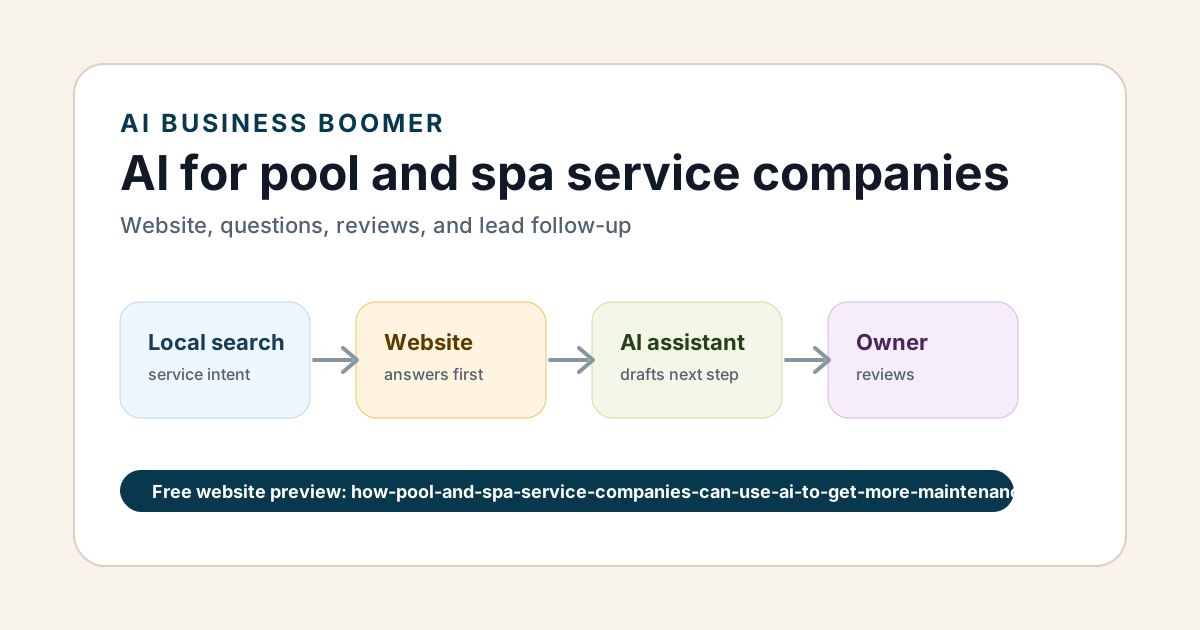
An illustrative, owner-reviewed AI workflow for pool and spa service companies: Pool opening, recurring care, and a water concern need different details. A useful intake summary helps the technician see the equipment and visit context without guessing a diagnosis.
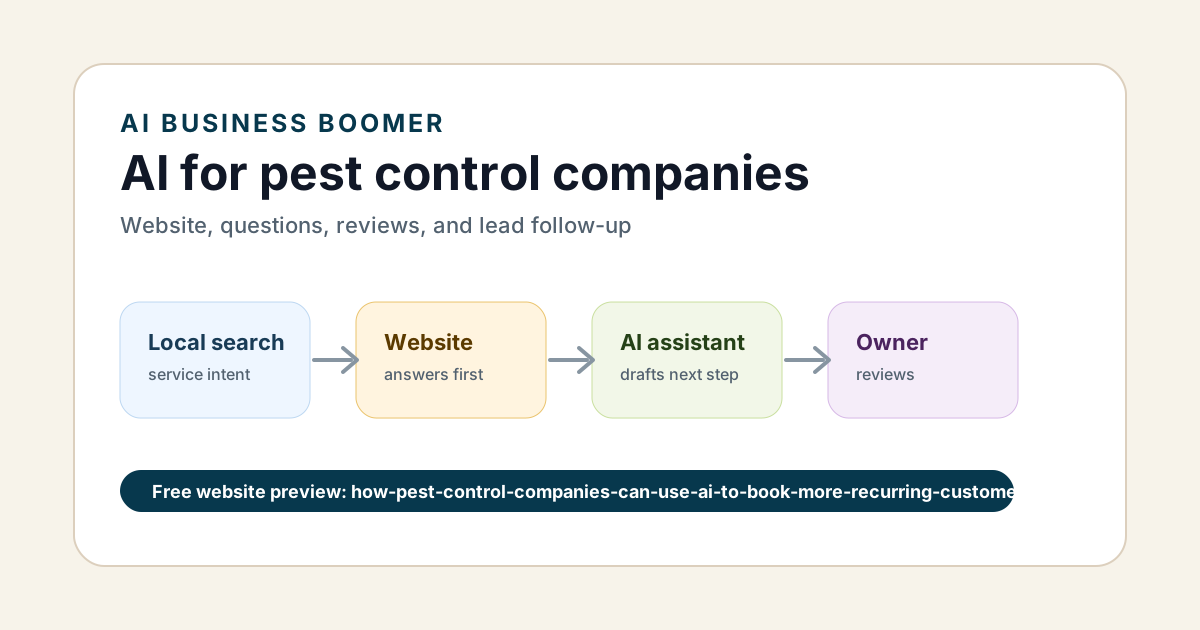
An illustrative, owner-reviewed AI workflow for pest control companies: A pest inquiry needs the customer’s description, the affected area, and a safe path to an inspection or staff response. The system should not identify a pest or recommend treatment from a guess.
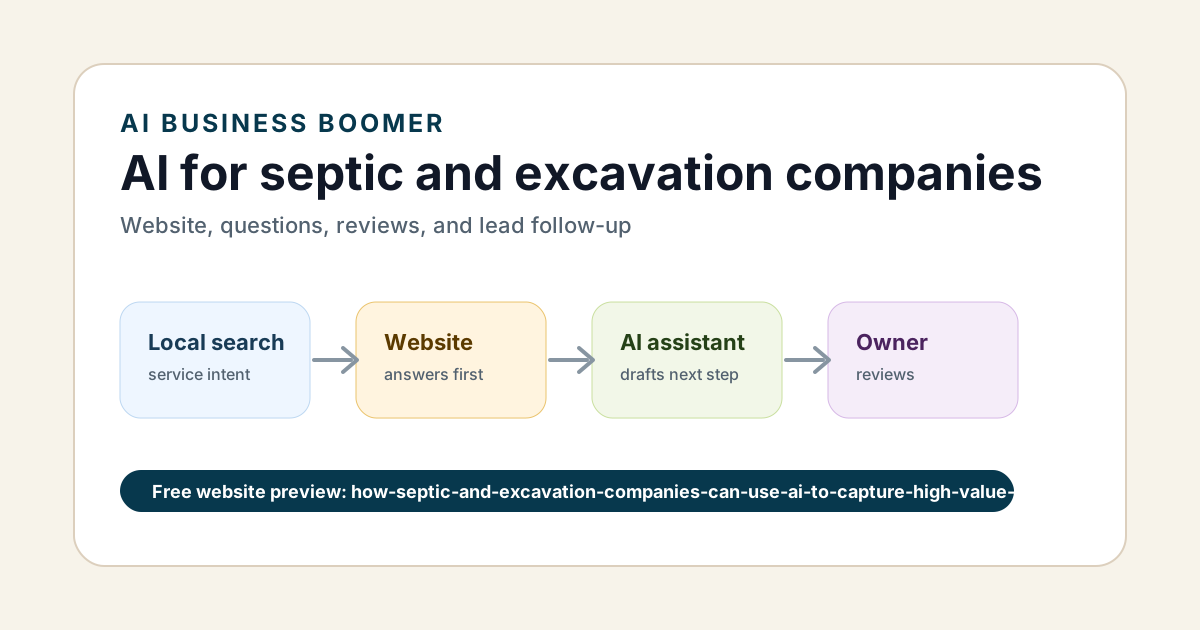
An illustrative, owner-reviewed AI workflow for septic and excavation companies: An excavation or septic request may require site access and an on-site review before the company can determine fit. Clear intake prevents an incomplete request from looking like a confirmed estimate.
AI for carpenters works best when it helps a local carpentry business respond faster, explain services clearly, manage reviews, and follow up with leads without replacing owner judgment.
Behind the guides: our publishing process and search data
Inside our publishing process
How we’re building a more useful blog with AI.
See our actual search growth, the pages behind it, and the structure we use to research, refresh, review and publish. Then adapt our skills and automation prompts to your own business.
Same blog cohort, compared per day. September covers 14 days; July and August each cover 31.
Average daily impressions · scale 0–500
July126.7
August169.5
September 1–14partial461.7
July → August: +33.7% impressions over two full months. September’s observed daily rate is 2.72× August’s, not a full-month result or forecast.
Source: Search Console daily table, read September 16, 2026. Web search; pages containing aibusinessboomer.io/blog/. Dates use Pacific Time. Filtered data can be partial. These are search appearances and clicks, not ChatGPT referrals, leads or revenue.
Questions about the AI automation guides and how to use them
What topics does the Business Boomer blog cover?+
The blog covers AI automation, small-business workflows, invoice automation, lead follow-up, industry use cases, OpenClaw setup, and practical ways business owners can use AI.
How should I use these AI automation guides?+
Use each guide to identify one process to improve, then continue to the relevant service, checklist, calculator, or consultation if you want help implementing it.
Are these articles for technical teams or business owners?+
They are written mainly for business owners and operators who care about saving time, improving follow-up, and building practical systems rather than studying AI theory.