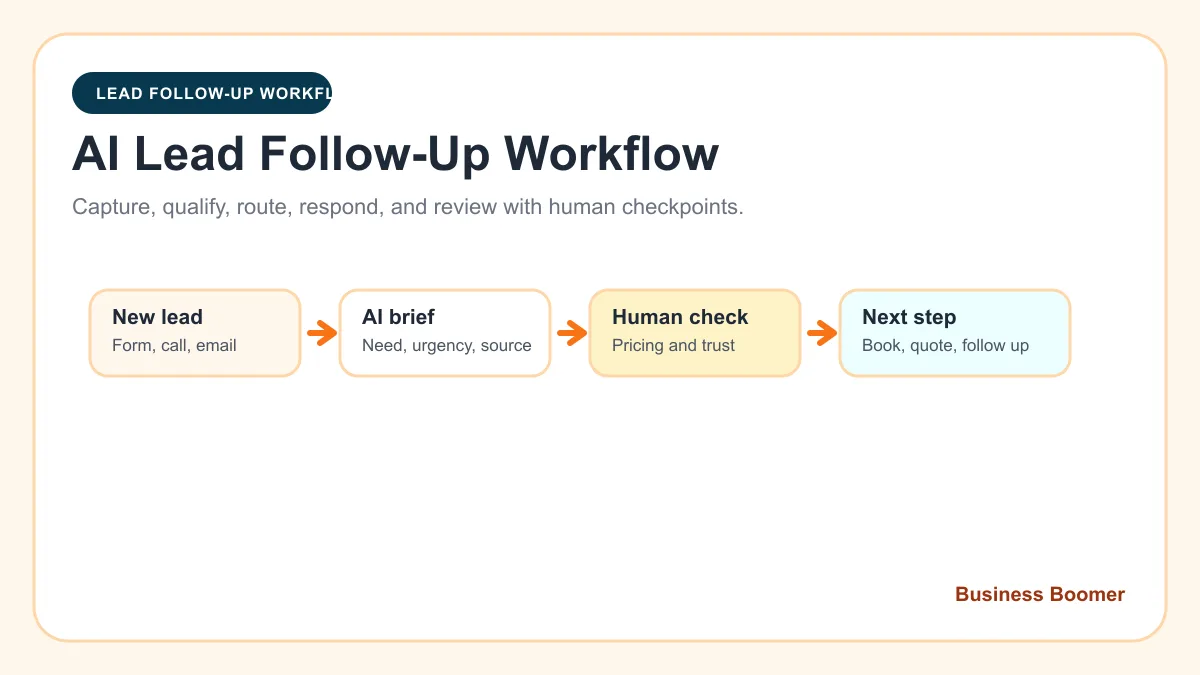
An illustrative, owner-reviewed AI workflow for roofing companies: A roof leak or storm-damage inquiry can be urgent, but photos from the ground do not replace an inspection. Intake should collect the report and route it to a person.
An illustrative, owner-reviewed AI workflow for contractors: A project inquiry may arrive as notes, photos, and a broad request for a price. A useful workflow keeps those inputs together and makes the next human step clear.
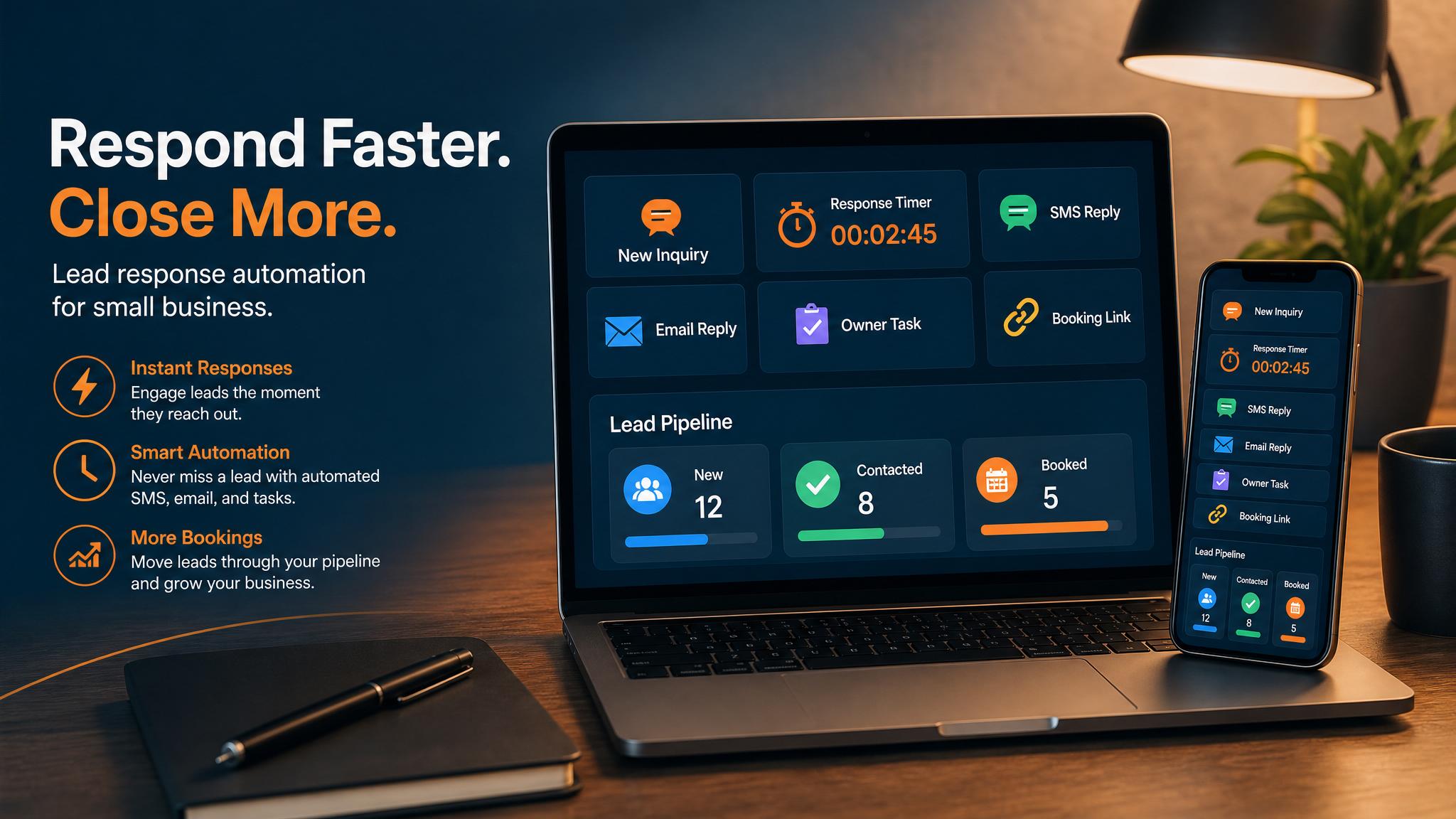
Missed-call text-back automation gives a service business a fast first reply, a few useful questions, and an owner task instead of letting the lead disappear.
An illustrative, owner-reviewed AI workflow for cleaning companies: A cleaning inquiry can mean a recurring home visit, a one-time deep clean, or a move-out job. The first useful step is sorting the request so the estimator can ask the right follow-up.
An illustrative, owner-reviewed AI workflow for landscaping companies: A recurring maintenance inquiry needs more than a name and phone number: the property, requested work, and desired cadence shape the next estimate.
An illustrative, owner-reviewed AI workflow for tree service companies: Tree-work requests can involve storm damage, pruning, removal, or stump work, with different access and safety considerations. Route hazard reports to a person without diagnosing from photos.
An illustrative, owner-reviewed AI workflow for HVAC companies: A no-heat call, a maintenance request, and an installation inquiry need different next steps. Intake can help staff see what the caller reported without attempting a diagnosis.
An illustrative, owner-reviewed AI workflow for electrical contractors: Electrical inquiries need careful routing because a caller may describe anything from a fixture request to an urgent power problem. Intake should record the caller’s words and route concerns under a human-approved policy.
Behind the guides: our publishing process and search data
Inside our publishing process
How we’re building a more useful blog with AI.
See our actual search growth, the pages behind it, and the structure we use to research, refresh, review and publish. Then adapt our skills and automation prompts to your own business.
Same blog cohort, compared per day. September covers 14 days; July and August each cover 31.
Average daily impressions · scale 0–500
July126.7
August169.5
September 1–14partial461.7
July → August: +33.7% impressions over two full months. September’s observed daily rate is 2.72× August’s, not a full-month result or forecast.
Source: Search Console daily table, read September 16, 2026. Web search; pages containing aibusinessboomer.io/blog/. Dates use Pacific Time. Filtered data can be partial. These are search appearances and clicks, not ChatGPT referrals, leads or revenue.
Questions about the AI automation guides and how to use them
What topics does the Business Boomer blog cover?+
The blog covers AI automation, small-business workflows, invoice automation, lead follow-up, industry use cases, OpenClaw setup, and practical ways business owners can use AI.
How should I use these AI automation guides?+
Use each guide to identify one process to improve, then continue to the relevant service, checklist, calculator, or consultation if you want help implementing it.
Are these articles for technical teams or business owners?+
They are written mainly for business owners and operators who care about saving time, improving follow-up, and building practical systems rather than studying AI theory.