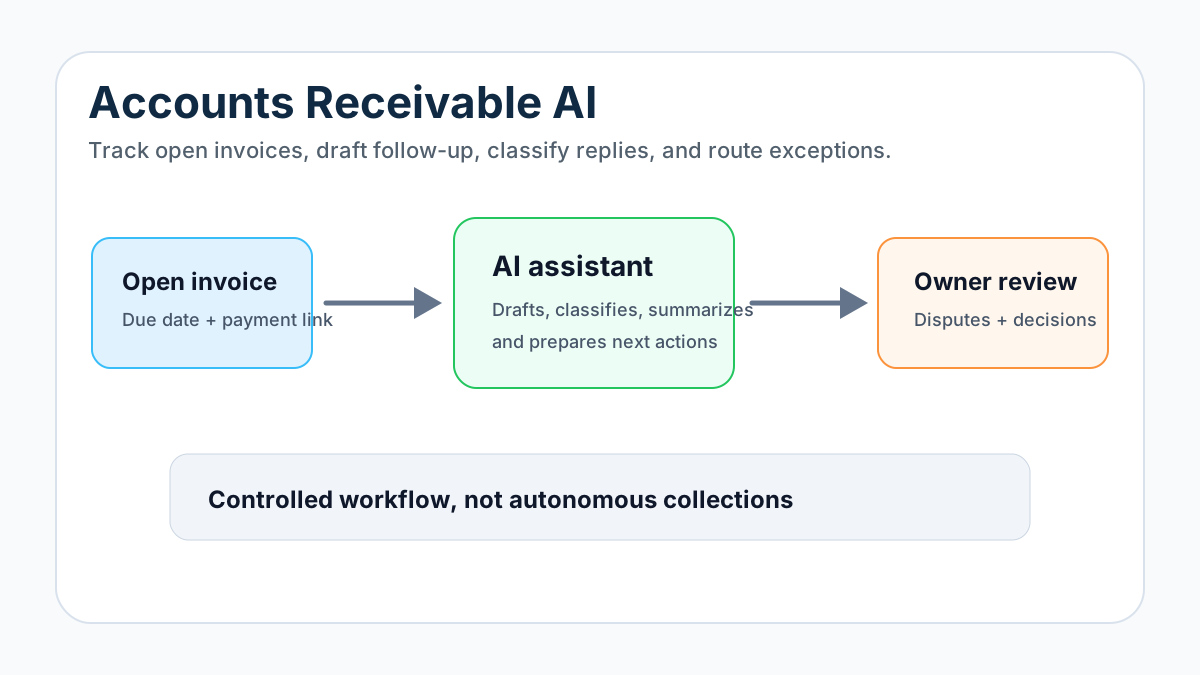
Automating accounts receivable with AI works best when a small business connects invoice status, payment links, reminder timing, customer replies, exception tasks, and weekly owner review into one controlled workflow.
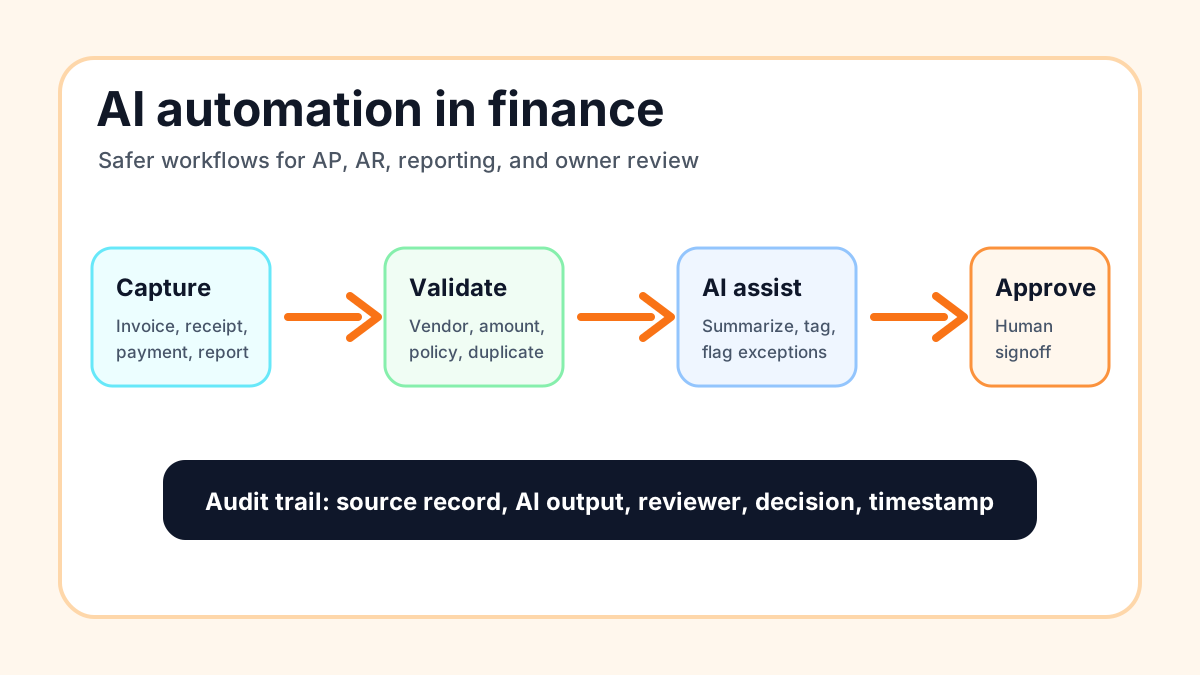
Use AI to prepare finance review notes while staff verify source records, payment changes and exceptions. Includes a fictional duplicate-invoice exercise.
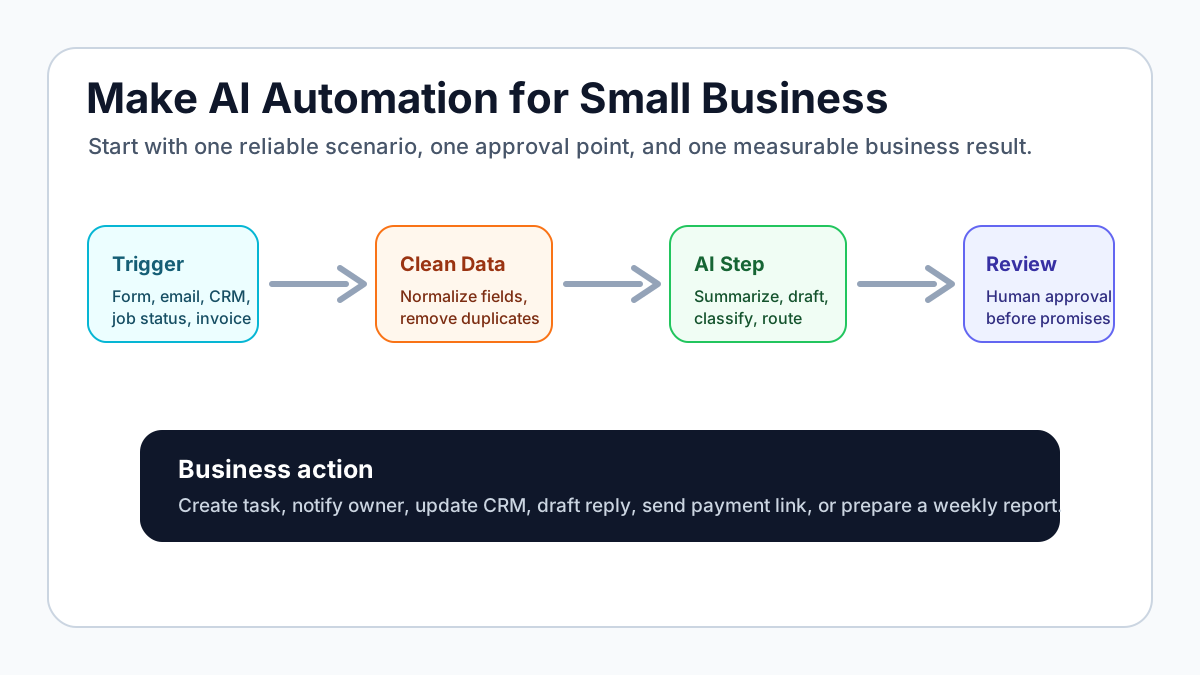
Plan a Make inquiry workflow with explicit filters, fallback handling, duplicate checks and a local test fixture. Verify the account connection separately.
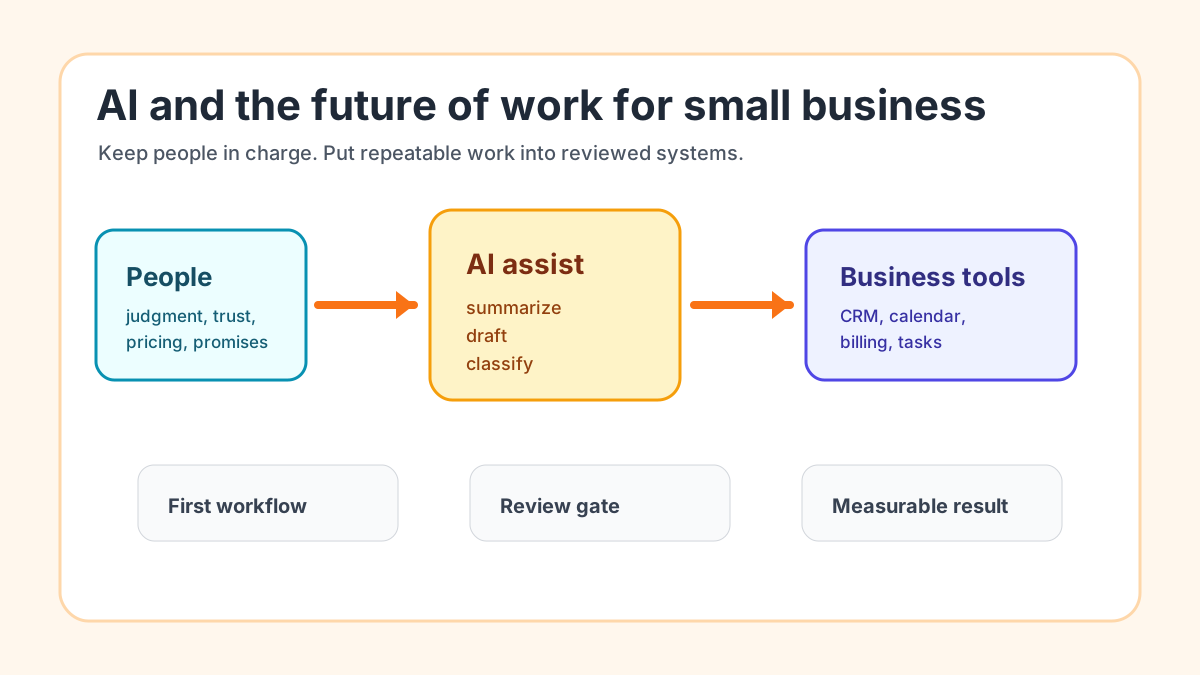
AI will change small-business work by moving repeatable tasks into reviewed systems, not by removing the need for owners, managers, and staff judgment.
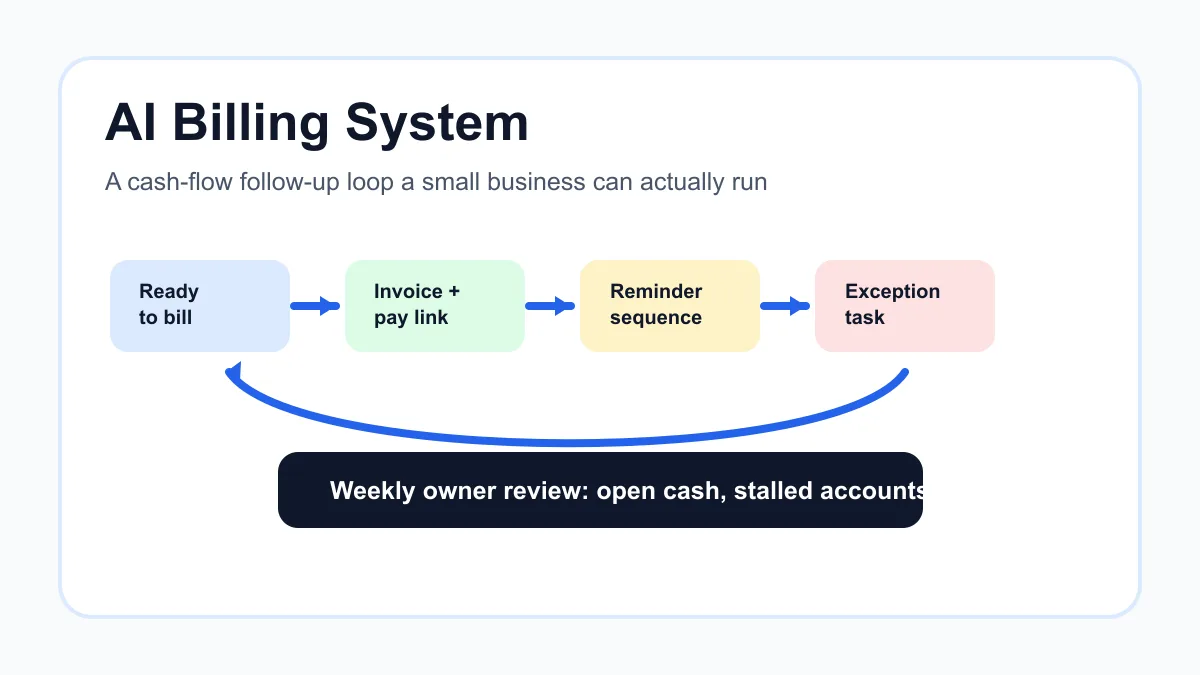
AI billing systems help small businesses improve cash-flow follow-up when they connect billing triggers, invoice status, payment links, reminders, exception tasks, and weekly owner review.
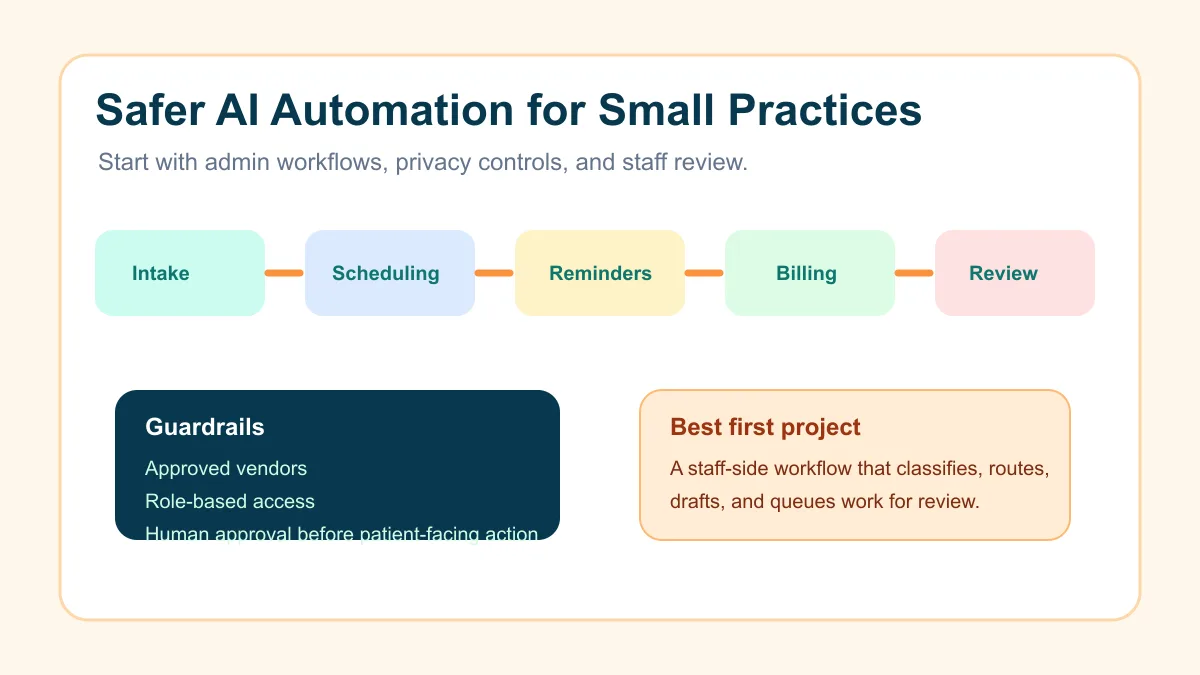
AI automation in healthcare can help small practices improve intake, scheduling, reminders, billing handoffs, and staff follow-up when privacy, review, and vendor controls come first.
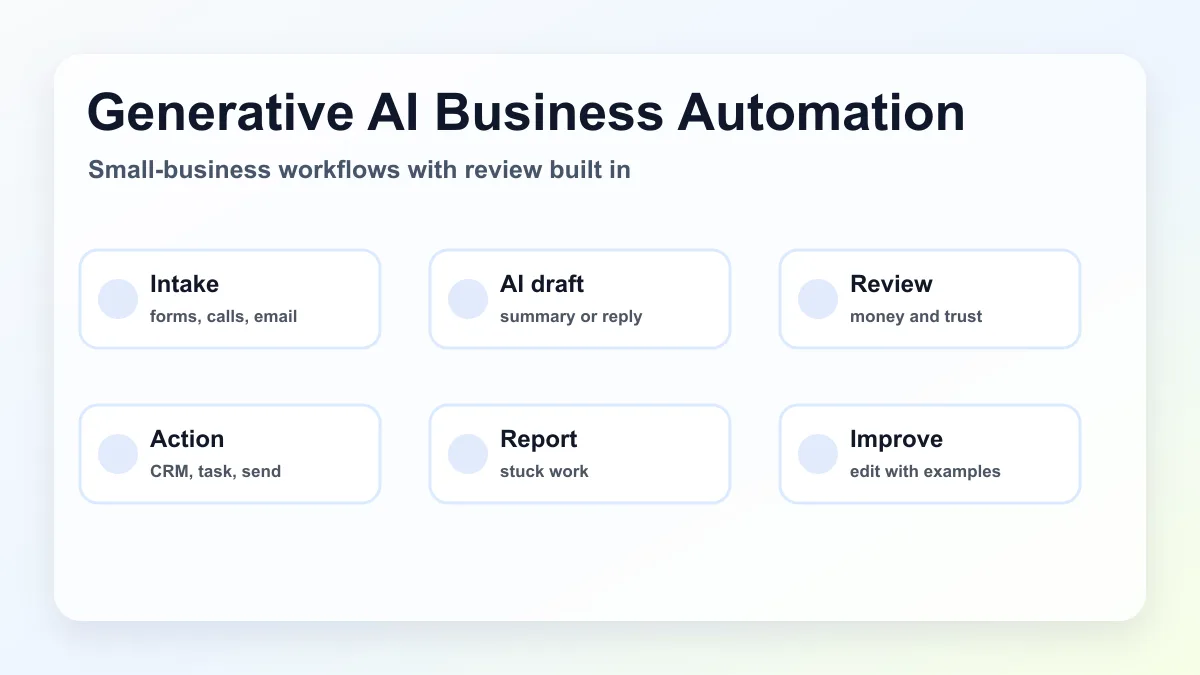
Generative AI for business automation helps small businesses turn messy customer messages, notes, calls, invoices, and follow-up work into reviewed workflows.
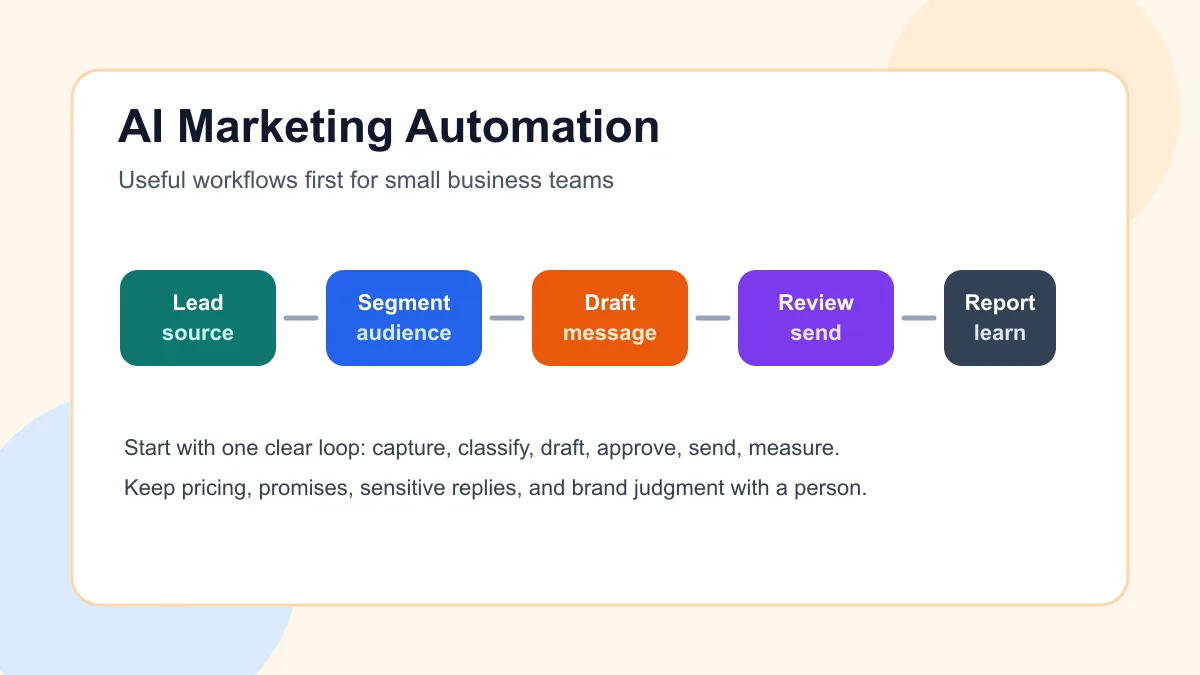
AI marketing automation helps small businesses turn repeat marketing work into reviewed workflows: lead nurture, content drafts, review requests, segmentation, and reporting.
Most small businesses do not need another generic AI chat window. They need a private AI operator with context, workflows, approval rules, and a practical place to use it.
A plain-English setup guide for business owners who want an AI agent but do not want to configure servers, terminals, Telegram bots, or runtime tooling themselves.
Before comparing QuickBooks vs Stripe invoice automation, small businesses should understand the AI agent skills that make workflows safer and more useful.
Behind the guides: our publishing process and search data
Inside our publishing process
How we’re building a more useful blog with AI.
See our actual search growth, the pages behind it, and the structure we use to research, refresh, review and publish. Then adapt our skills and automation prompts to your own business.
Same blog cohort, compared per day. September covers 14 days; July and August each cover 31.
Average daily impressions · scale 0–500
July126.7
August169.5
September 1–14partial461.7
July → August: +33.7% impressions over two full months. September’s observed daily rate is 2.72× August’s, not a full-month result or forecast.
Source: Search Console daily table, read September 16, 2026. Web search; pages containing aibusinessboomer.io/blog/. Dates use Pacific Time. Filtered data can be partial. These are search appearances and clicks, not ChatGPT referrals, leads or revenue.
Questions about the AI automation guides and how to use them
What topics does the Business Boomer blog cover?+
The blog covers AI automation, small-business workflows, invoice automation, lead follow-up, industry use cases, OpenClaw setup, and practical ways business owners can use AI.
How should I use these AI automation guides?+
Use each guide to identify one process to improve, then continue to the relevant service, checklist, calculator, or consultation if you want help implementing it.
Are these articles for technical teams or business owners?+
They are written mainly for business owners and operators who care about saving time, improving follow-up, and building practical systems rather than studying AI theory.